
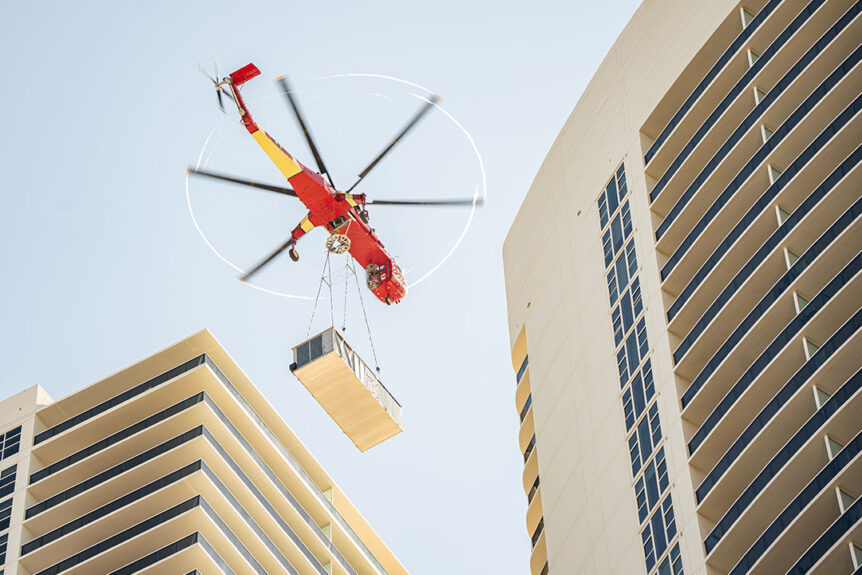
Heavy lift helicopter capacity determines how effectively an aircraft can transport equipment, materials, machinery, and supplies by air. These helicopters remain indispensable across construction, utility work, disaster response, military logistics, firefighting, and remote cargo delivery.
This guide highlights ten of the world’s most notable heavy lift helicopters. The list includes proven commercial aircraft, military platforms, and historical designs that helped advance aerial load transport.
Published capacity is only a starting point. Actual lifting performance depends on aircraft configuration, elevation, temperature, fuel, rigging, weather, flight distance, and required safety margins. Therefore, the helicopter with the highest published capacity is not always the best aircraft for a particular project.
Table of Contents
- What Is a Heavy Lift Helicopter?
- What Determines Heavy Lift Helicopter Capacity?
- Published Capacity Versus Actual Project Capacity
- 1. Mil Mi-26
- 2. Sikorsky CH-53K King Stallion
- 3. Mil Mi-10
- 4. Boeing CH-47F Chinook
- 5. Kamov Ka-32
- 6. Sikorsky S-64 Skycrane
- 7. Mil Mi-6
- 8. Airbus AS332 Super Puma
- 9. Boeing Vertol 234 Chinook
- 10. Sikorsky S-92
- Heavy Lift Helicopter Capacity Comparison Chart
- Which Heavy Lift Helicopter Is Right for Your Project?
- The Future of Heavy Lift Helicopters
- Need Heavy Lift Helicopter Services?
- Heavy Lift Helicopter Capacity FAQs
What Is a Heavy Lift Helicopter?
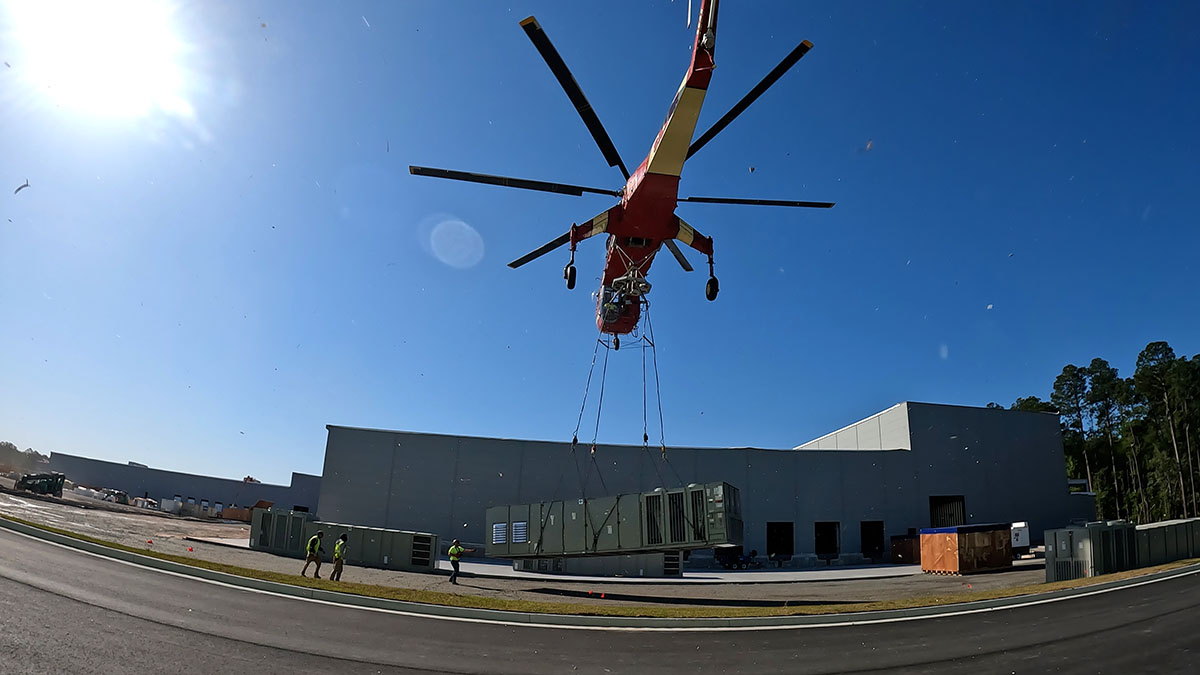
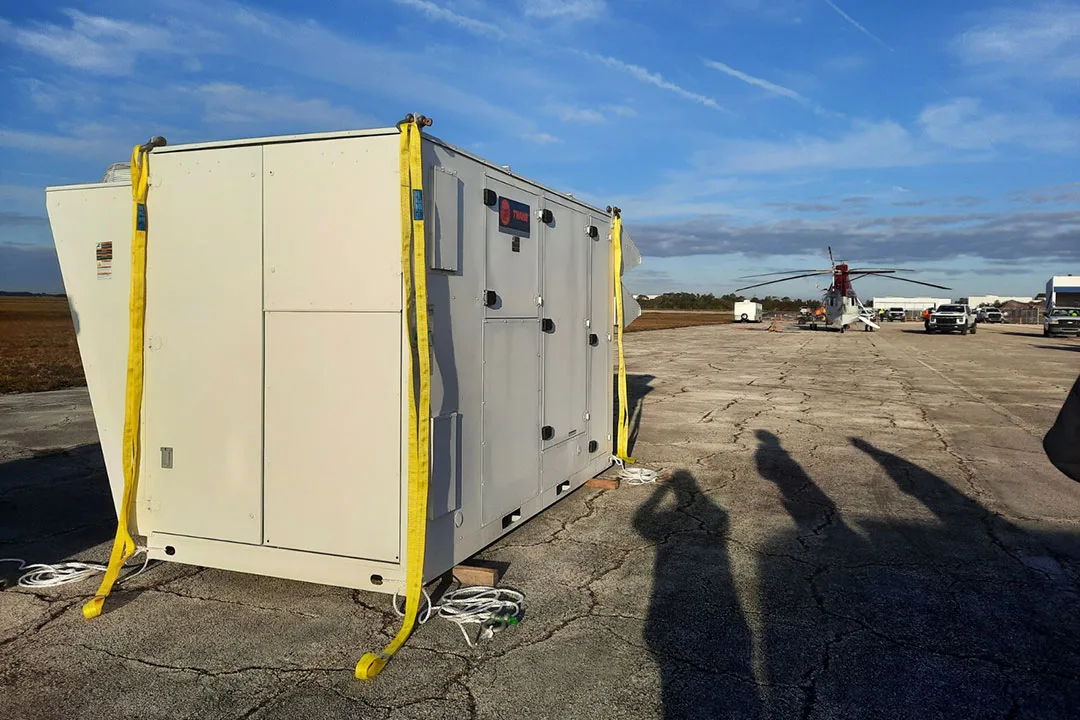
Sikorsky S-64 Skycrane lifting a commercial rooftop HVAC unit while rigging crew monitors the heavy lift operation
A heavy lift helicopter is an aircraft designed or configured to transport substantial cargo. Loads may be carried inside the cabin or suspended beneath the aircraft using a cargo hook, sling, long line, cargo net, or specialized lifting frame.
There is no single capacity that defines every heavy lift helicopter. In commercial construction, the term may describe aircraft capable of carrying several thousand pounds. The largest military transport helicopters and purpose-built aerial cranes can carry 20,000 pounds or more under suitable conditions.
Heavy lift helicopters support a wide range of industries and applications, including:
- Commercial and industrial construction
- Rooftop HVAC installation and replacement
- Tower construction and equipment installation
- Electrical transmission and utility work
- Pipeline construction and maintenance
- Logging and resource development
- Wildland firefighting
- Disaster response and humanitarian support
- Remote and oversized cargo transport
These aircraft are particularly valuable when a crane cannot reach the work area, ground access is limited, terrain is sensitive, or conventional transportation would cause excessive disruption.
What Determines Heavy Lift Helicopter Capacity?
Heavy lift helicopter capacity depends on engine power, rotor performance, maximum gross weight, cargo-hook limits, aircraft configuration, environmental conditions, fuel requirements, and operating safety margins.
Engine Power
A helicopter must generate enough power to support its own weight, fuel, crew, equipment, rigging, and cargo. More available engine power can increase lifting performance. However, the transmission, drivetrain, rotor system, and aircraft structure must also be designed to handle that power.
Rotor Diameter and Design
The main rotor creates the lift that supports the aircraft and its cargo. Rotor diameter, blade design, blade count, rotor speed, and total disc area all affect performance. Tandem-rotor and coaxial-rotor helicopters distribute power differently than conventional helicopters with tail rotors.
Maximum Gross Weight
Maximum gross weight is the greatest approved combined weight of the helicopter, crew, fuel, equipment, cargo, and rigging. An aircraft cannot exceed this limit, even when additional engine power appears to be available.

Cargo-Hook Capacity
The cargo hook and supporting aircraft structure have approved weight limits. Cargo-hook capacity may differ from useful load, internal payload, or maximum gross weight. These specifications should not be treated as interchangeable.
Internal Versus External Loads
An internal payload is carried inside the helicopter. An external load is suspended beneath it. External loads create drag and may restrict speed, maneuvering, or flight routes. External cargo also requires rigging that contributes to the total suspended weight.

Altitude and Temperature
Higher elevations and warmer temperatures reduce air density. Lower-density air decreases rotor and engine performance, which can reduce the weight an aircraft is able to lift. This is why high and hot conditions are an important part of helicopter performance planning.

Fuel and Flight Distance
Fuel is part of the helicopter’s total weight. A mission requiring more fuel may leave less available capacity for cargo. The distance between the staging area, pickup zone, placement point, and refueling location can therefore influence aircraft selection.

Rigging and Safety Margins
Long lines, hooks, swivels, shackles, nets, slings, spreader bars, and lifting frames contribute to the suspended load. Required operating margins must also be included when calculating the allowable project payload.
Published Capacity Versus Actual Project Capacity
A helicopter’s published maximum capacity is not a guaranteed payload for every lift.
Published figures generally represent a structural limit, cargo-hook rating, or maximum demonstrated capability under specified conditions. Actual lifting capacity must be calculated for the aircraft, site, load, fuel state, rigging configuration, weather, and planned flight profile.
For example, a helicopter with a published capacity of 20,000 pounds may not be able to carry a 20,000-pound project load at a high-elevation site on a hot day. Rigging weight, fuel, distance, wind, and required safety margins may reduce the allowable load.
Contractors should not select an aircraft from a specification table alone. Project-specific performance calculations must be completed before the helicopter and lift plan are confirmed.
1. Mil Mi-26

Mil Mi-26
The Mil Mi-26 remains the gold standard among production heavy lift helicopters. Developed by the Mil Moscow Helicopter Plant, this aircraft can transport up to 20 metric tons of cargo internally or on an external sling.
The Mi-26 has supported military logistics, humanitarian operations, disaster response, remote construction, and machinery transport. Its eight-blade main rotor and twin-turbine engines provide the power needed to operate across difficult terrain and demanding environments.
The aircraft has transported heavy machinery, generators, vehicles, supplies, and even disabled aircraft. However, its size, mobilization requirements, operating costs, and limited availability mean that it is not a practical option for most commercial projects in North America.
- Maximum payload: Approximately 44,000 lb or 20,000 kg
- Maximum takeoff weight: Approximately 123,000 lb or 56,000 kg
- Typical applications: Military logistics, humanitarian support, aircraft recovery, machinery transport, and remote cargo delivery
- Years in service: Entered service during the early 1980s
- Interesting fact: The Mi-26 has been used to recover other helicopters that could not be removed economically by ground transport.
2. Sikorsky CH-53K King Stallion

Sikorsky CH-53K King Stallion
The Sikorsky CH-53K King Stallion represents the latest generation of military heavy lift capability. It was developed for the United States Marine Corps to transport vehicles, equipment, cargo, and personnel during expeditionary operations.
The CH-53K has a published external lift capability of 36,000 pounds. Its wider cargo cabin can also accommodate large equipment internally, while three General Electric T408 engines provide power for demanding missions.
Digital flight controls, modern avionics, and upgraded drivetrain systems distinguish the CH-53K from earlier CH-53 variants. The aircraft is designed to operate in environments ranging from desert heat to cold-weather and maritime conditions.
- Maximum external lift capability: 36,000 lb or 16,329 kg
- Maximum gross weight: Configuration-dependent
- Typical applications: Military vehicles, equipment, cargo, personnel support, and expeditionary logistics
- Years in service: Entered operational service during the 2020s
- Interesting fact: The CH-53K has demonstrated flight with a 36,000-pound external load.
The CH-53K is a military aircraft and should not be treated as a routinely available commercial lifting option.
3. Mil Mi-10

Mil Mi-10K
Although retired from active production, the Mil Mi-10 remains a standout in the history of heavy lift helicopter development. Its tall landing gear and onboard crane system allowed it to handle oversized cargo with unusual versatility.
The Mi-10 was used for construction, oil field operations, industrial transport, and aircraft recovery. Its ability to lift and position large structures without extensive ground support equipment provided an important advantage in remote regions.
The original Mi-10 could carry cargo beneath its raised fuselage. The later Mi-10K used shorter landing gear and a control position beneath the fuselage to improve load visibility during precision placement.
- Maximum external load: Variant-dependent, with published figures generally near 24,000 to 26,000 lb
- Maximum takeoff weight: Variant-dependent
- Typical applications: Construction, industrial transport, oil field support, and oversized cargo movement
- Years in service: Developed during the 1960s
- Interesting fact: Specialized Mi-10 variants set lifting records that exceeded their normal operational capacity.
The Mi-10 helped establish the concept of a purpose-built aerial crane. However, it is now primarily important for its historical influence rather than current commercial availability.
Top 10 Aircraft Versus a Typical Commercial Helicopter Lift
The largest military and international aircraft on this list have remarkable published capacities. However, they are rarely necessary for routine commercial construction projects.
Many daily commercial loads fall between a 500-pound tower component and an 8,000-pound rooftop HVAC unit. These projects often require light or medium utility helicopters rather than the largest aircraft available.
Maximum capacity also changes with altitude, temperature, weather, fuel, rigging, flight distance, and site conditions. Fair Lifts helps contractors evaluate the complete project before identifying the most appropriate aircraft class.
4. Boeing CH-47F Chinook
Boeing CH-47F Chinook
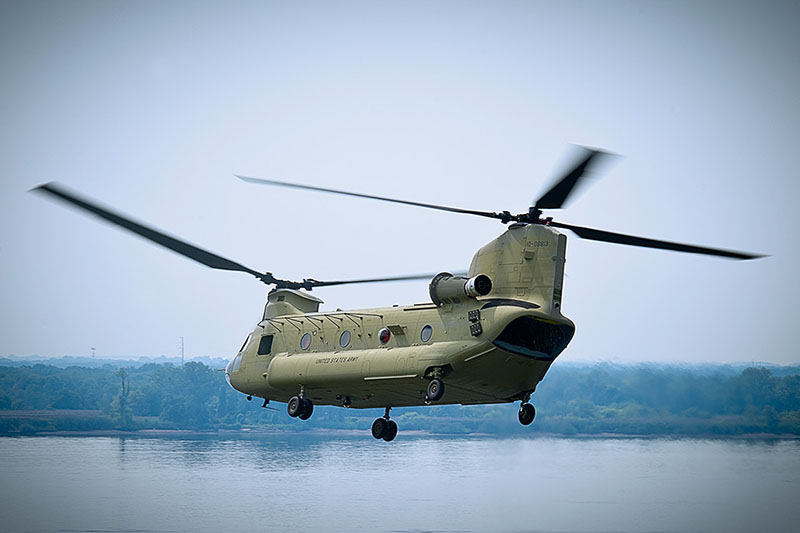
The CH-47F Chinook remains a mainstay for heavy lift missions around the world. Its tandem-rotor configuration provides balance, cargo flexibility, and strong high-altitude performance.
The Chinook supports cargo transport, troop movement, search and rescue, casualty evacuation, special operations, and disaster relief. Its rear ramp also allows vehicles and equipment to move directly into the cabin.
The CH-47F continues to receive updates to its avionics, flight controls, drivetrain, fuel system, and airframe. Newer Block II configurations are designed to improve lift capability and mission range.
- Maximum external load: Configuration and mission-dependent
- Maximum gross weight: Variant-dependent
- Typical applications: Military cargo, vehicles, equipment, disaster relief, and logistics
- Years in service: The Chinook family has operated since the 1960s
- Interesting fact: The aircraft’s tandem rotors eliminate the need for a conventional tail rotor.
The CH-47F is a military platform. Commercial projects typically use the Boeing 234 or another civilian aircraft rather than a military CH-47F.
5. Kamov Ka-32
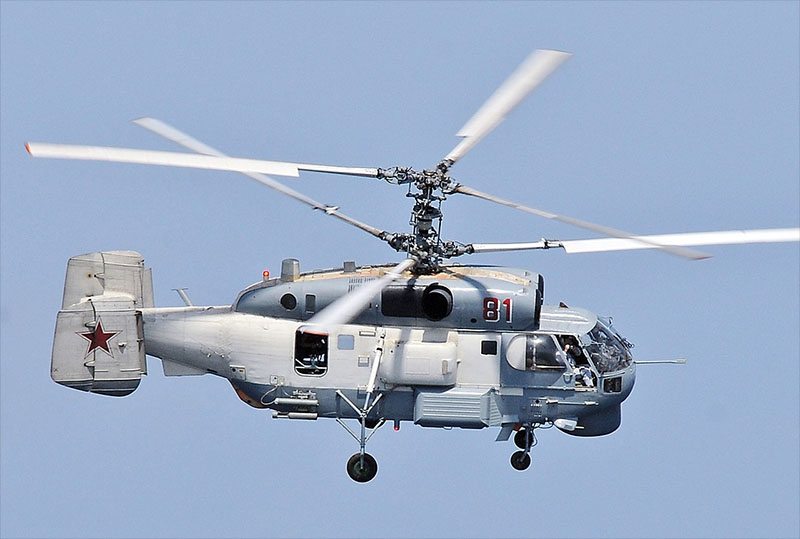
Kamov Ka-32
The Kamov Ka-32 uses a distinctive coaxial rotor system. Two counter-rotating main rotors eliminate the need for a tail rotor and provide a compact operating footprint.
The Ka-32 has been used for firefighting, logging, external cargo, construction, ship support, and search and rescue. Its rotor configuration supports stable hovering and maneuverability in urban, mountain, and confined environments.
The Ka-32A11BC can carry up to 5,000 kilograms on an external sling.
- Maximum external sling load: 11,023 lb or 5,000 kg
- Maximum takeoff weight: Configuration-dependent
- Typical applications: Firefighting, construction, logging, rescue, and ship support
- Years in service: The Ka-32 family entered service during the 1980s
- Interesting fact: The absence of a tail rotor gives the Ka-32 a shorter overall operating footprint than many conventional helicopters.
6. Sikorsky S-64 Skycrane

Sikorsky S-64 Skycrane
The S-64 Skycrane is built specifically for heavy external lifting. Its narrow fuselage and open space beneath the airframe allow large loads to be suspended directly below the aircraft.
This design has made the S-64 a leading choice for construction, firefighting, utility work, pipeline support, logging, and industrial equipment placement. An aft-facing control station gives the flight crew a direct view of the load during precision operations.
There are two primary commercial variants. The S-64E has a published maximum external cargo capacity of 20,000 pounds. The more powerful S-64F has a published maximum hook weight of 25,000 pounds.
- S-64E maximum external cargo: 20,000 lb or 9,072 kg
- S-64F maximum hook weight: 25,000 lb or 11,340 kg
- S-64F maximum gross weight: 47,000 lb or 21,320 kg
- S-64F maximum cruise speed: 104 knots
- Typical applications: Construction, rooftop HVAC, utility work, pipeline support, logging, and firefighting
Proven on Complex Heavy Lift Projects
Fair Lifts has coordinated S-64 projects involving rooftop mechanical equipment, generators, pipeline materials, and large industrial components.
- McCormack Building, Boston: An S-64E placed a generator, enclosure, stack, and platform during a complex congested-area operation.
- Cooling tower installation: An S-64 was used to lift cooling towers and rooftop units instead of mobilizing a large ground crane.
- Michigan pipeline support: An S-64 transported riprap for erosion control along a remote pipeline corridor.
- Data center construction: The helicopter moved large loads that would otherwise have required a substantial ground crane setup.
- Washington, D.C. hospital: An S-64 supported precision rooftop placement within restricted and congested airspace.
- Las Vegas Strip air handling unit installation: An S-64E placed air handling equipment weighing up to 16,000 pounds during the transformation of the former Mirage property.
The S-64 combines substantial lifting capability with precise load control. This makes it one of the most relevant aircraft on the list for large commercial construction projects.
7. Mil Mi-6
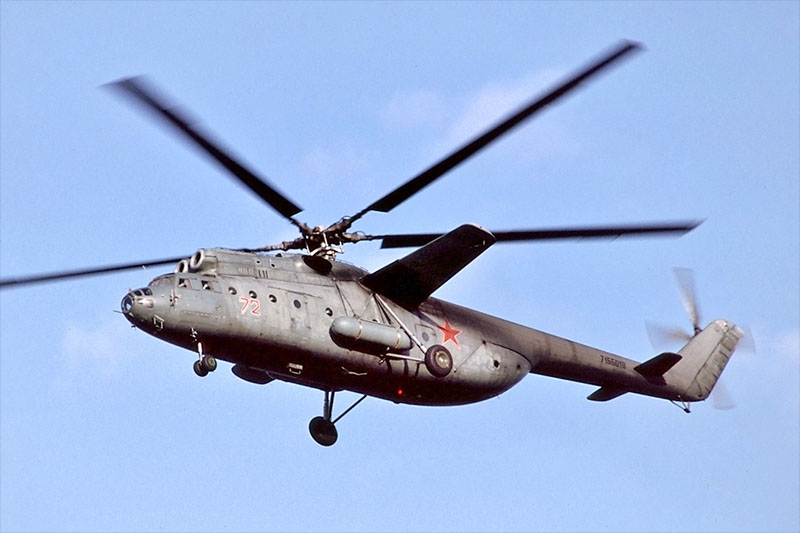
Mil Mi-6
The Mil Mi-6 was an important achievement in early heavy helicopter engineering. It held the title of the world’s largest production helicopter before the Mi-26 entered service.
The Mi-6 supported military, industrial, firefighting, construction, and rescue operations. It demonstrated that turbine-powered helicopters could move large cargo loads over substantial distances.
Some versions used short wings to help support the helicopter during forward flight. This reduced the aerodynamic load carried by the main rotor at higher speeds.
- Maximum payload: Approximately 26,455 lb or 12,000 kg
- Maximum takeoff weight: Approximately 92,594 lb or 42,000 kg
- Typical applications: Military transport, industrial cargo, construction, firefighting, and remote logistics
- Years in service: Entered service during the 1960s
- Interesting fact: The Mi-6 set multiple helicopter speed and payload records during its operating life.
The Mi-6 is now retired. Its inclusion reflects its historical significance rather than current project availability.
8. Airbus AS332 Super Puma

AS332 Super Puma
The AS332 Super Puma, developed by Airbus Helicopters, is a twin-engine utility platform used for offshore transport, search and rescue, government operations, firefighting, cargo transport, and external-load work.
The current Airbus H215 continues the Super Puma design family. Airbus promotes the H215 for utility, powerline, firefighting, and construction missions.
Super Puma capacity varies by model and configuration. The H215 has a published external sling capacity of 4,500 kilograms.
- H215 maximum external sling load: 9,921 lb or 4,500 kg
- Maximum takeoff weight: Model and configuration-dependent
- Typical applications: Offshore transport, utility work, firefighting, search and rescue, and construction
- Years in service: The AS332 family entered service during the early 1980s
- Interesting fact: The Super Puma family combines a large internal cabin with external-load capability and long-range performance.
Fair Lifts has coordinated projects using Super Puma-class aircraft when load weights, production requirements, or project scale exceeded the practical capacity of smaller utility helicopters.
9. Boeing Vertol 234 Chinook
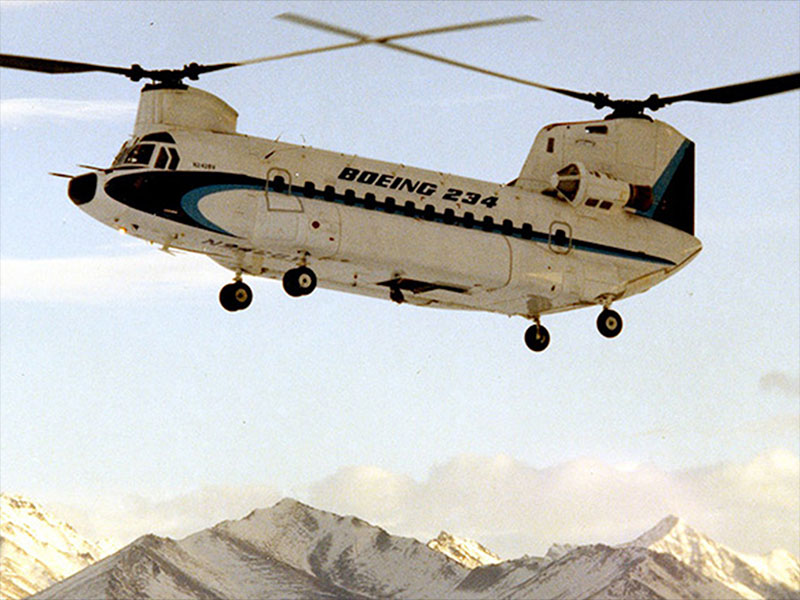
Boeing Vertol 234 Chinook
The Boeing Vertol 234 is the commercial version of the Chinook. It has supported logging, construction, oil and gas operations, firefighting, disaster relief, and remote cargo transportation.
Like the military Chinook, the Boeing 234 uses tandem rotors. This configuration provides stability and eliminates the need for a conventional tail rotor.
Published capacity varies by aircraft configuration, certification, hook system, and operating purpose. Some figures describe structural hook limits, while others represent recommended limits for precision lifting work.
- Maximum external load: Configuration-dependent
- Maximum gross weight: Configuration-dependent
- Typical applications: Logging, construction, firefighting, remote logistics, and industrial cargo
- Years in service: Commercial service began during the 1980s
- Interesting fact: The Boeing 234 combines commercial certification with the tandem-rotor design developed for the military Chinook family.
The commercial fleet is limited. Aircraft location, mobilization distance, certification, and scheduling can be as important as published capacity when evaluating a project.
10. Sikorsky S-92
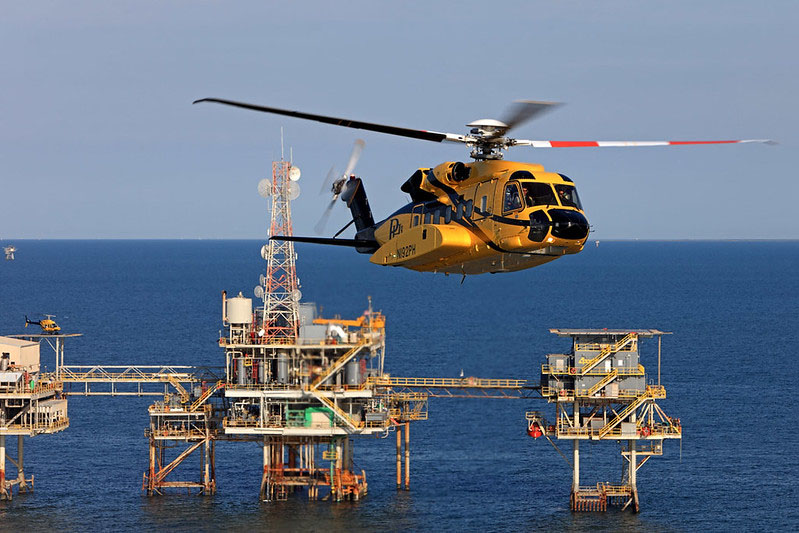
Sikorsky S-92
A prominent aircraft in offshore operations, the Sikorsky S-92 is known for its large cabin, modern avionics, all-weather capability, and twin-engine redundancy.
The aircraft supports offshore energy transportation, search and rescue, government transportation, firefighting, and utility missions. Its design emphasizes range, safety, cabin capacity, and operational reliability rather than maximum external lift alone.
Published Sikorsky technical information lists an 8,000-pound maximum cargo-hook load for a utility-configured S-92A. Actual external-load capability remains subject to configuration, certification, aircraft weight, fuel, and environmental conditions.
- Maximum cargo-hook load: 8,000 lb or 3,628 kg in published utility specifications
- Maximum takeoff weight with external load: 28,300 lb or 12,836 kg
- Typical applications: Offshore transport, search and rescue, government transportation, firefighting, and utility support
- Years in service: Entered commercial service during the 2000s
- Interesting fact: The S-92 can be configured with a full-width rear cargo ramp for internal cargo and utility missions.
The S-92 is better described as a medium-lift utility helicopter than a dedicated heavy aerial crane. Its inclusion shows why aircraft size, gross weight, cabin volume, and external lift capacity should be evaluated separately.
Heavy Lift Helicopter Capacity Comparison Chart
| Aircraft | External Lift Capacity or Published Payload | Maximum Gross or Takeoff Weight | Primary Uses | Commercial Relevance |
|---|---|---|---|---|
| Mil Mi-26 | 44,000 lb | Approximately 123,000 lb | Heavy cargo, machinery, military logistics, disaster response | Limited availability |
| Sikorsky CH-53K King Stallion | 36,000 lb external lift capability | Configuration-dependent | Military vehicles, cargo, and expeditionary logistics | Military aircraft |
| Mil Mi-10 | Approximately 24,000 to 26,000 lb, depending on variant | Variant-dependent | Historical construction and industrial transport | Retired or extremely limited |
| Boeing CH-47F Chinook | Mission and configuration-dependent | Variant-dependent | Military cargo, vehicles, equipment, and disaster relief | Military aircraft |
| Kamov Ka-32A11BC | 11,023 lb | Configuration-dependent | Firefighting, construction, logging, and rescue | Selected international markets |
| Sikorsky S-64E | 20,000 lb | Model-dependent | Construction, HVAC, utilities, and firefighting | Commercial aerial crane |
| Sikorsky S-64F | 25,000 lb | 47,000 lb | Construction, HVAC, utilities, and firefighting | Commercial aerial crane |
| Mil Mi-6 | Approximately 26,455 lb | Approximately 92,594 lb | Historical military and industrial cargo transport | Retired |
| Airbus H215 Super Puma | 9,921 lb | Configuration-dependent | Utility work, offshore support, construction, and rescue | Commercial and government platform |
| Boeing Vertol 234 Chinook | Configuration-dependent | Configuration-dependent | Logging, construction, firefighting, and remote cargo | Limited commercial fleet |
| Sikorsky S-92 | 8,000 lb published cargo-hook limit | 28,300 lb with external load | Offshore, rescue, utility, and firefighting support | Commercial utility platform |
Published capacities are not guaranteed project payloads. Exact performance depends on aircraft variant, configuration, certification, fuel, rigging, elevation, temperature, weather, and flight requirements.
Which Heavy Lift Helicopter Is Right for Your Project?
Bigger is not always better. The helicopter with the greatest published capacity may cost more to mobilize, require more fuel, need a larger staging area, and create additional logistical or regulatory requirements.
The right aircraft depends on several project-specific factors:
- Weight: The verified weight of each load, including rigging
- Volume: The dimensions, shape, balance, and aerodynamic characteristics of the load
- Elevation: The altitude of the pickup area, flight path, and placement point
- Temperature: Expected conditions during the proposed lift window
- Distance: The distance between staging, pickup, placement, and refueling areas
- Landing and staging areas: Available space for the aircraft, fuel, equipment, and ground crews
- Weather: Wind, visibility, ceiling, precipitation, and local conditions
- Airspace: Nearby airports, controlled airspace, flight restrictions, and coordination requirements
- Schedule: The number of picks and the time available to complete them
- Cost: Mobilization, flight time, fuel, support equipment, and standby exposure
A smaller helicopter may provide the most economical solution when equipment can be separated into lighter components. A larger aircraft may be more efficient when it reduces the number of lifts, avoids extensive disassembly, or replaces a costly crane setup.
The objective is not to select the largest helicopter. It is to identify the aircraft that can complete the work safely, efficiently, and economically under the actual site conditions.
The Future of Heavy Lift Helicopters

Artist rendering of a CH-53K King Stallion. Photo: Sikorsky, a Lockheed Martin company.
Heavy lift helicopters continue to play an important role in global logistics, construction, disaster response, firefighting, and defense operations. Proven platforms such as the Mi-26, Chinook family, Super Puma family, and S-64 Skycrane remain valuable because of their lifting power and adaptability.
Advancements in digital avionics, automated flight controls, drivetrain systems, and materials are extending the operating life of established fleets. These improvements can reduce pilot workload, improve situational awareness, and support more precise operations.
Development is also progressing in autonomous cargo flight, sustainable aviation fuel, hybrid propulsion, lightweight composite structures, and next-generation rotor technology. However, producing the power required for very heavy vertical lift remains a significant engineering challenge.
Current aircraft will therefore remain important while new technologies continue to develop.
Need Heavy Lift Helicopter Services?
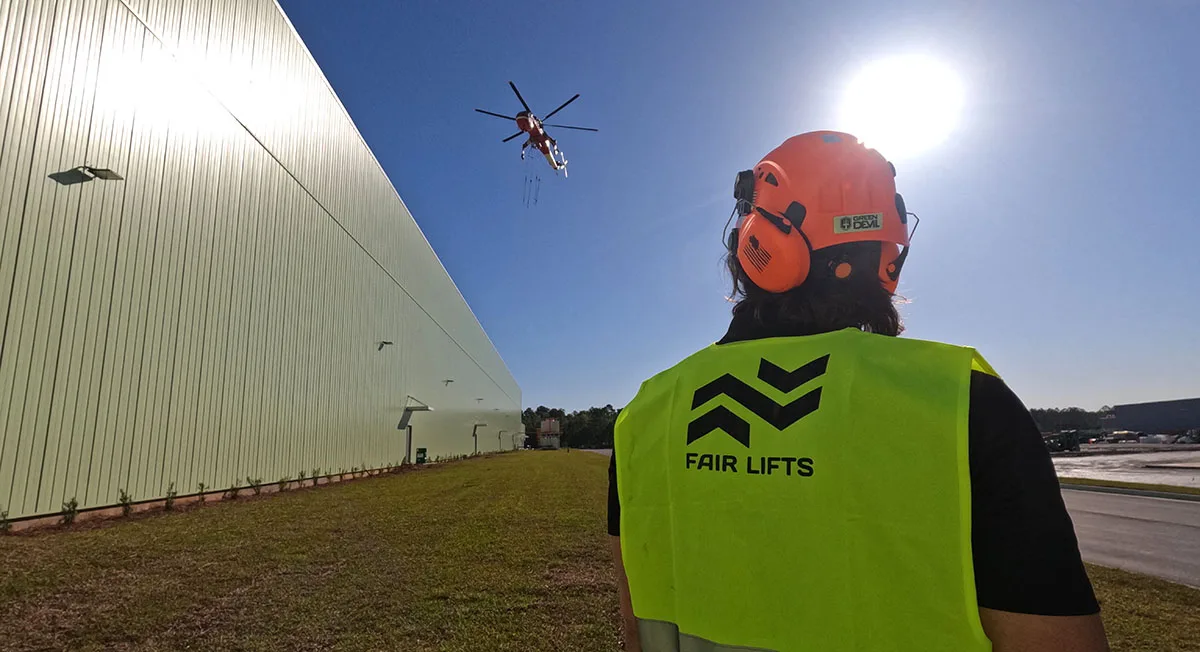
A Fair Lifts project manager monitors a Sikorsky S-64 Skycrane heavy lift operation on an active job site.
Aircraft capacity is only one part of a successful helicopter lift. Fair Lifts evaluates the load, site, elevation, schedule, airspace, staging requirements, environmental conditions, and available aircraft before recommending a lift strategy.
Depending on the project, the best solution may involve a light utility helicopter, medium-lift aircraft, Super Puma-class helicopter, Boeing 234, S-64 Air Crane, or another specialized platform.
Fair Lifts coordinates access through an established network, allowing the aircraft to be matched to the project rather than forcing the project around one aircraft.
Our team supports heavy lift helicopter projects involving rooftop HVAC equipment, generators, towers, utility infrastructure, industrial components, pipeline materials, and remote cargo.
Contact Fair Lifts or call 1-800-318-8940 to discuss your load weights, site conditions, schedule, and potential aircraft options.
Heavy Lift Helicopter Capacity FAQs
What is the most powerful heavy lift helicopter?
The Mil Mi-26 is generally recognized as the most capable production helicopter by payload. It can transport approximately 44,000 pounds or 20,000 kilograms internally or on an external sling under suitable conditions.
Which helicopter has the highest lifting capacity?
The Mil Mi-26 has one of the highest published payload capacities among production helicopters. Experimental aircraft have lifted heavier loads, but they were not produced for routine commercial or military service.
How much weight can a heavy lift helicopter carry?
A heavy lift helicopter may carry anywhere from several thousand pounds to more than 40,000 pounds. Commercial construction aircraft commonly support loads ranging from a few thousand pounds to approximately 25,000 pounds. Actual capacity must be calculated for the project conditions.
Can a helicopter lift 20,000 pounds?
Yes. Aircraft such as the S-64E, S-64F, Boeing 234, CH-53K, and Mi-26 have published capabilities at or above 20,000 pounds. However, not all of these aircraft are commercially available, and actual performance depends on the mission.
Can a helicopter lift 25,000 pounds?
Yes. Erickson publishes a maximum hook weight of 25,000 pounds for the S-64F Air Crane. Other large military and international aircraft also meet or exceed this capacity.
What industries use heavy lift helicopters?
Heavy lift helicopters support construction, utilities, tower installation, HVAC replacement, pipeline work, mining, logging, firefighting, disaster response, military logistics, offshore work, and remote cargo transport.
Does altitude reduce helicopter lifting capacity?
Yes. Higher altitude reduces air density and decreases rotor and engine performance. High temperatures can reduce available lift even further. This is why elevation and expected temperature must be included in aircraft performance calculations.
Does rigging count toward helicopter lifting capacity?
Yes. Long lines, hooks, shackles, slings, spreader bars, nets, and lifting frames are included in the total suspended load. Their combined weight reduces the capacity available for the project equipment.
Is the largest helicopter always the best choice?
No. Larger helicopters generally require more fuel, greater mobilization expense, larger staging areas, and additional support. A smaller helicopter may provide a safer and more economical solution when the load and site conditions allow it.