
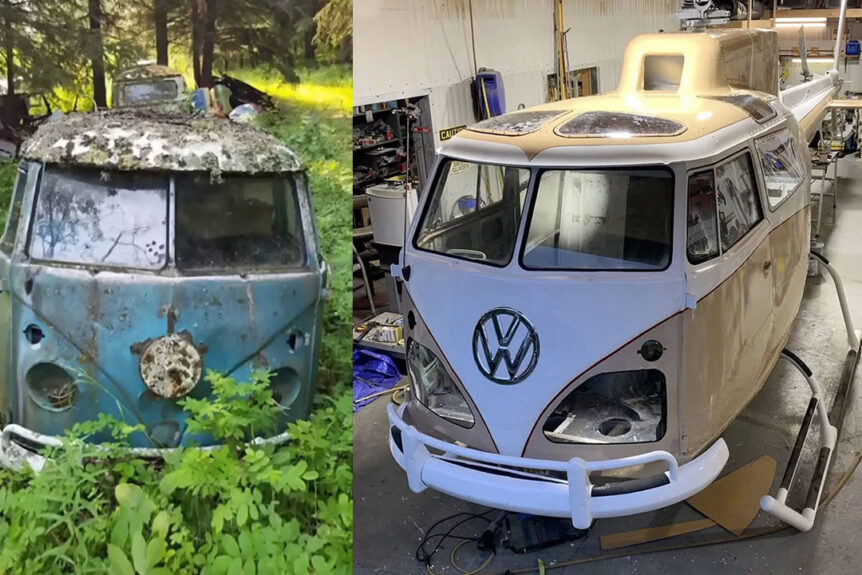
A remarkable VW helicopter conversion has captured the attention of automotive and aviation fans worldwide. This project highlights the result of Chuck Jurgen Teschke applying his 38 year career in aircraft maintenance to a creative backyard vision.
By merging a classic Volkswagen T1 Bus with components from an Airbus H125 helicopter, Teschke has created a spectacle that blurs the line between automotive nostalgia and aviation engineering.
A Backyard Vision Shaped by Decades of Aircraft Maintenance

Photo: Chuck Jurgen Teschke / Instagram
The project utilized modified blueprints of the Airbus H125 light utility helicopter, which Teschke adapted to fit a classic VW body. Based in Alberta, Canada, Teschke sourced a scrapped donor helicopter and a deteriorated split window T1. Their poor condition made them ideal for the project, as he could modify both frames freely without the need to preserve original configurations.
According to Teschke’s Instagram, this is the fourth entry in his “Frankencopter” series. His portfolio includes an agricultural tractor fused with helicopter parts, showing a consistent passion for transforming heavy machinery into conversation starting art pieces.
Adapting Helicopter Architecture to a Classic VW Body
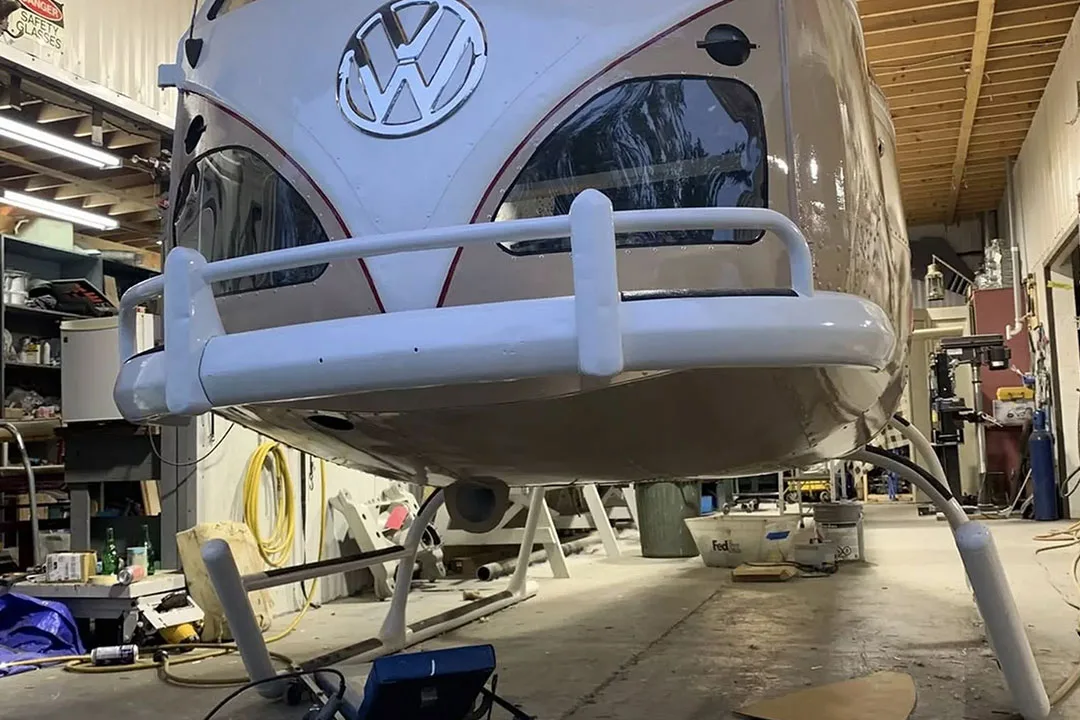
Photo: Chuck Jurgen Teschke / Instagram
This hybrid required extensive structural changes to both vehicles. Teschke overhauled the T1 bodywork to integrate it with the helicopter’s rear fuselage. Key modifications included enlarging the original headlight openings for visual impact and adding strategic roof windows to maintain the airy aesthetic of the original VW Bus.
Although the build required removing the iconic sliding doors, the cabin remains spacious. The front bumper was painted white to match the landing skids, creating visual continuity between the automotive and aviation elements.
Styling Decisions That Honor Two Mechanical Legacies
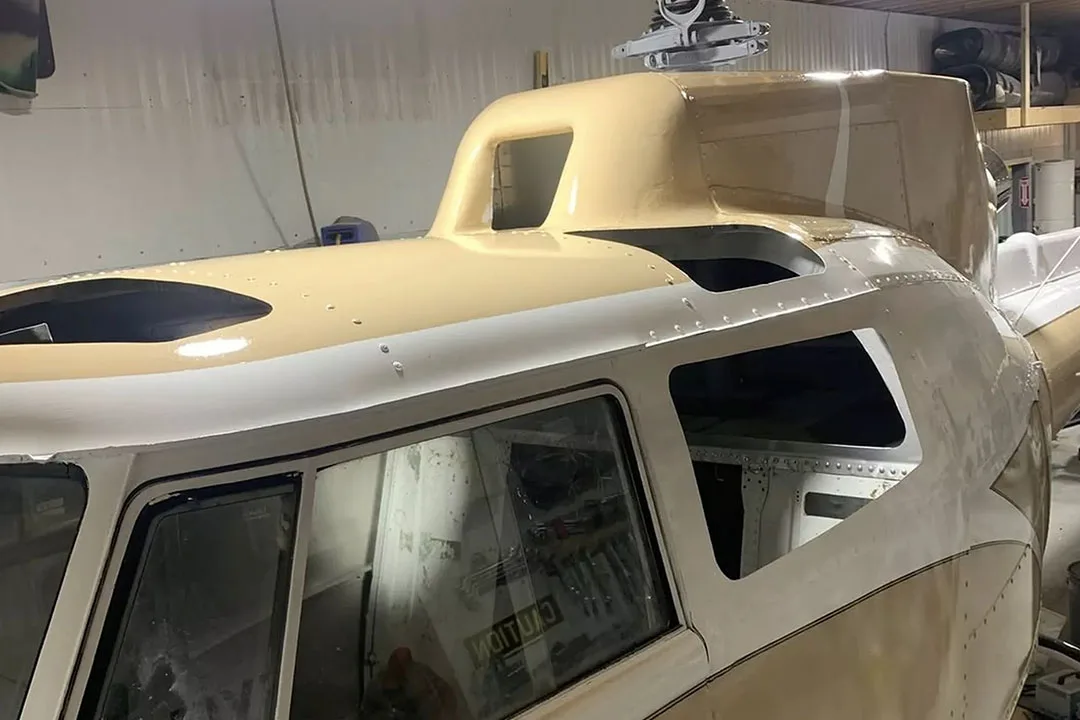
Photo: Chuck Jurgen Teschke / Instagram
The finished piece features a two tone paint scheme with red pinstripes, honoring vintage Volkswagen and helicopter liveries alike. By keeping the engine hump and vertical stabilizer fin, Teschke added authentic character that has led many online viewers to wonder if the vehicle is flight capable.
Genuine landing skids and unique roof windows further enhance the design, mimicking the look of observation helicopters used in tourism.
Where Creativity Stops and Physics Takes Over
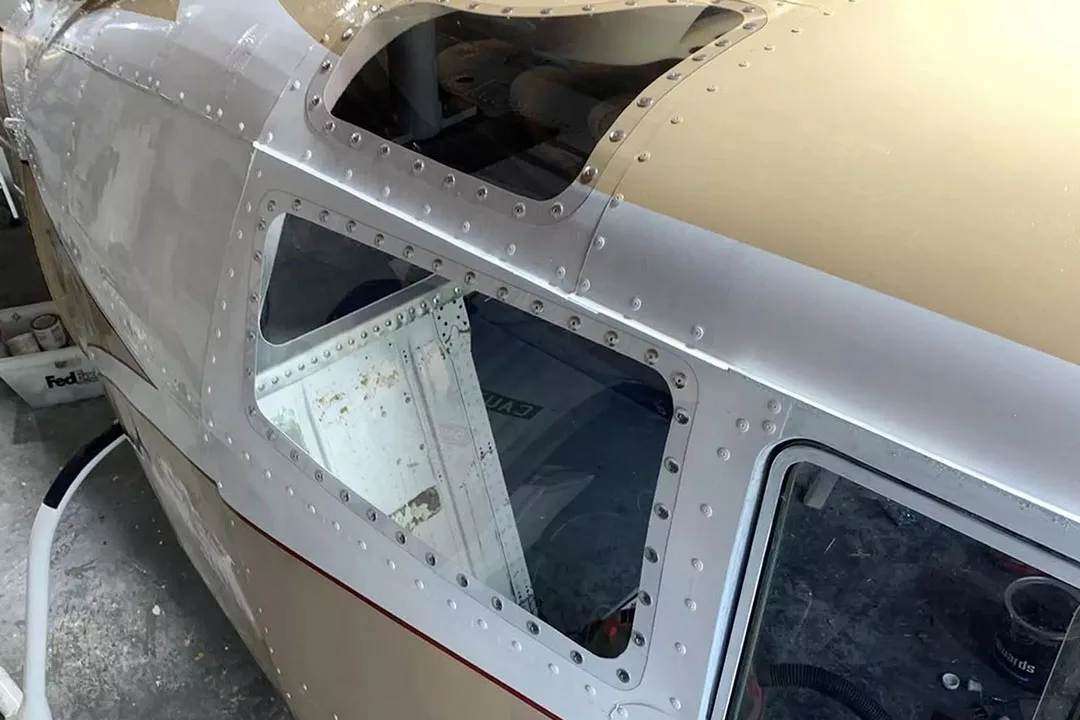
Photo: Chuck Jurgen Teschke / Instagram
Despite its authentic look, this “Frankencopter” is strictly a static display piece. It was never intended for flight. Stringent aviation safety regulations and the physics of rotary wing flight prevent such a vehicle from taking to the skies. The weight distribution of a steel automotive body is simply incompatible with safe flight operations.
Teschke often clarifies these limitations on social media. Obtaining airworthiness certification for a hybrid vehicle would require immense engineering documentation and testing far beyond the scope of this art project.
Bringing the Frankencopter Vision Fully to Life
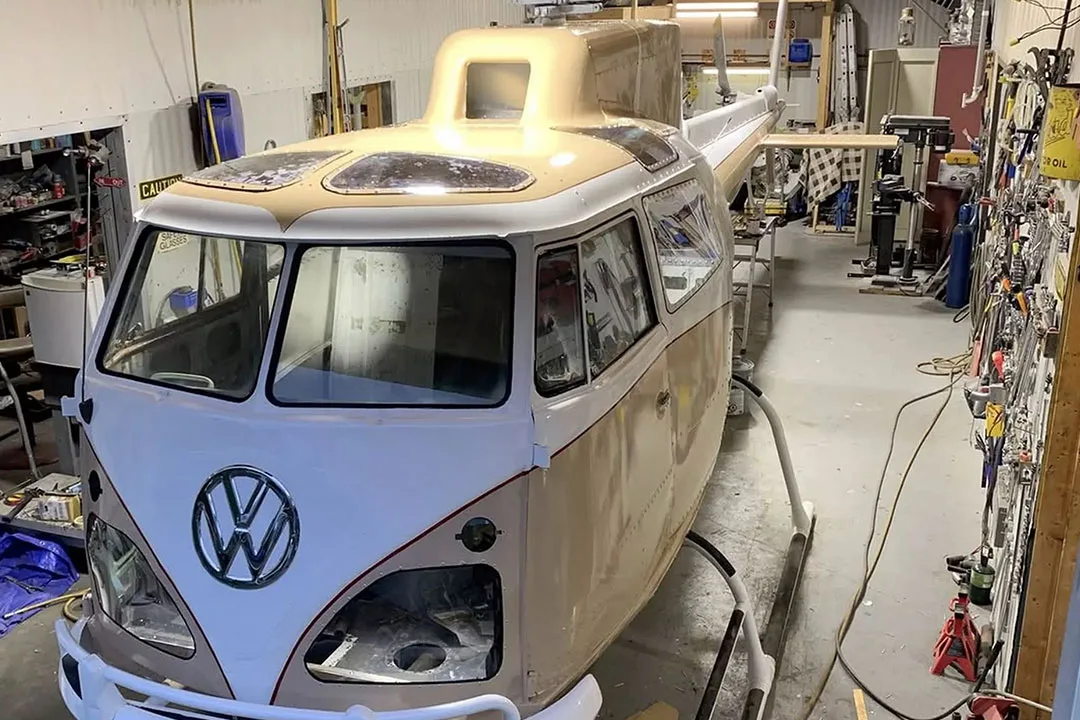
Photo: Chuck Jurgen Teschke / Instagram
Final assembly awaits the attachment of the main rotor blades, which will occur once the project is moved outdoors. This completion will solidify the “Frankencopter” as a unique work of functional art.
While it will never fly, Teschke’s creation successfully honors the heritage of both the road and the sky.
View this post on Instagram