
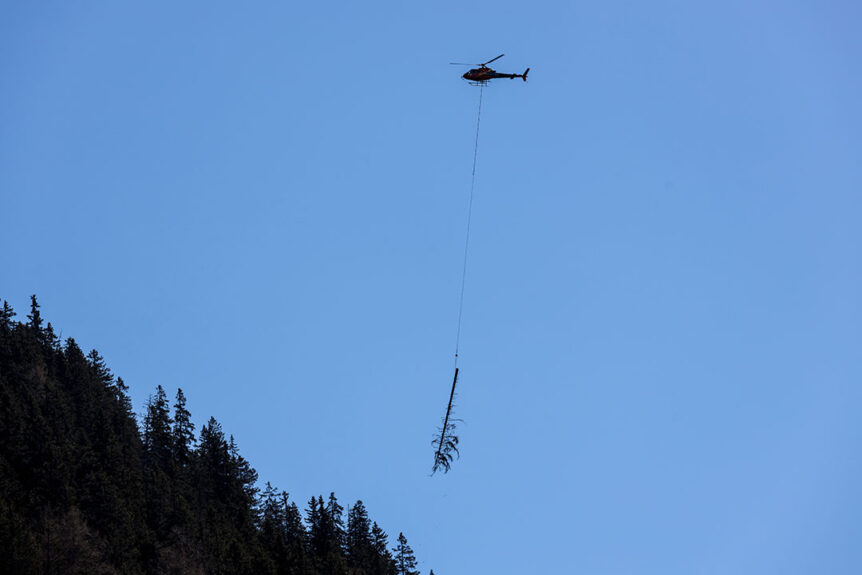
Helicopter tree removal operations at Chatfield State Park have been turning heads and raising noise concerns for months. The sight of helicopters making pass after pass over the reservoir, each one carrying away another dead or dying tree, has become a daily spectacle for nearby residents. Colorado Parks and Wildlife (CPW) is using this specialized aerial technique to clear thousands of hazardous trees from the water and shoreline
This type of helicopter tree removal isn’t just dramatic to watch. It’s a calculated approach that balances safety, efficiency, and environmental protection. The operation aims to make the water safer for boaters and paddlers while protecting critical dam infrastructure from floating debris.
How Chatfield’s Trees Became a Problem
The issue began with an extreme weather event in May 2023. Heavy rainfall caused the reservoir to rise nearly 10 feet in just eight days. Shoreline trees were suddenly submerged and exposed to prolonged underwater conditions. Cottonwoods and willows tolerate wet soils but cannot survive long-term inundation.
The reservoir remained at full pool far longer than normal. As a result, widespread tree mortality occurred along the shoreline. Dead trees began to rot, break apart, and destabilize. Floating logs and stump debris increased collision risks for boaters and paddlers. Woody debris also threatened dam outlets and water management systems.
What’s Actually Being Removed
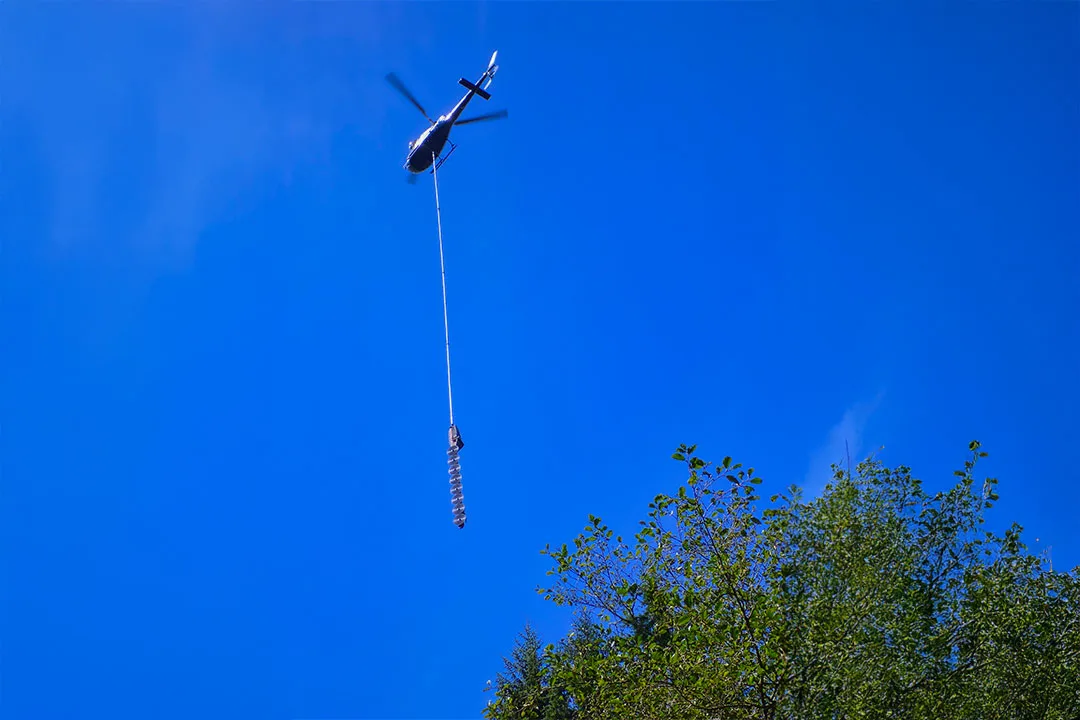
Forestry helicopter with spinning blade suspended saw
CPW has been quick to clarify that while thousands of trees are being cut down, that represents less than 1% of the total trees in Chatfield State Park. The targets are specifically dead or dying cottonwoods and willows that have become unstable due to flooding and decay.
That distinction matters because some of these tree stands had become popular features for paddlers who enjoyed navigating through the flooded forest. But CPW’s position is clear: leaving unstable trees in place increases the risk of collisions, equipment damage, and injuries as conditions continue to deteriorate.
Why Use Helicopters?
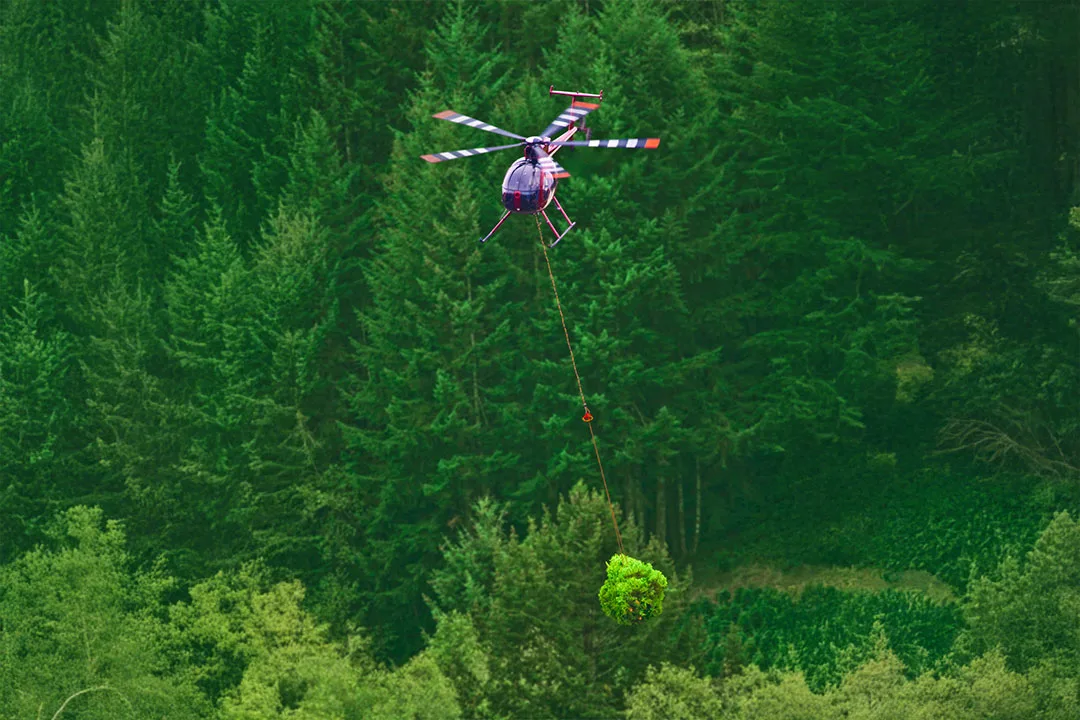
A helicopter removes Christmas trees from a tree farm.
Helicopter tree removal has become the method of choice for challenging extraction scenarios where traditional ground-based equipment simply won’t work. At Chatfield, the technique addresses a unique problem: how do you safely remove thousands of trees from waterlogged terrain and submerged zones without causing more environmental damage in the process?
The helicopters use specialized equipment that clamps onto a tree, cuts beneath it, and lifts the entire thing out of the water or saturated ground. Each aircraft can remove 20 to 30 trees per hour, which explains how crews have made such visible progress in a relatively short time.
The Advantages of Aerial Tree Removal
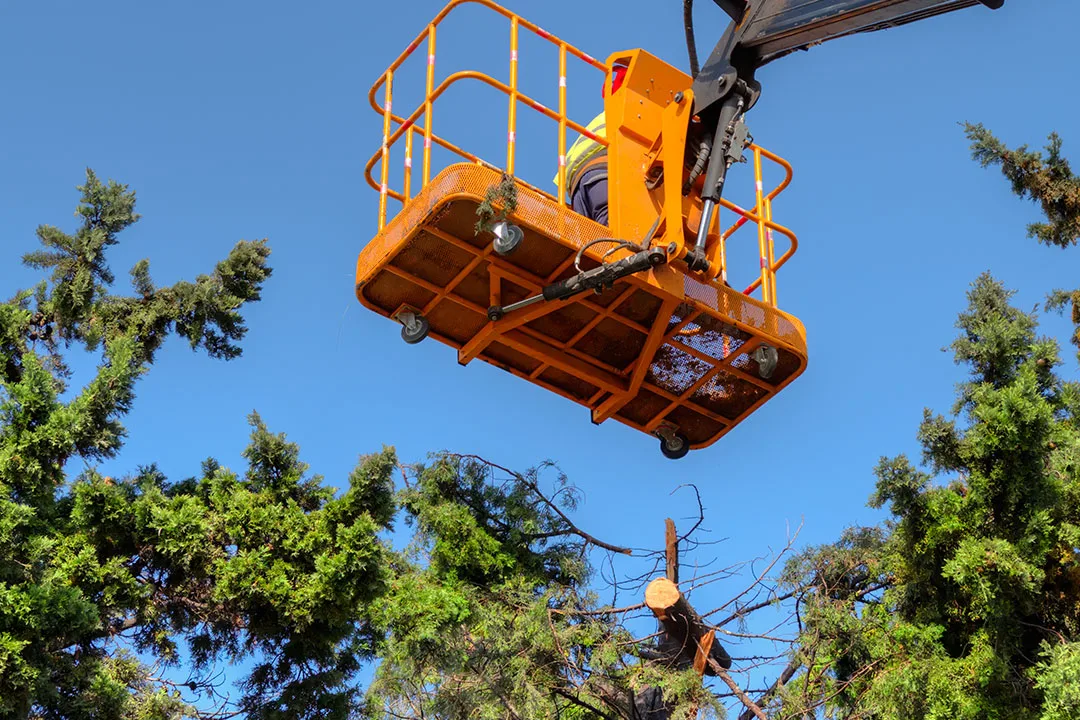
Worker cuts branches on tree with a special, motorized chainsaw on a long crane pole.
The alternative of bringing in heavy machinery would cause extensive ground disturbance, create deep ruts, damage remaining vegetation, and increase erosion, especially during winter conditions. Helicopter tree removal provides low-impact access to areas that would otherwise require temporary roads or equipment staging, which could do lasting harm to sensitive shoreline ecosystems.
This aerial approach has proven particularly effective for reservoir and wetland environments where:
- Ground access is limited or impossible due to water, mud, or protected habitat areas
- Speed matters because narrow seasonal work windows require rapid completion
- Minimizing soil disturbance is critical to prevent erosion and habitat degradation
- Precision extraction is needed to remove specific hazardous trees while leaving healthy ones intact
How Helicopter Tree Removal Works in Practice
The process at Chatfield demonstrates the efficiency of helicopter tree removal operations. Crews identify target trees, the helicopter hovers into position with its specialized cutting and lifting attachment, secures the tree, makes the cut, and transports it to a nearby staging area. All of this happens in a matter of minutes per tree. The removed trees are then processed on-site, with wood chips sold to nurseries and larger pieces repurposed for habitat restoration projects.
Key benefits of helicopter tree removal:
- Improves boater and paddler safety by removing submerged collision hazards
- Protects dam outlet operations by preventing debris buildup
- Dramatically reduces environmental disturbance compared to heavy equipment
- Accelerates project timelines during narrow seasonal work windows
- Provides access to terrain that’s otherwise unreachable by conventional means
The Infrastructure Risk
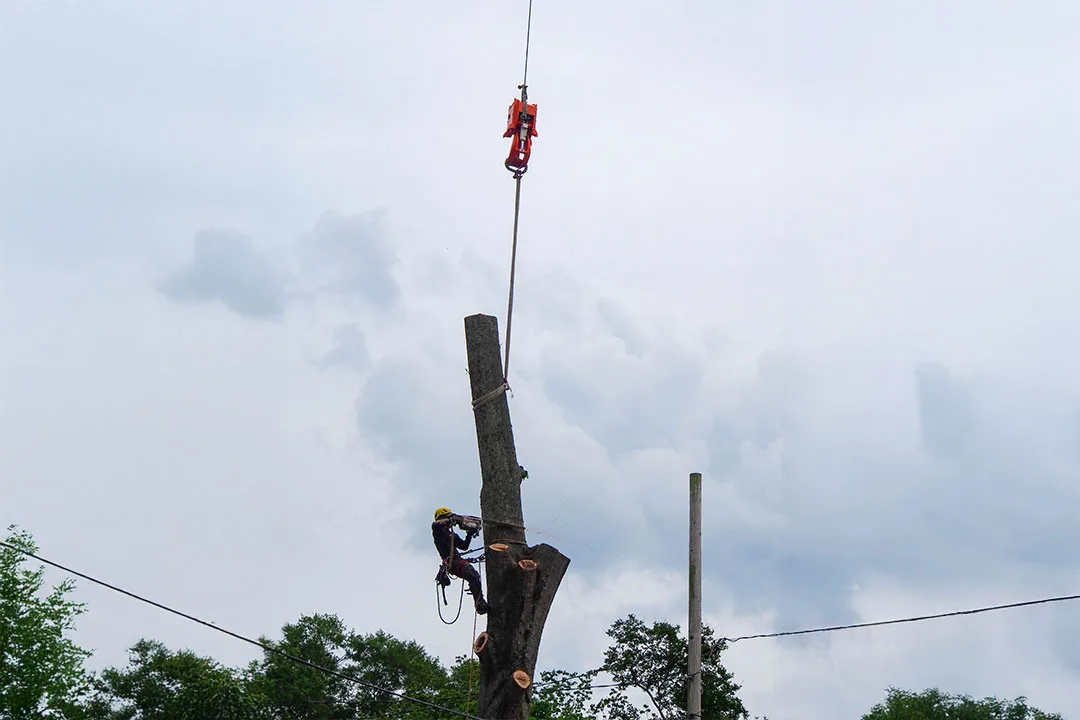
A worker cuts a tree with aerial assistance from a helicopter.
Beyond recreational safety, there’s a genuine concern about dam operations. Dead trees break apart into floating logs, stump fragments, and branches that can drift into high-traffic areas or move toward critical infrastructure. CPW has warned that unmanaged debris can disrupt water management systems and clog outlet works.
What Happens to the Trees
The removed trees don’t go to waste. After extraction, they’re brought to processing areas where they’re chipped and prepared for reuse. The wood chips are sold to nurseries and landscaping companies for use as mulch or soil amendment. Some larger pieces are repurposed for habitat improvements and stream stabilization projects within the watershed.
A Response to Changing Conditions
The Chatfield operation demonstrates how helicopter tree removal has become an essential tool for modern land and water management. As Colorado reservoirs face more frequent swings in precipitation, runoff, and operational demands, traditional methods often fall short when rapid response and minimal environmental impact are both required.
This approach offers a real-world example of how land and water managers are adapting to balance recreation safety, dam reliability, and habitat stewardship at one of the Front Range’s busiest outdoor destinations. The success at Chatfield could inform similar helicopter tree removal projects at other reservoirs and waterways facing comparable challenges.
The Future of Helicopter Tree Removal
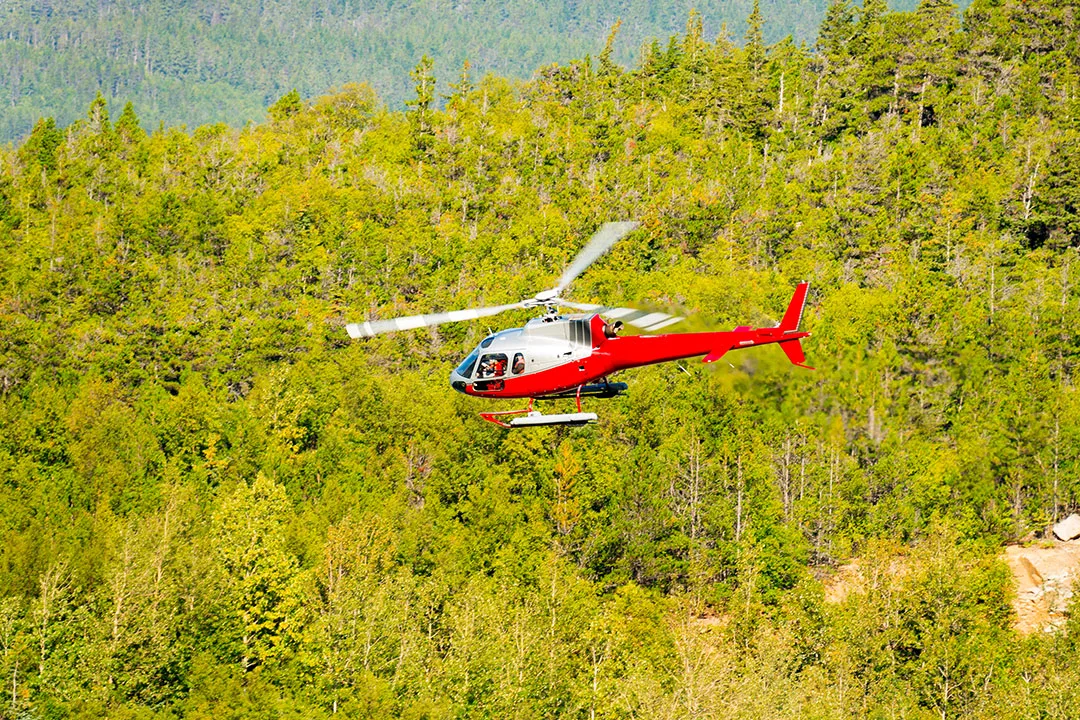
Contact Fair Lifts for your helicopter tree removal project.
As water levels become more unpredictable across the West, helicopter tree removal is emerging as a critical tool for managing shoreline hazards, protecting infrastructure, and reducing environmental impact. Projects like the one at Chatfield show how aerial removal can solve problems that ground-based methods cannot.
For agencies and land managers facing similar conditions, working with a proven helicopter tree removal provider is critical. Fair Lifts delivers specialized aerial tree removal services for reservoirs, wetlands, and difficult terrain where ground-based methods fall short. Contact Fair Lifts today to discuss your project requirements and deployment timelines.