
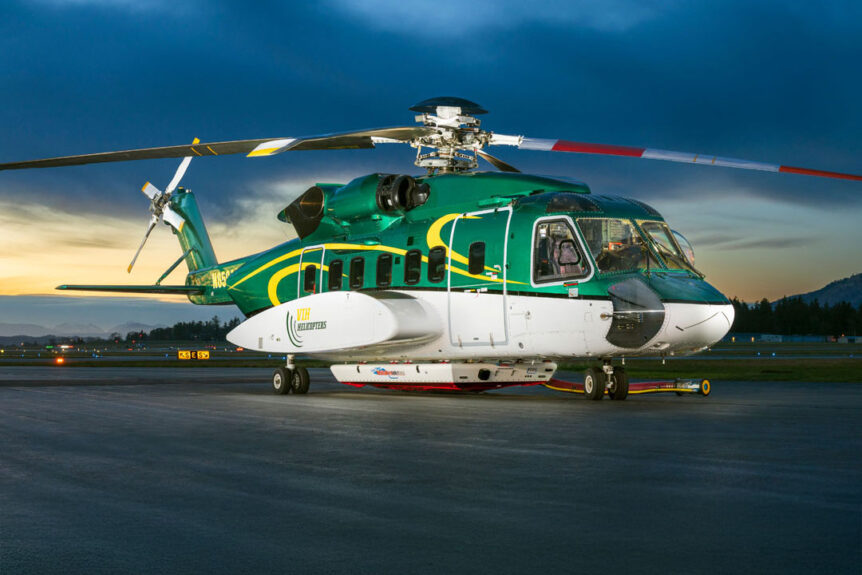
The Sikorsky S-92 is a medium-class, twin-engine helicopter designed for passenger transport and long-range operations, particularly in offshore and maritime environments. First certified in the early 2000s, the S-92 has been widely adopted for missions requiring a combination of cabin capacity, range, and redundancy.
This profile presents a detailed, specification-focused overview of the Sikorsky S-92, describing the aircraft’s design characteristics, performance limits, and operational envelope in clear terms for non-pilots.
Aircraft classification and design overview
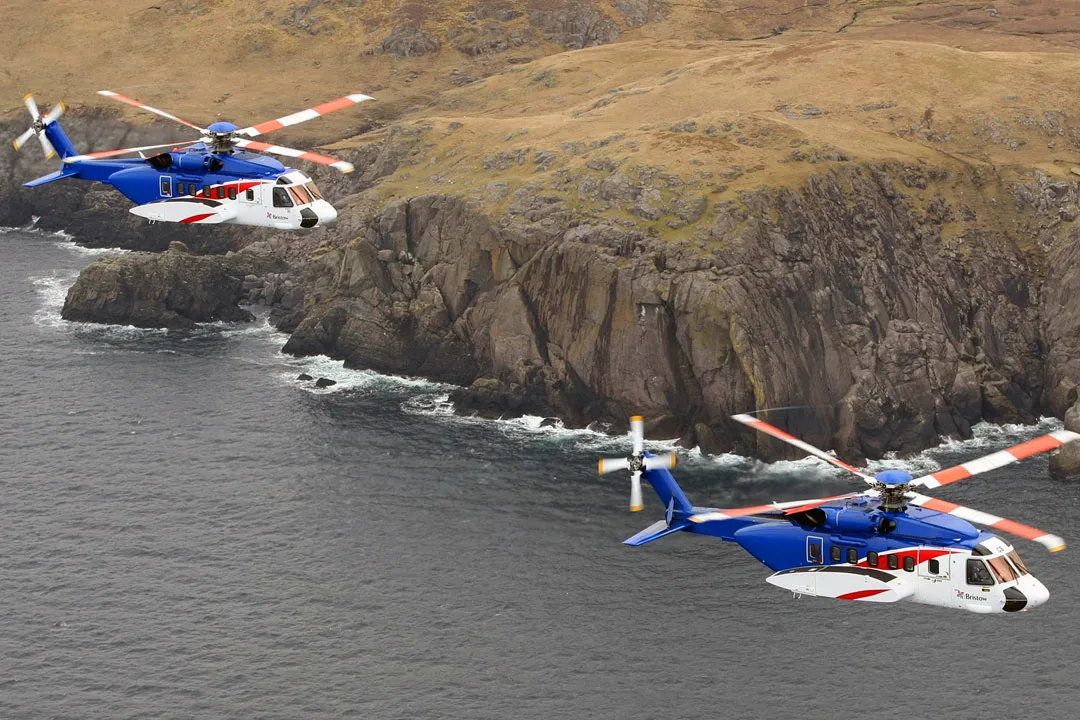
Two S-92’s fly in formation. | Photo: lockheedmartin.com
The Sikorsky S-92 falls within the medium helicopter category and is certified under transport-category rotorcraft standards. Its design emphasizes twin-engine redundancy, crashworthy structure, and systems suitable for extended overwater flight. The helicopter features a conventional single main rotor with a tail rotor, a retractable landing gear, and a large cabin designed to accommodate high passenger counts relative to its class.
The S-92 was developed with a focus on offshore transport and search and rescue applications, which influenced its structural margins, fuel capacity options, and system redundancy. These design priorities place the aircraft between lighter twin-engine helicopters used for short-range transport and larger heavy helicopters intended for maximum lift capability.
Cabin dimensions and passenger capacity
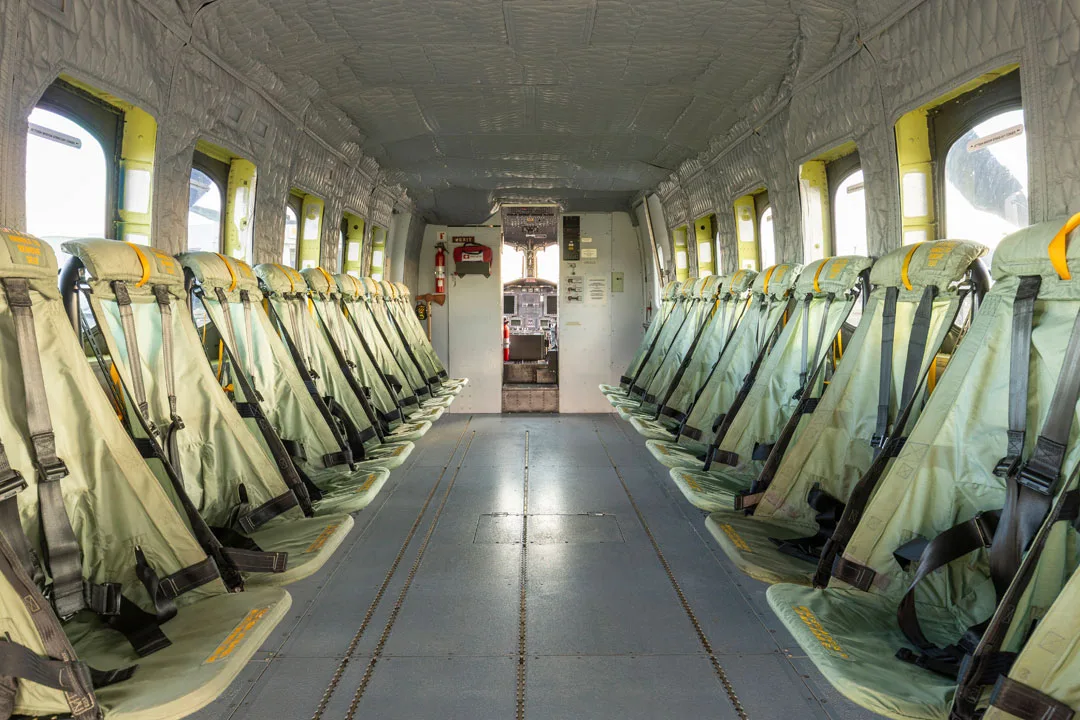
The S-92 features a large stand-up cabin with crashworthy, energy absorbing seating, full-width hydraulically-operated rear ramp, and high-load capacity floors. | Photo: lockheedmartin.com
A defining feature of the S-92 is its stand-up passenger cabin. In a standard transport configuration, the aircraft is certificated to carry two pilots and up to 19 passengers. The cabin height is approximately 6 feet (1.83 meters), allowing most occupants to stand upright inside the cabin.
Cabin volume is approximately 700 cubic feet (19.8 cubic meters), providing space for seating, personal equipment, and mission-specific gear. In addition to the main cabin, the S-92 includes a dedicated baggage compartment with a volume of approximately 140 cubic feet (4.0 cubic meters) and a certificated baggage weight limit of 1,000 pounds (454 kilograms).
Cabin layout, seating configuration, and installed equipment vary by aircraft, but the underlying cabin dimensions and volume are fixed characteristics of the S-92 airframe. These parameters directly influence passenger capacity, baggage carriage, and center-of-gravity management across different mission profiles.
Weights and load limits
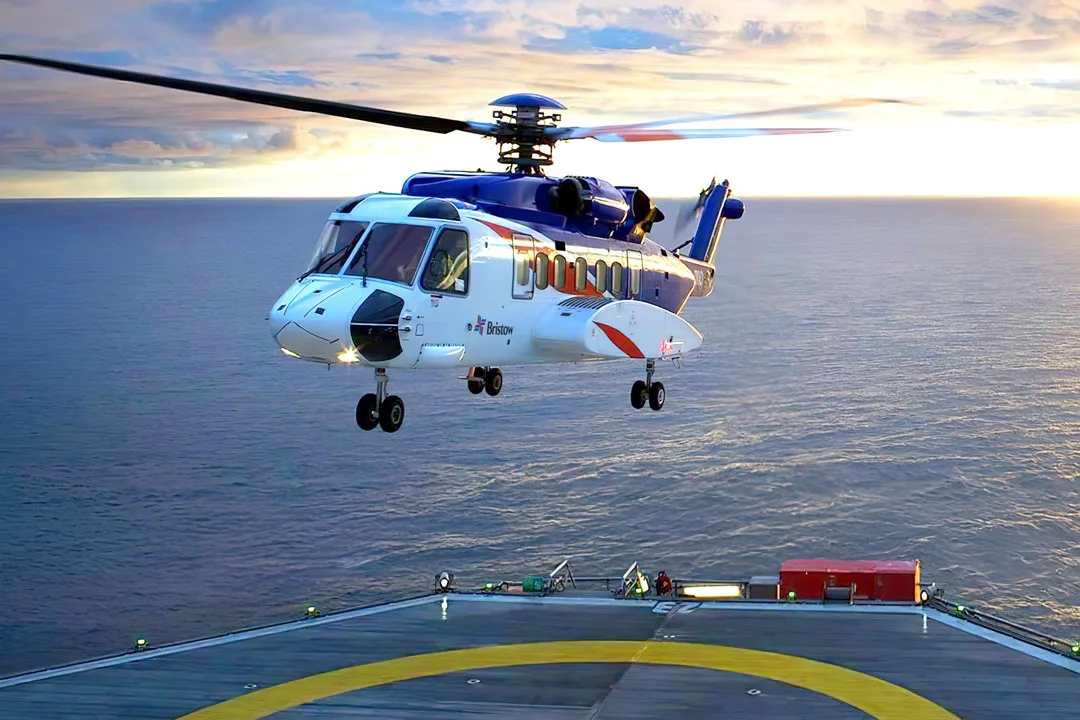
Designed for all weather operations, day and night, the S-92 helicopter offers full capability for the most demanding missions. | Photo: lockheedmartin.com
The Sikorsky S-92 has a maximum takeoff weight of 27,700 pounds (12,564 kilograms) when operating with an internal load. The base aircraft empty weight is approximately 15,662 pounds (7,104 kilograms), resulting in a useful load of about 12,038 pounds (5,460 kilograms) in a standard internal-load configuration.
When configured for external load operations, the maximum takeoff weight increases to 28,300 pounds (12,836 kilograms), with a maximum cargo hook load of 8,000 pounds (3,628 kilograms).
Engines and propulsion system
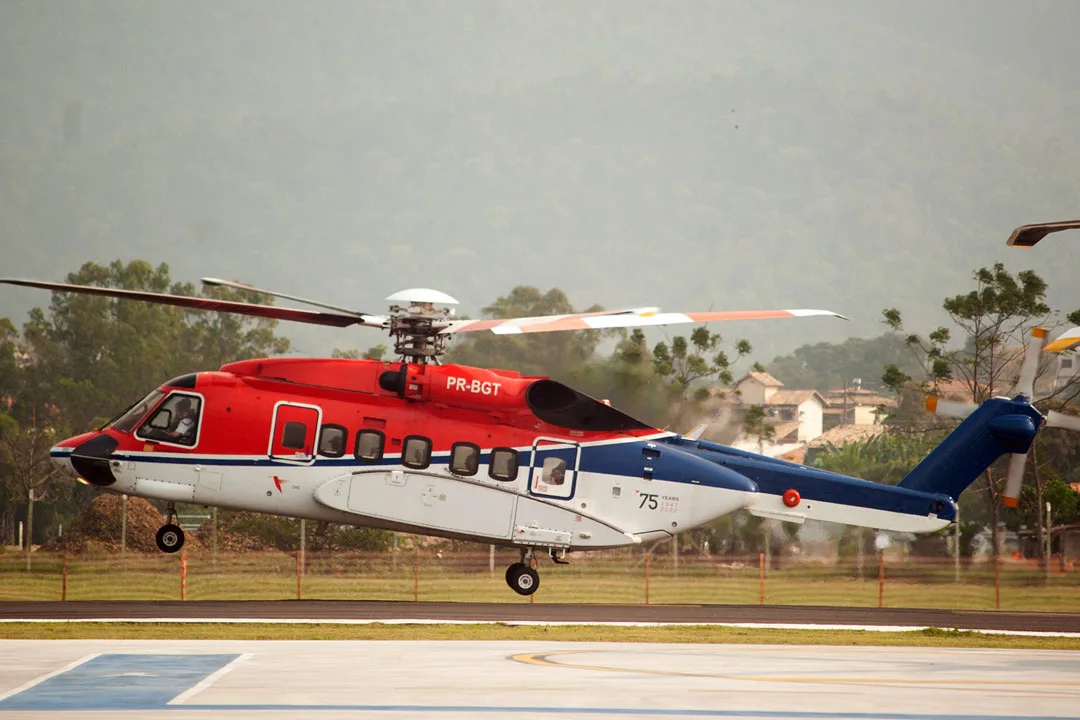
The S-92 helicopter combines proven performance, safety, availability, and comfort. | Photo: lockheedmartin.com
The Sikorsky S-92 is powered by two General Electric CT7-8A6 turboshaft engines. The CT7 family is widely used across multiple helicopter platforms and is known for its modular design and broad global support network.
For the S-92 installation, engine power is defined across multiple operating conditions, including dual-engine takeoff, maximum continuous operation, and one-engine-inoperative (OEI) scenarios with 30-second and 2-minute limitations. Under sea level, International Standard Atmosphere (ISA) conditions, dual-engine takeoff power is approximately 2,695 shaft horsepower (2,010 kilowatts) per engine, while maximum continuous power is approximately 2,329 shaft horsepower (1,737 kilowatts).
One-engine-inoperative (OEI) power capability supports continued controlled flight following the loss of one engine, subject to defined time and power limits. These limits form part of the S-92’s approved performance envelope and are specific to the helicopter installation rather than the standalone engine.
Fuel system and range capability
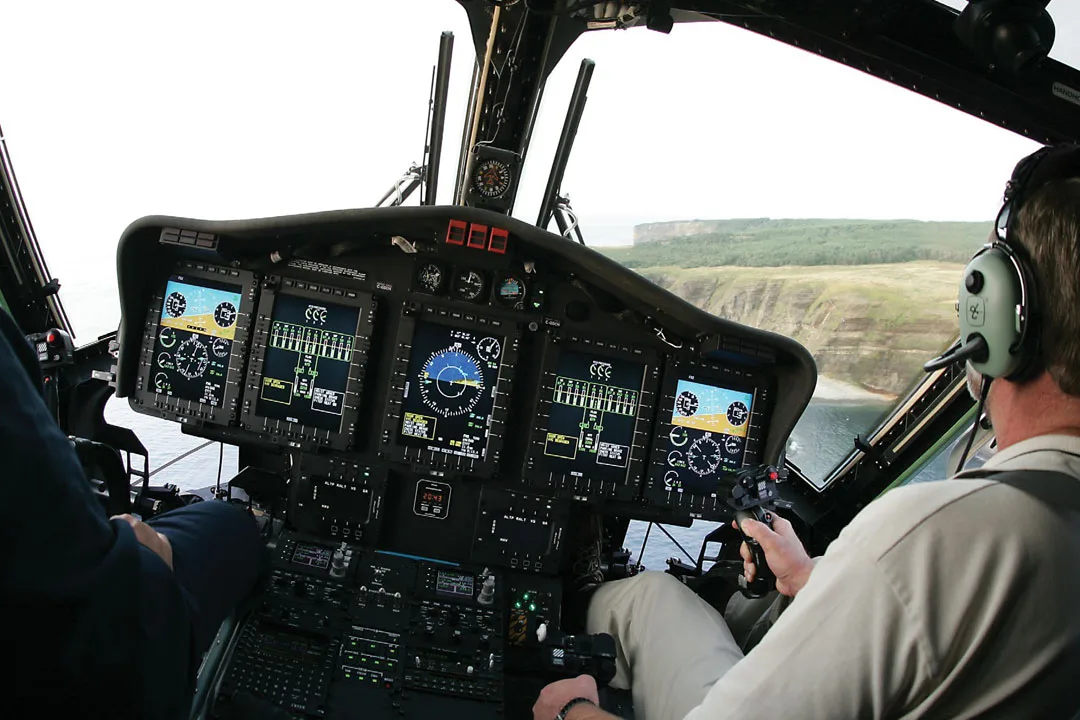
Enhanced cockpit with latest weather radar. | Photo: lockheedmartin.com
The S-92 operates on standard turbine aviation fuels, including Jet A and Jet A-1, and is compatible with fuel blends containing up to 50 percent sustainable aviation fuel.
Internal fuel is carried in sponson-mounted tanks with a total capacity of approximately 760 U.S. gallons (2,877 liters). Removable auxiliary fuel tanks may be installed, each with a capacity of approximately 210 U.S. gallons (795 liters), increasing total fuel capacity for extended-range operations.
With main fuel and no reserve, maximum still-air range is approximately 547 nautical miles (1,013 kilometers) under sea level, International Standard Atmosphere (ISA), and maximum takeoff weight conditions. Endurance under the same assumptions is approximately 5.2 hours, with an average fuel flow of about 1,270 pounds per hour (576 kilograms per hour). Range and endurance values vary with aircraft weight, altitude, temperature, and fuel reserve assumptions.
Performance and operating limits
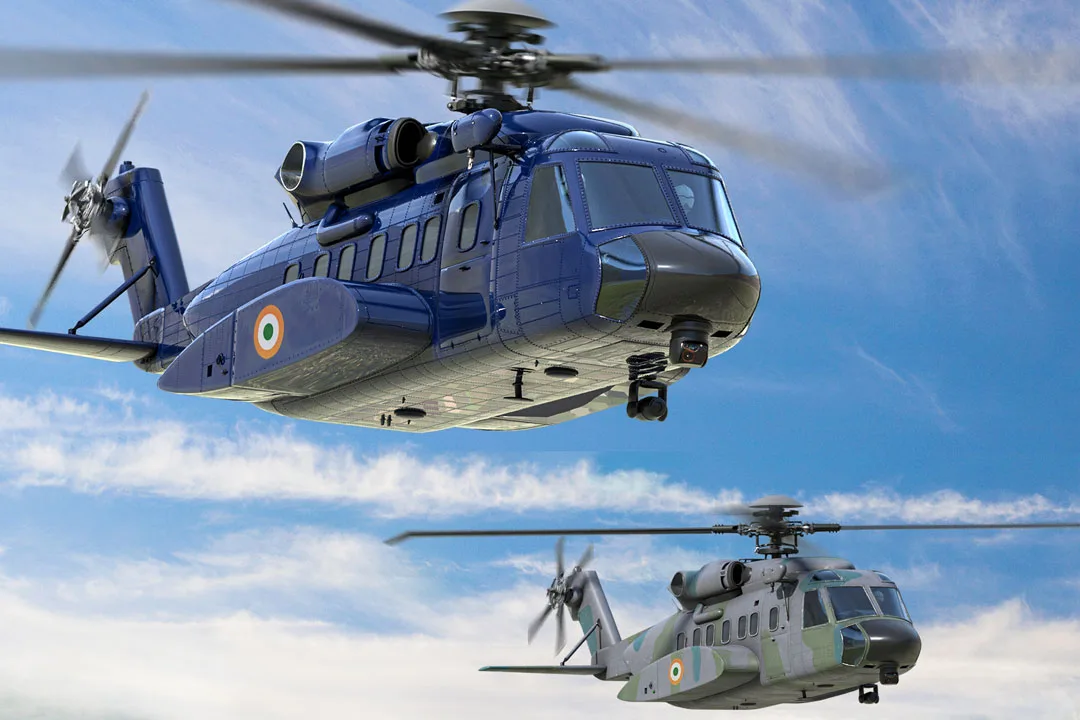
The S-92 multi-mission helicopter has become the most sought after aircraft in its weight class. | Photo: lockheedmartin.com
The Sikorsky S-92 has a never-exceed speed (VNE) of approximately 165 knots. Maximum cruise speed is approximately 151 knots, with a long-range cruise speed of approximately 136 knots, depending on configuration and operating conditions.
The operating temperature range extends from approximately −40 degrees Celsius up to ISA +35 degrees Celsius. Additional operating parameters include a maximum wind speed of 55 knots for rotor start, capability for flight in icing conditions with a rotor ice protection system installed, and flotation capability to Sea State 6 when equipped with emergency flotation systems.
S-92 Specifications At a Glance
Passenger Transport |
||
|---|---|---|
| Maximum Seats | 2 pilots + 19 passengers | |
| Cabin Height | 6 ft 0 in | 1.83 m |
| Cabin Volume | 700 ft³ | 19.82 m³ |
| Baggage Volume | 140 ft³ | 4.0 m³ |
| Baggage Area Weight Limit | 1,000 lb | 454 kg |
Weights |
||
| Maximum Takeoff Weight (Internal Load) | 27,700 lb | 12,564 kg |
| Base Aircraft Empty Weight | 15,662 lb | 7,104 kg |
| Useful Load (Base Config, Internal) | 12,038 lb | 5,460 kg |
| Maximum Takeoff Weight (External Load) | 28,300 lb | 12,836 kg |
| Maximum Cargo Hook Load | 8,000 lb | 3,628 kg |
Fuel |
||
| Standard Fuel Types | Jet A, Jet A-1, Jet B, No. 3 Jet Fuel | |
| Sustainable Aviation Fuel | <50% | |
| Internal Fuel (Sponsons) | 760 gal | 2,877 L |
| Auxiliary Fuel Tanks (Removable) | 2 × 210 gal | 2 × 795 L |
Powerplant |
||
| Engines | (2) General Electric CT7-8A6 | |
| Uninstalled, sea level, ISA, 105% Nr unless noted | ||
| Dual Engine Takeoff Power (5 min) | 2,695 shp | 2,010 kW |
| Dual Engine 30-Minute Power | 2,637 shp | 1,966 kW |
| Maximum Continuous Power (MCP) | 2,329 shp | 1,737 kW |
| OEI 30-Second Power | 2,845 shp | 2,122 kW |
| OEI 2-Minute Power | 2,684 shp | 2,001 kW |
| OEI Continuous Power | 2,637 shp | 1,966 kW |
Performance |
||
Speed |
||
| VNE | 165 kts | |
| Maximum Cruise Speed | 151 kts | |
| Long Range Cruise Speed (VLRC) | 136 kts | |
Range & Endurance |
||
| Range (Main Fuel, No Reserve) | 547 nm | 1,013 km |
| Average Fuel Flow | 1,270 lb/hr | 576 kg/hr |
| Endurance (No Reserve) | 5.21 hr | |
| * Sea Level, ISA, MTOW | ||
Operating Limits |
||
| Temperature Range | -40 °C to ISA +35 | |
| Max Wind Speed for Rotor Start | 55 kts | |
| Icing | RIPS Certified | |
| Flotation | Sea State 6, Floats Certified | |
| Cabin Door Height | 6 ft 2 in | 1.9 m |
Putting the S-92 in Context
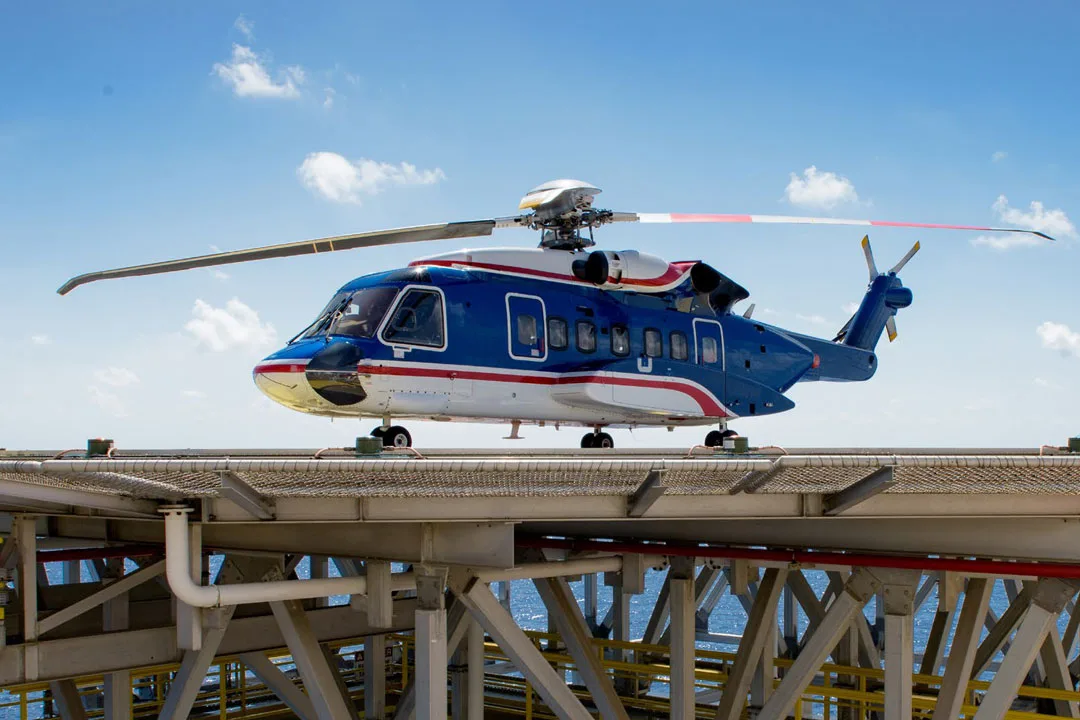
The S-92 helicopter is the aircraft of choice for demanding Offshore Crew Transport, Search and Rescue (SAR) and Utility missions | Photo: lockheedmartin.com
The Sikorsky S-92 occupies a defined position within the medium helicopter class, combining a high-capacity stand-up cabin with twin-engine redundancy, substantial fuel capacity, and performance characteristics suited to long-range and offshore operations. Its dimensions, weights, propulsion characteristics, and operating limits reflect a design optimized for transport missions where range, payload, and environmental capability are central considerations.
Taken together, the specifications outlined above provide a consolidated technical reference for understanding the S-92’s capabilities and constraints. Cabin layout, load limits, engine power characteristics, fuel capacity, and environmental operating parameters establish the framework within which the aircraft is configured and operated across its various mission profiles.