
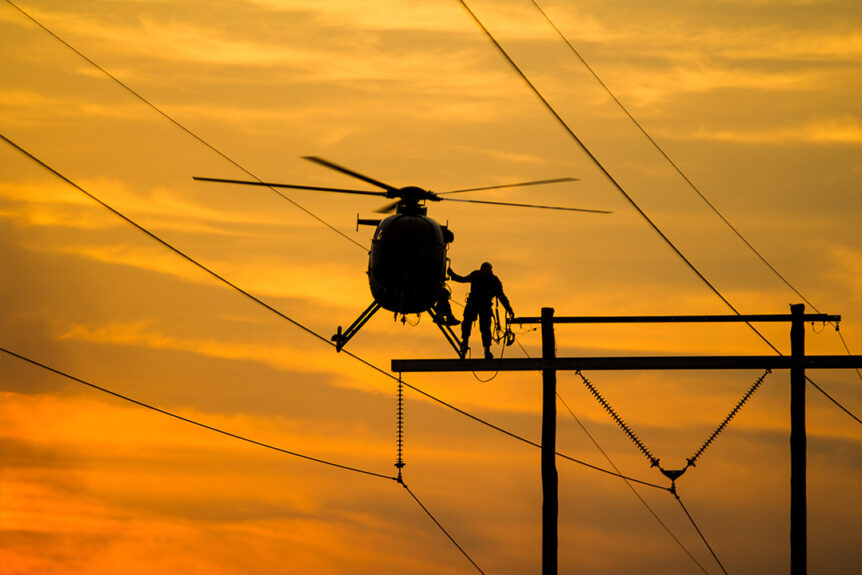
When the grid is under pressure, speed and visibility matter. Helicopter powerline patrol is a proven way to inspect long stretches of transmission and distribution corridors, identify hazards early, and support rapid response after storms or other disruptive events. Compared with ground patrols that can be slowed by access issues, terrain, and right-of-way constraints, an aircraft can cover large areas in a single sortie and deliver timely observations to decision makers.
Below is a field-ready overview of what helicopter powerline patrol is, where it shines, what equipment and standards are commonly used, and how to plan a mission that is both safe and cost-effective.
Finding Problems Before They Become Outages
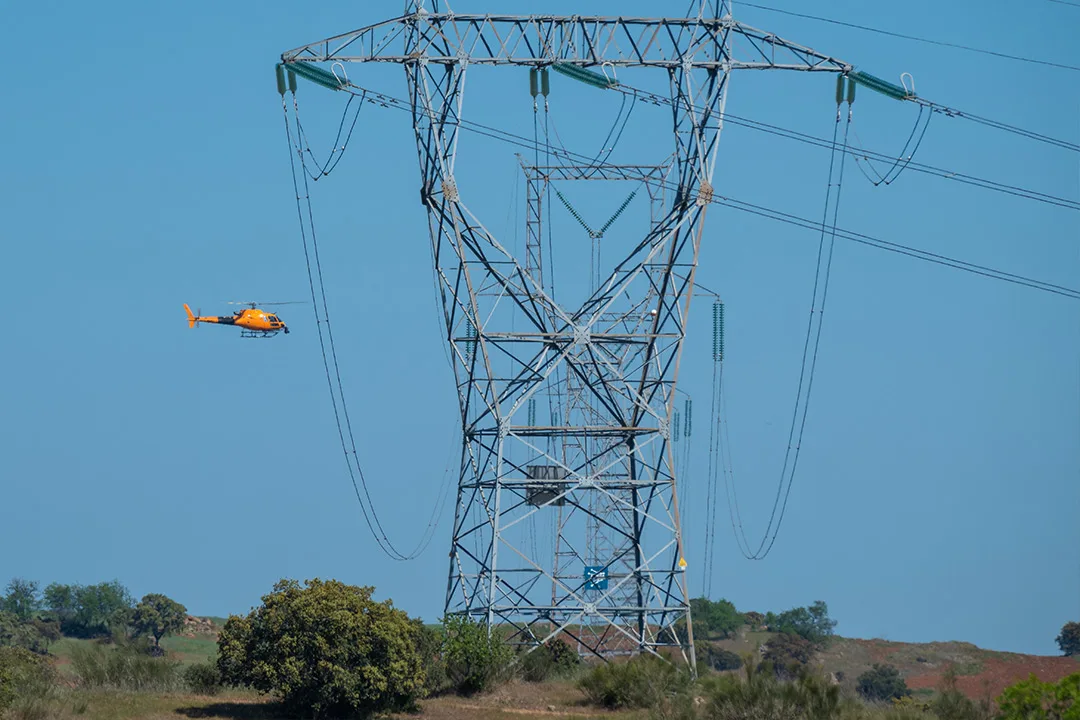
Aerial patrol aircraft assessing transmission structures and hardware along a long-span corridor.
Powerline patrol by helicopter typically focuses on visual inspection and situational awareness along energized infrastructure, including:
- Transmission lines, towers, and hardware
- Distribution lines and poles in hard-to-reach areas
- Right-of-way (ROW) vegetation and encroachment concerns
- Access roads, river crossings, and terrain constraints
- Post-event damage checks after storms or other incidents
Utilities invest in inspection because the reliability stakes are high. The U.S. Energy Information Administration tracks major electric disturbance events and restoration information, underscoring how weather and external impacts can disrupt service at scale.
Helicopter patrol supports faster prioritization. Instead of dispatching multiple ground teams to confirm what is happening, an aircraft can provide a corridor-level picture that helps operations leaders decide where to send line crews, vegetation teams, and materials.
From Routine Checks to Storm Response
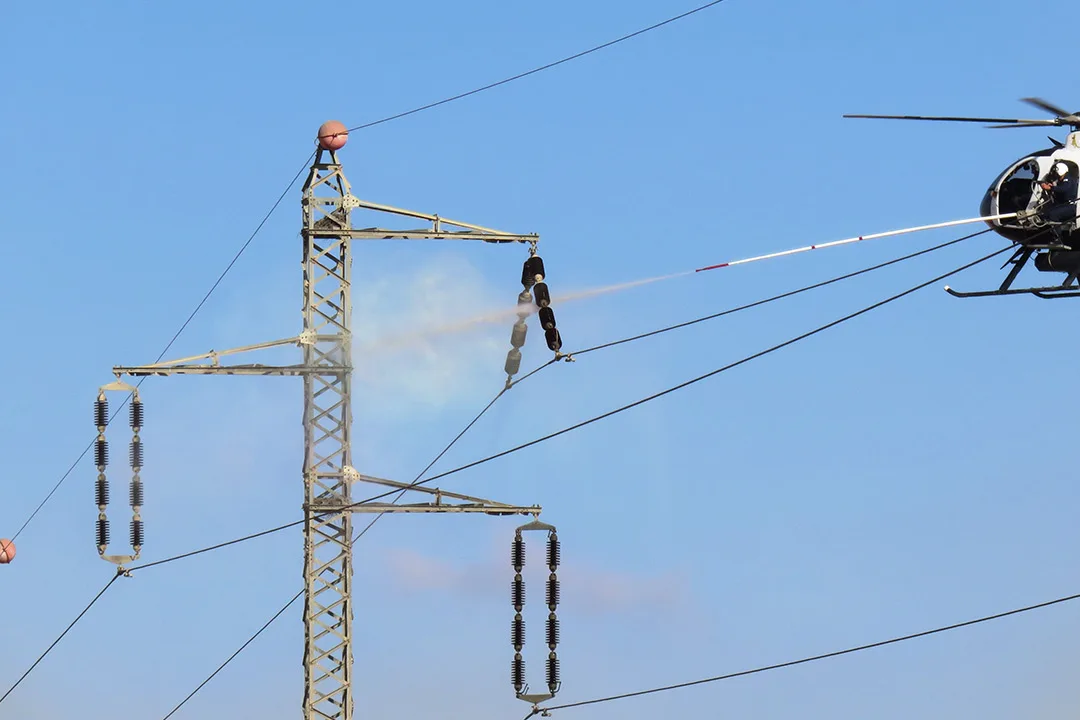
A helicopter crew conducts energized insulator washing to maintain line performance and reduce outage risk.
Routine corridor inspections
Routine patrols are planned flights along known routes. The goal is to detect issues like damaged insulators, missing cotter keys, conductor conditions, leaning poles, or vegetation growth nearing clearance limits. Many operators combine real-time observations with photo or video capture for later review.
Storm and emergency damage assessment
After hurricanes, ice storms, derechos, or severe wind events, access can be blocked by debris and flooded roads. Helicopters can quickly locate downed lines, broken structures, and inaccessible washouts so restoration can be prioritized. NOAA’s National Centers for Environmental Information provides context on U.S. billion-dollar weather and climate disasters, highlighting how significant these events can be for infrastructure.
Wildfire mitigation and situational awareness
In fire-prone regions, patrols can support hazard identification and pre-planning. This can include spotting vegetation encroachment, documenting ROW conditions, and supporting utility coordination. The U.S. Forest Service provides wildfire-related data and program information that utilities and contractors often reference when coordinating mitigation efforts.
Mission Planning in the Wire Environment
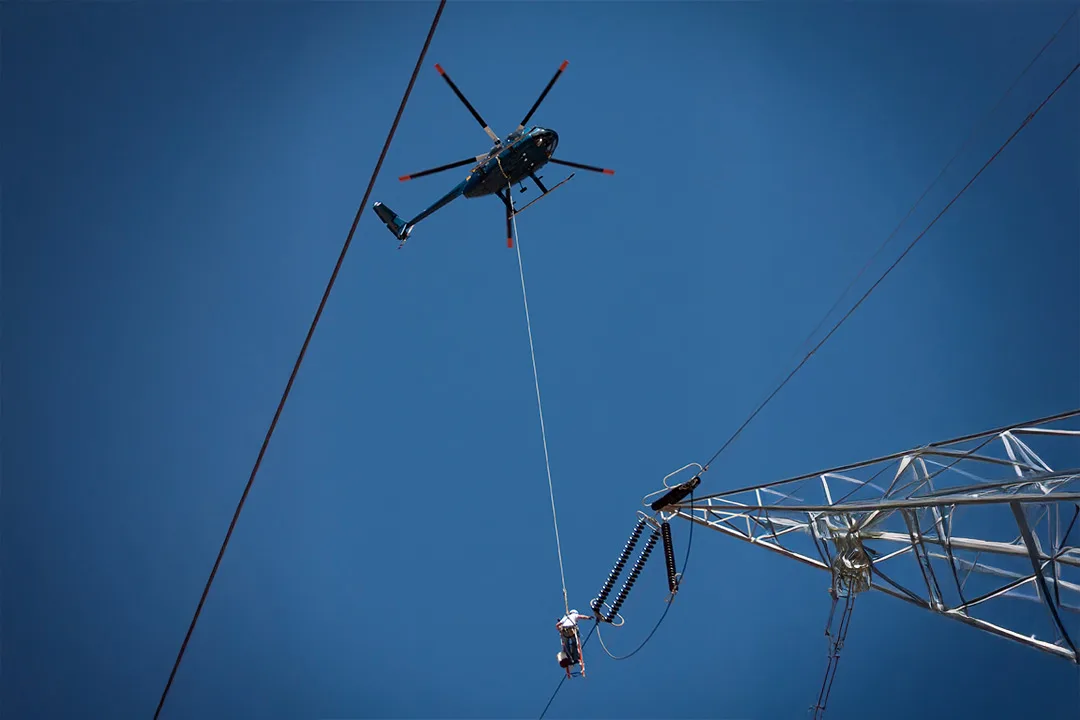
Precision aerial long-line operation supporting transmission structure maintenance.
Effective patrols start well before rotor start. Planning typically begins with defining clear objectives: is this a routine inspection, a post-storm triage flight, a vegetation observation pass, or targeted follow-up on known anomalies? From there, route and altitude planning follows, with corridor routing, observation passes, and fuel planning all aligned to local airspace and terrain constraints.
Coordination comes next, bringing in utility operations, dispatch, and any required site contacts for access and staging. A thorough hazard review covers the wires environment, tower locations, known bird activity, and local constraints. Finally, the team agrees on what constitutes a complete deliverable, including expected photos, timestamps, and location references, so there is no ambiguity about what a successful mission looks like.
In the United States, low-level operations and wire environment risk management are typically guided by operator procedures and FAA regulations.
Technology That Supports Faster Decisions
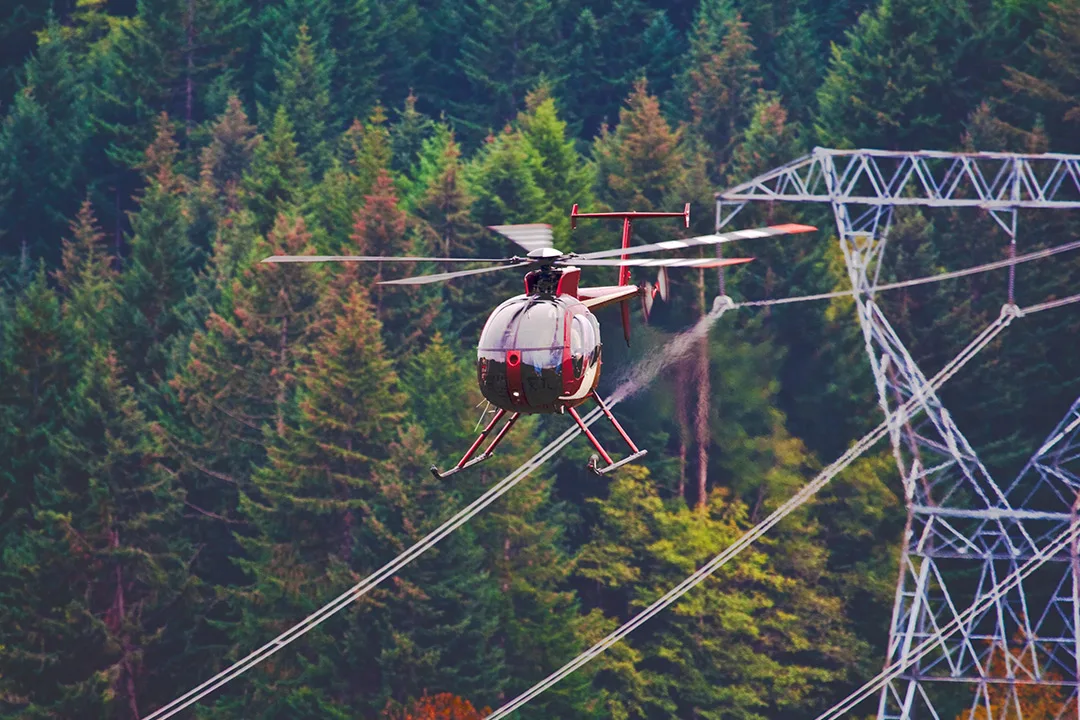
Aerial support for right-of-way vegetation management in fire-prone terrain.
Not every patrol needs specialized sensors, but the mission profile influences the best fit. The closer crews operate to live infrastructure to capture high-quality data, the more important it becomes to pair that capability with disciplined procedures. Common sensor options include:
- High-resolution stills and stabilized video: useful for documenting structures, hardware, and corridor conditions at a level of detail that supports confident maintenance decisions
- Thermal imaging: helps identify overloaded connections, failing components, and hotspots before they become outages, especially when paired with clear interpretation standards
- GPS-enabled mapping workflows: correlates observations to structure IDs, spans, and mile markers so findings can be handed off directly to field crews without guesswork
For many customers, the most valuable output is a concise, prioritized list of findings, backed by images and locations. The goal is to reduce ambiguity so a supervisor can dispatch the right crew with the right parts.
Built-In Safety at Every Phase
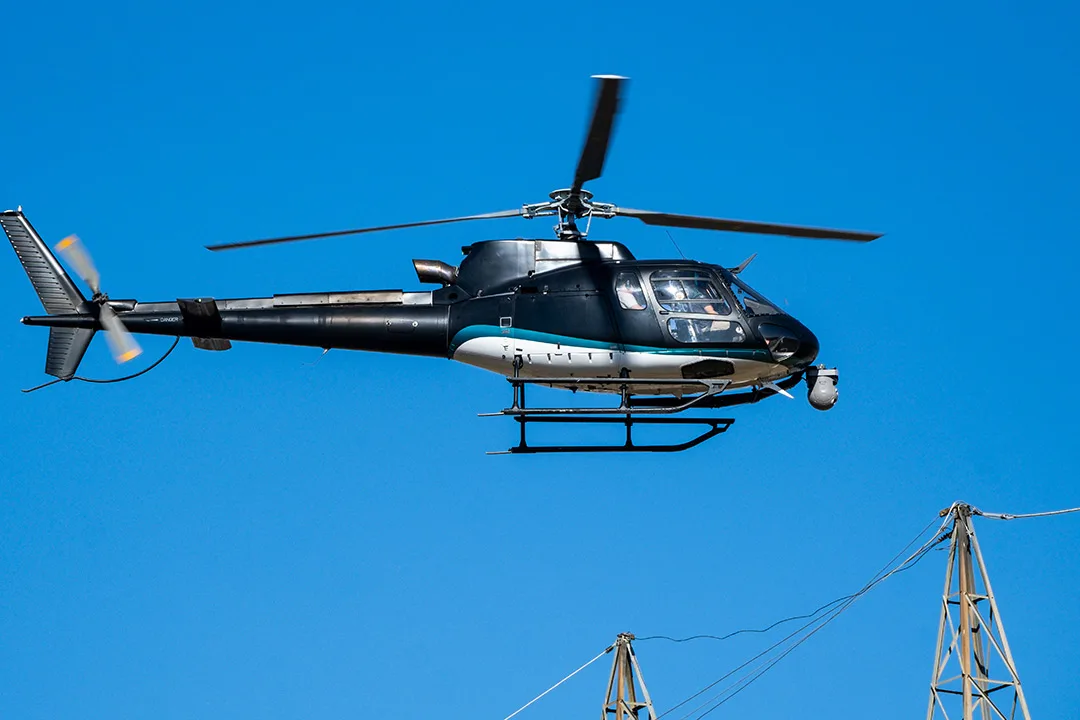
A helicopter positions for detailed visual inspection of distribution infrastructure in the wire environment.
Patrolling around transmission and distribution infrastructure demands disciplined aviation fundamentals. Key safety considerations typically include:
- Wire awareness: continuous scanning and route discipline in a high-risk environment
- Crew coordination: clear roles between pilot and observer for callouts, navigation, and anomaly identification
- Weather and visibility limits: postponing flights when turbulence, smoke, low ceilings, or reduced visibility increases risk
- Standoff and maneuver margins: avoiding aggressive maneuvering near structures and lines
- Landing zone and fueling planning: minimizing rushed decisions and maintaining safe margins
Industry-wide, helicopter wire strike prevention is a major safety theme. The FAA’s wire strike resources and safety materials are an important reference point for operators and pilots.
When Helicopter Patrol Is the Right Tool
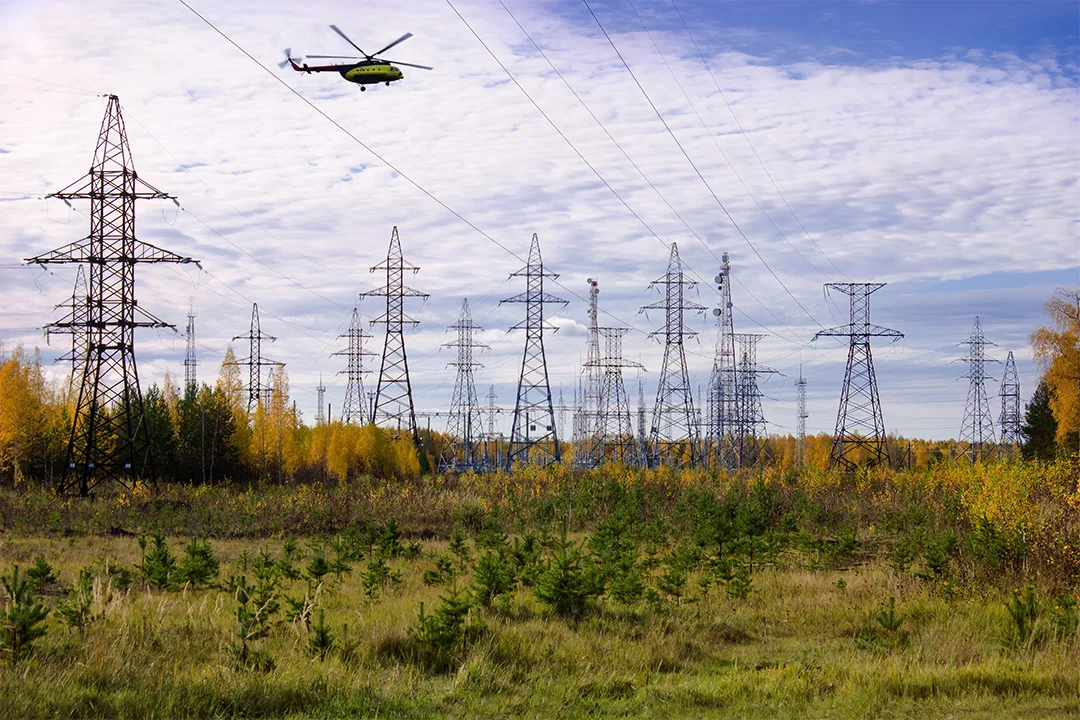
Aerial powerline patrol over a transmission corridor, providing corridor-level visibility across multiple structures.
Helicopter patrol is especially useful when you need speed, broad coverage, or access beyond what vehicles can handle. It is often a strong fit for:
- Long, linear assets across mixed terrain
- Time-sensitive storm restoration and triage
- Corridors with limited road access or water crossings
- Early identification of vegetation and ROW issues
To scope a request efficiently, be ready to share:
- Corridor location, length, and structure types
- Primary goal and priority areas
- Preferred deliverables (photos, video, written findings, GIS-friendly notes)
- Timeline, staging locations, and any access constraints
- Utility contact and coordination requirements
Plan Your Powerline Patrol with Fair Lifts
When speed, visibility, and disciplined execution matter, partner with a team built for utility work. Fair Lifts will align the right aircraft and crew to your corridor, define reporting your field teams can immediately act on, and execute the mission with the safety standards your infrastructure demands. Contact us today or call us at 1-800-318-8940 to scope your patrol mission.