

Helicopter lift cost vs crane cost is not decided by the hourly rate at the bottom of a quote. The more useful question is whether a helicopter, a ground crane, or a planned combination of both will complete the lift safely with the lowest total delivered cost. That total includes mobilization, setup time, crew hours, rigging, road closures, building disruption, permitting, overages, weather risk, and the financial cost of delaying the rest of the project.
Quick answer: A helicopter lift is not always cheaper than a crane, but it is often more affordable than contractors expect when the full project is measured. Helicopters usually carry a higher hourly operating cost, but they can finish many rooftop HVAC, tower, utility, signage, remote access, and difficult-reach lifts in hours instead of days.
Ground cranes often win on simple jobs with stable access, short reach, and enough room to stage. Helicopters often win when a crane would need to be oversized, repositioned repeatedly, staged on questionable ground, or kept on site through long setup and teardown windows.
The best way to compare the cost of helicopter lifting and the cost of crane service is to look beyond the machine. A crane quote and a helicopter quote are built differently, so placing the totals side by side can be misleading.
Fair Lifts evaluates the whole job, including asset availability, aircraft or crane class, pick count, site access, road impacts, labor exposure, and the cost of disruption.
Defining Affordability in a Lift Project
In heavy lift planning, affordable does not mean cheapest per hour. Affordable means the lift method that safely moves the load into place with the least total waste. A crane with a lower hourly rate can become expensive if it takes days to assemble, requires a larger tonnage class because of reach, closes roads for an extended period, or forces crews to wait. A helicopter with a higher hourly rate can become the better value if it compresses the work into a short lift window and avoids the largest secondary costs.
That is why helicopter lift cost vs crane cost should be reviewed as a total project comparison.
The right answer depends on the load, the site, the number of picks, the schedule, the available assets, and the cost of disruption to the contractor or building owner.
Why a Quote Total Can Be Misleading
A lift quote rarely captures every cost that affects the job. It may not include your crew waiting on site, production downtime, facility access issues, lost retail traffic, tenant disruption, traffic control, or the cost of delaying the next phase of work. Those numbers often belong to the contractor, not the lift provider, which is why they can disappear from the equipment quote even though they are very real.
For example, two options can have similar quoted costs while creating very different jobsite outcomes. A crane may need several days on site for setup, picking, repositioning, and teardown. A helicopter may complete the active lifting in a short morning window. The quote may look similar. The real cost to the contractor may not.
The Better Question to Ask
Instead of asking, “What is the cost of a helicopter?” or “What is the cost of crane rental?” ask this:
-
- What is the safest way to complete every pick?
- How many crew hours will each option consume?
- How long will the building, road, roof, or jobsite be restricted?
- Will the lift method affect the rest of the project schedule?
- Is the selected crane or helicopter right-sized for the heaviest single lift?
- Can multiple lifts, buildings, or projects be bundled into one efficient mobilization?
Direct Costs of a Helicopter Lift vs a Crane Lift
Direct costs are the easiest numbers to see, but they are not always the most important numbers. A crane may appear cheaper because the machine rate is lower. A helicopter may appear expensive because aircraft time is highly visible. In reality, both pricing structures include multiple line items, minimums, and variables that change the final cost.
What Goes Into Helicopter Lift Pricing?
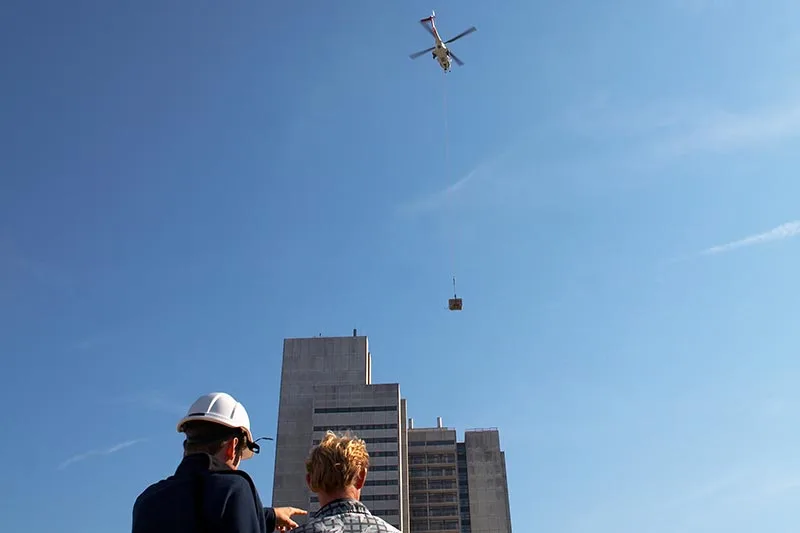
While a helicopter carries a higher hourly rate, completing multiple rooftop picks in a single morning often lowers the total project cost.
Helicopter lift cost depends on the aircraft, payload, number of picks, distance from pickup to placement, site complexity, fuel support, crew needs, rigging requirements, and where the aircraft must travel from to reach the job. A light aircraft used for small rooftop equipment will not price like a heavy-lift helicopter used for large cooling towers, tower sections, generators, or industrial equipment.
A helicopter crane quote may include:
- Aircraft selection: The helicopter must match the heaviest single load, site elevation, temperature, line length, fuel requirements, and safety margin.
- Mobilization and demobilization: Aircraft travel, crew travel, fuel logistics, and support resources.
- Flight time or per-pick pricing: Depending on the job, pricing may be hourly, per pick, or structured around a daily minimum.
- Rigging and lift gear: Slings, shackles, spreader bars, swivels, cargo hooks, long lines, and load-specific equipment.
- Ground and roof crews: Personnel for staging, hook-up, receiving, safety control, and communications.
- Planning and compliance: Flight planning, congested-area coordination where required, exclusion zones, local authority coordination, and safety procedures.
External-load helicopter work in the United States is governed by 14 CFR Part 133, Rotorcraft External-Load Operations. FAA guidance for these operations is also discussed in Advisory Circular 133-1B.
What Goes Into Crane Pricing?
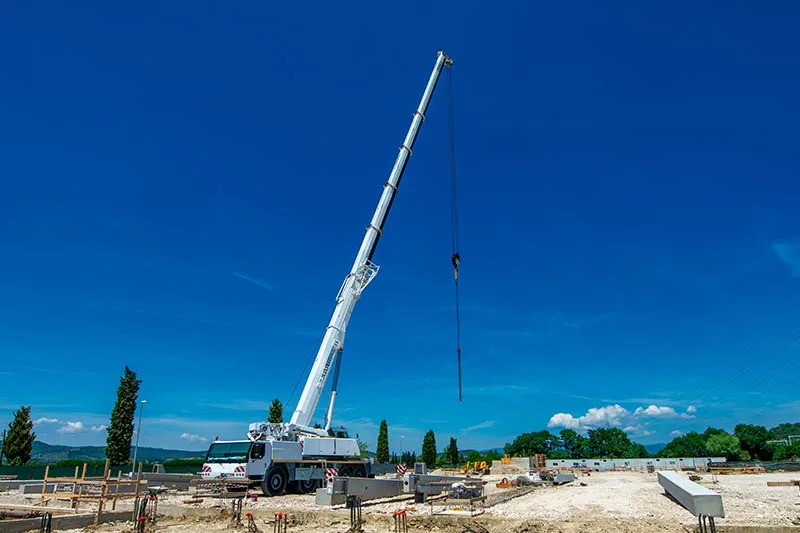
A ground crane quote might look cheaper upfront, but the true cost must include mobilization, setup time, and required support vehicles.
The cost of crane service also extends far beyond the basic rental rate. A crane quote may include the machine, mobilization, demobilization, operator, rigger, oiler, flagman, mats, counterweight freight, fuel surcharge, rigging equipment, safety crew, per diem, overtime, weekend rates, minimum hours, and overages.
Construction crane work is regulated under OSHA Subpart CC for cranes and derricks in construction. OSHA also addresses crane operator training, certification, and evaluation under 29 CFR 1926.1427, signal person qualifications under 29 CFR 1926.1428, and ground conditions under 29 CFR 1926.1402.
Labor Costs Can Change the Answer
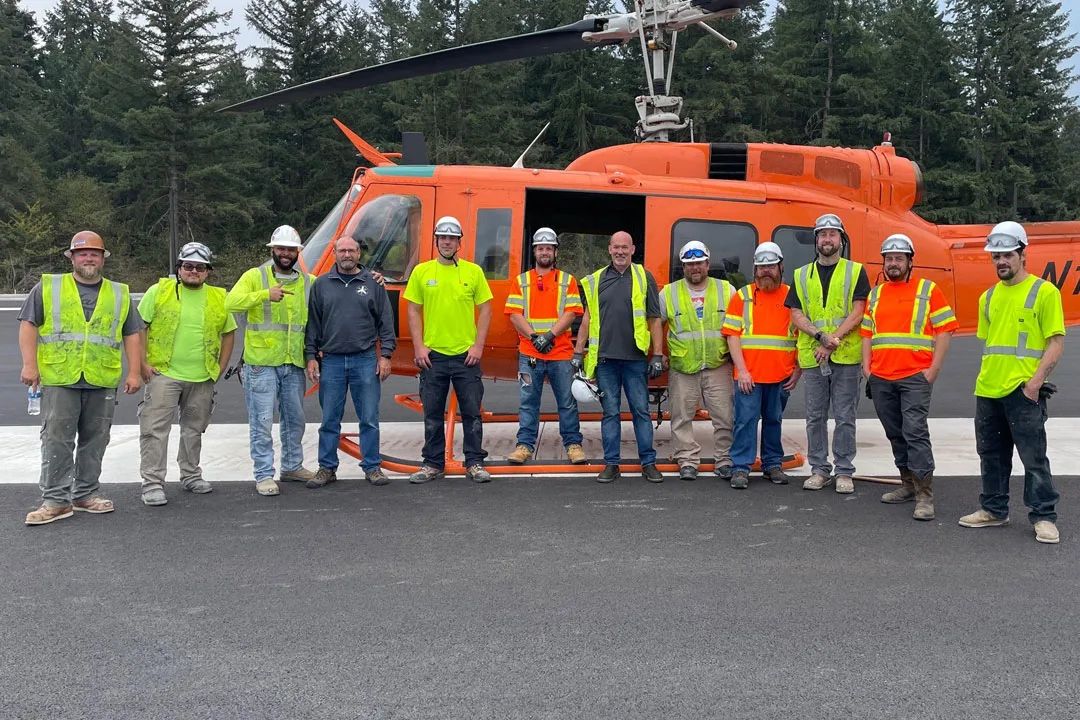
Equipment choice directly impacts labor. A faster lift method minimizes the hours your ground and roof crews spend waiting.
Labor is one of the biggest reasons the apparent low-cost option becomes the expensive option. If a crane takes multiple days on site, the contractor may carry extra crew days, supervision, security, traffic control, and coordination time. If the building is occupied, the owner may also face business interruption, tenant complaints, blocked access, or shutdown costs.
Helicopter lifts can require intensive planning and well-prepared crews, but once the aircraft is on site, the active lift cycle can move quickly. When loads are staged correctly and crews are ready, a helicopter can often place many items in a short window. That speed can reduce crew waiting, shorten shutdowns, and allow the rest of the project to move forward sooner.
Crane Projects Often Carry More On-Site Time
Crane setup happens on or near the jobsite. Larger cranes may require counterweights, support trucks, mats, assembly, disassembly, traffic control, and enough space for safe operation. If the crane must move to a second staging location, much of that work may repeat. As crane size increases, these on-site time costs usually become more important.
A smaller crane may have a lower hourly rate but require multiple setups to reach all loads. A larger crane may reach everything from one position but bill at a higher rate and require more mobilization, support vehicles, and assembly time. Neither answer is automatically right. The right answer depends on the site geometry and the total cost of time.
Helicopter Lifts Reward Preparation
A helicopter lift is fastest when the loads are pre-rigged, labeled, staged in sequence, and ready before the aircraft arrives. The roof or receiving crew must also know exactly where each load goes. Poor staging can turn paid aircraft time into waiting time. Strong staging can turn the helicopter into the most efficient tool on the job.
Fair Lifts has published a rooftop HVAC example where an Airbus H125 placed 34 one-ton air conditioning units in two hours. That kind of project shows why helicopter lift cost must be compared against total work time, not only hourly aircraft cost.
Schedule Impacts and Project Delays
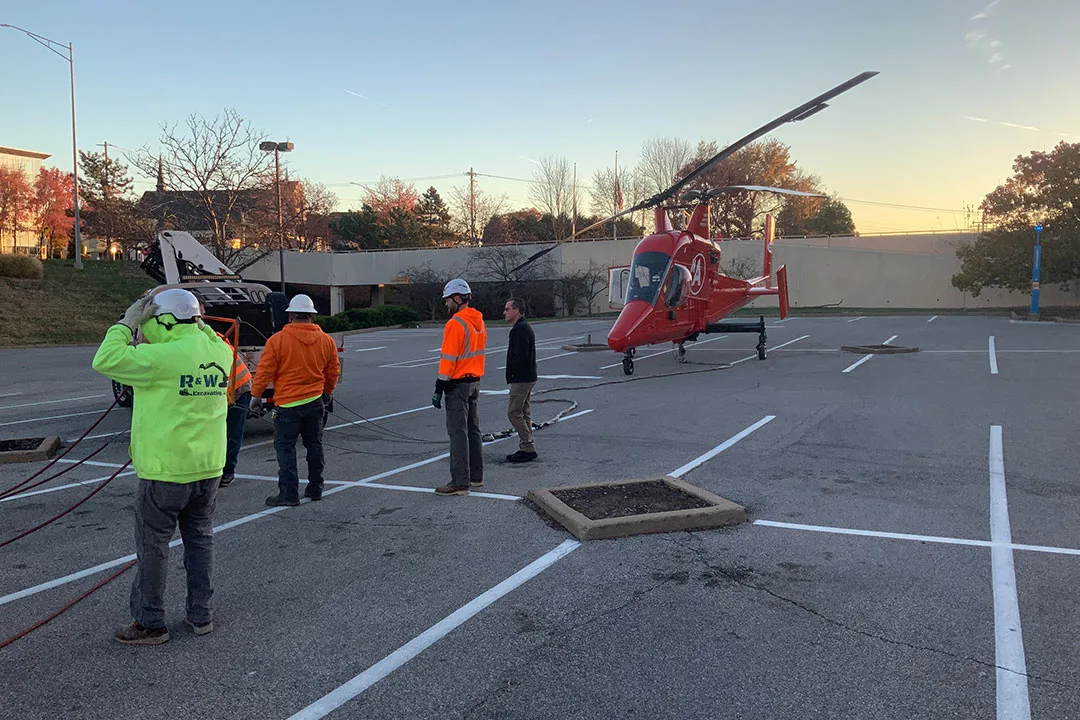
Helicopters can place dozens of units in a matter of hours, minimizing facility shutdowns and keeping the rest of the project on schedule.
Schedule is often the deciding factor in helicopter lift cost vs crane cost. A lift may affect roofers, mechanical contractors, electricians, building engineers, tenants, facility managers, production teams, truck drivers, inspectors, and the public. A delay in the lift can ripple across the project.
The Cost of Waiting
Waiting costs money even when it does not appear on the lift quote. Crews may be paid while equipment is assembled. Trucks may wait for access. A building may remain shut down longer than planned. A retail site may lose customer access. A warehouse may lose operating capacity. A hospital, school, hotel, data center, or manufacturing facility may need to protect continuity of operations.
That is why contractors should value speed realistically. If the lift is isolated from other work, speed may matter less. If every downstream activity depends on the equipment being placed, speed can be the difference between profit and loss.
Road Closures and Public Disruption
When a crane affects streets, sidewalks, public paths, or access roads, the project may require lane closures, detours, police details, traffic control devices, permits, and public coordination. The Federal Highway Administration discusses work zone traffic management considerations, including delay, queues, incidents, user costs, and cumulative impacts, in its work zone traffic management guidance.
A helicopter may still require public control and temporary closures, especially in congested areas, but the duration can be shorter. The footprint may be different, and the planning must account for the non-participating public, flight path, pickup zone, placement zone, and emergency procedures.
Mobilization Is Often the Biggest Swing Factor
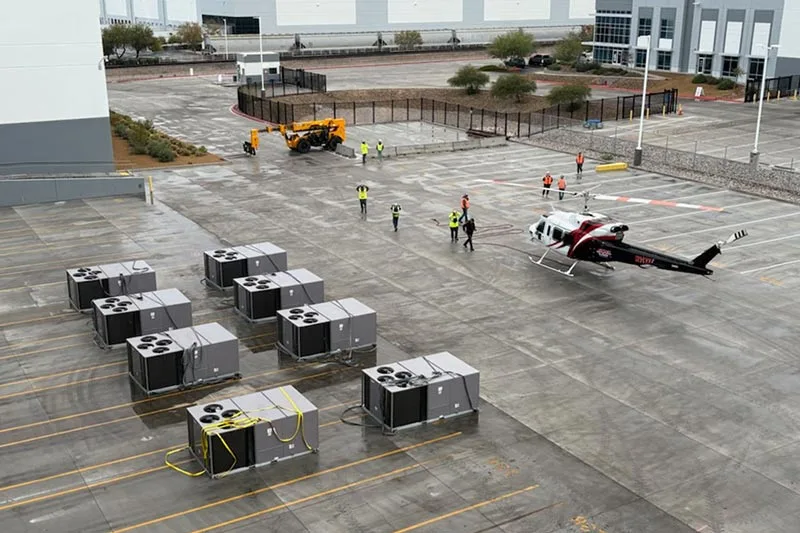
Mobilization is often the biggest swing factor. Bundling multiple nearby sites into one aircraft flight path can drastically reduce your cost per pick.
Mobilization is the cost of getting the right asset to the job. It is one of the most important variables in both aerial crane cost and ground crane cost. The closest asset is not always the cheapest asset. A nearby crane may be oversized. A nearby helicopter may have more lift capacity than the job needs. A right-sized asset farther away, or an asset already traveling through the region, can sometimes create a better total cost.
Why the Closest Equipment May Not Be the Best Equipment
Distance is only one factor. A crane that is close but oversized may require more counterweight freight, more trucks, more setup time, and more crew. A helicopter that is close but too large may carry an hourly rate that makes little sense for light units. Conversely, a larger asset already moving near the site for another project may reduce mobilization enough to become the best option.
This is where an unbiased lift planner can add value. A single crane company naturally sees the job through the cranes it owns. A helicopter operator naturally sees the job through the aircraft it can provide. Fair Lifts evaluates the broader field of options, including ground cranes, helicopters, and hybrid plans.
Bundling Multiple Lifts Can Lower Average Cost
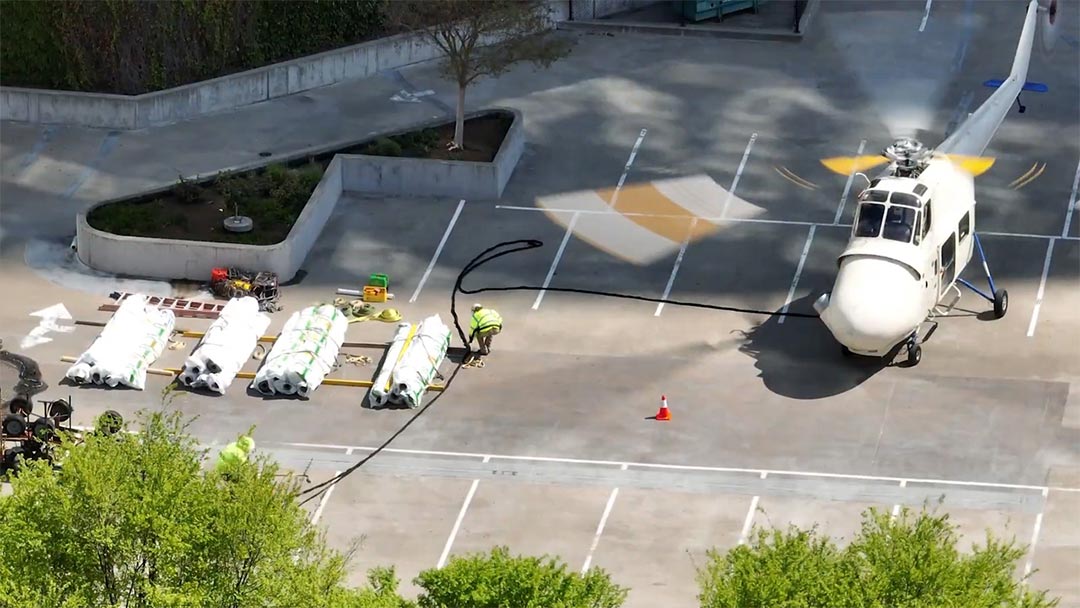
Having loads properly bundled and staged in sequence before the aircraft arrives turns the helicopter into the most efficient tool on the job.
When a helicopter is involved, bundling can be one of the strongest cost strategies. If one mobilization can serve several buildings, schools, stores, warehouses, or project phases, the average cost per pick can drop. The same logic applies when a project can be scheduled along an aircraft’s existing travel path.
The key is flexibility. Sites that are close together do not automatically save money if they are scheduled weeks apart. Sites farther apart may save money if they align with the same mobilization route. Early planning gives the lift specialist more opportunity to find those savings.
Weight, Reach, and Equipment Class
The heaviest single pick drives the equipment class. Not the total project weight. Not the average unit. One heavy outlier can push the job into a larger crane class or a more expensive aircraft category. That is why accurate weights, spec sheets, dimensions, pick points, and placement locations matter so much.
What Changes Helicopter Capacity?
Helicopter capacity is affected by load weight, temperature, elevation, wind, fuel requirements, line length, and load shape. The FAA’s Helicopter Flying Handbook explains that density altitude, weight, and wind are major factors affecting helicopter performance.
This is why many helicopter lifts are planned early in the morning. Cooler air can improve aircraft performance, and early windows may also reduce public disruption. Surface area also matters because rotor downwash can affect broad loads differently than compact loads of the same scale weight.
What Changes Crane Capacity?
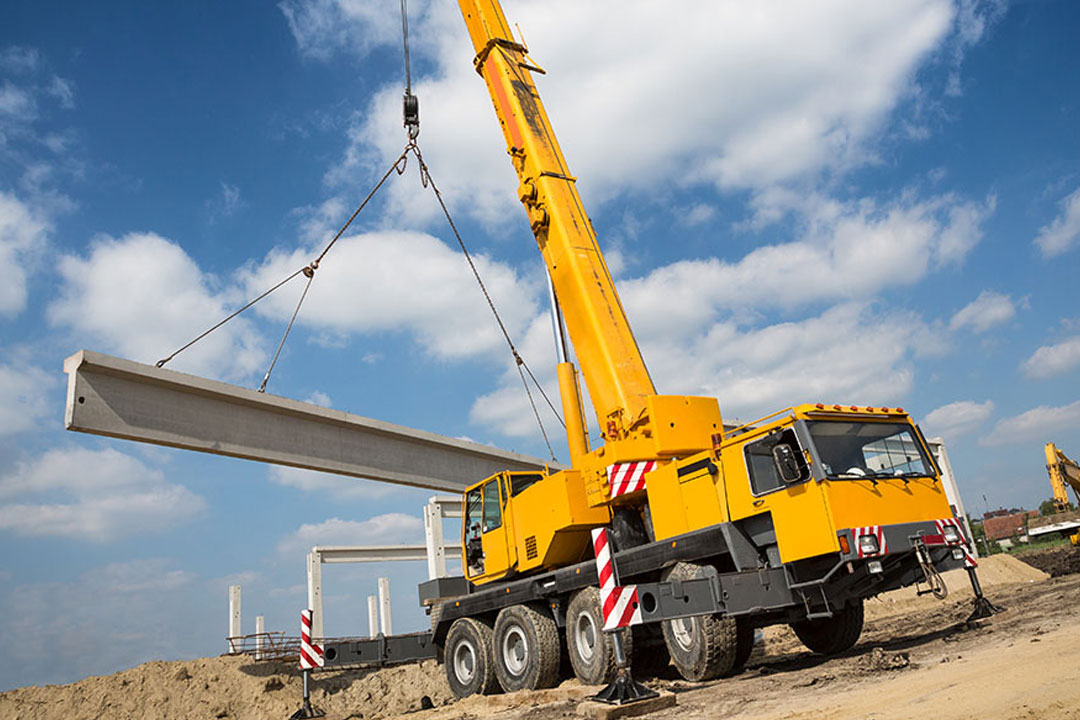
As a crane reaches further across a roof, its lifting capacity drops—which can force you to rent a much larger, more expensive crane class.
A crane’s rated capacity is not the same as its useful capacity at the load’s actual radius. A crane can lift more close to the machine than it can far away. As the boom reaches farther, capacity drops. This is why a relatively light rooftop unit deep on a roof can require a much larger crane than the unit weight alone suggests.
Ground bearing matters too. OSHA’s crane ground condition rule addresses the need for ground conditions that can support equipment, including slope, compaction, and firmness. Underground parking garages, utility vaults, soft soil, finished landscaping, and slabs not designed for crane loads can create major constraints.
Weight Reduction Can Drop the Job a Class
Reducing the heaviest lift can reduce the cost of helicopter lifting or crane lifting. Old mechanical units headed for scrap may be stripped, drained, separated, or broken down. New units require more care because warranty requirements matter, but manufacturers may be able to ship sections separately or identify components that can be removed without creating warranty problems.
Bulk materials such as rock, rip rap, or construction materials may be divided into smaller loads. In some cases, a larger aircraft that makes fewer trips is still more cost-effective. In other cases, smaller loads allow a less expensive aircraft or crane to do the work. The correct answer depends on the entire lift plan.
Hidden Expenses Many Contractors Overlook

Extended street closures, traffic control, and police details are hidden expenses that can quickly inflate the cost of a crane project.
Hidden costs are where a simple lift plan becomes expensive. These costs may be associated with a crane, a helicopter, or the surrounding site conditions. The most common mistake is choosing equipment before evaluating the whole site.
Crane Related Hidden Costs
| Consideration | Potential Impact |
|---|---|
| Street and Lane Closures | A crane may need to occupy public roads, sidewalks, loading zones, alleys, parking lots, or building entrances. |
| Traffic Control | Barricades, signs, flaggers, police details, pedestrian detours, and permits can add significant cost. |
| Ground Preparation | Mats, cribbing, engineered pads, compacted surfaces, or underground utility protection may be required. |
| Surface Damage | Heavy equipment can damage pavement, curbs, landscaping, irrigation systems, turf, or finished hardscape. |
| Repositioning | Multiple crane setups may be necessary to reach every rooftop unit, especially on large or irregular buildings. |
| Business Disruption | Blocked loading docks, customer entrances, parking areas, fire lanes, and tenant access can result in operational losses. |
Helicopter Related Considerations
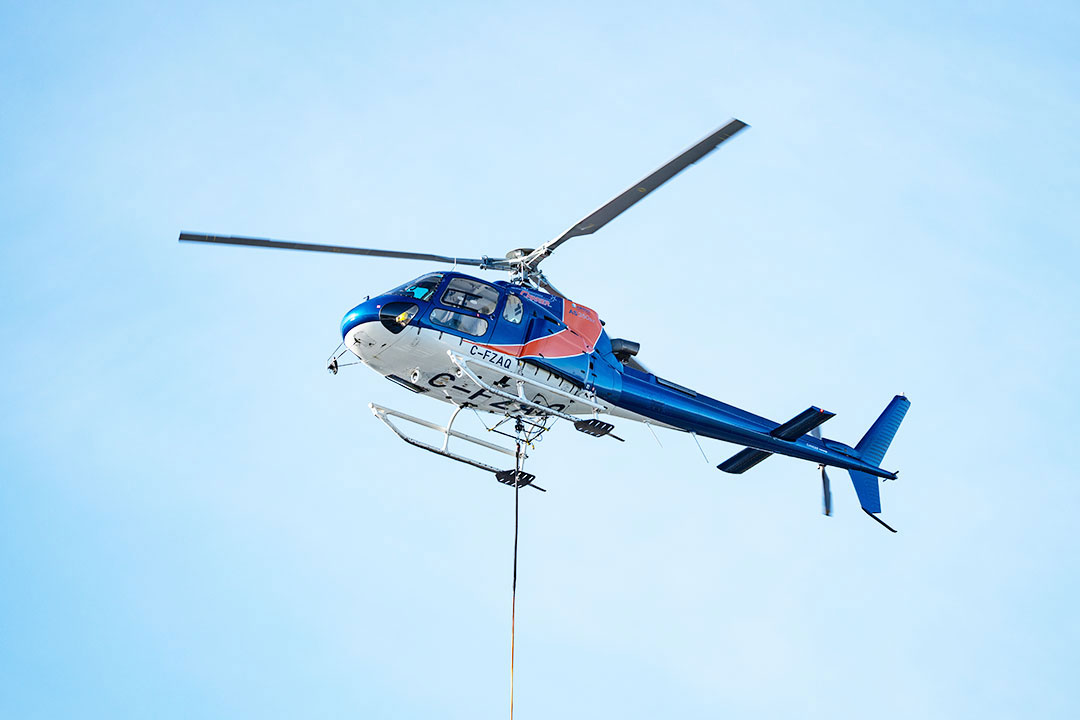
Helicopter lifts reward preparation. Establishing clear safety zones and pre-rigging loads turns paid flight time into rapid, efficient placement.
| Consideration | Planning Requirement |
|---|---|
| Pickup and Drop Zones | Controlled staging, hook-up, placement, and exclusion areas must be established before flight operations begin. |
| Weather Windows | Wind, temperature, visibility, ceiling, lightning, and local weather conditions can affect scheduling. |
| Public Control | The work area must be secured to keep non-participating people outside designated safety zones. |
| Noise and Communication | Building occupants, neighboring businesses, and local authorities may require advance notification. |
| Rigging Tempo | Loads must be prepared quickly and efficiently to maximize aircraft productivity during flight operations. |
| Emergency Planning | Flight routes, jettison areas where applicable, abort procedures, and communication protocols must be established in advance. |
Safety, Regulations, and Rigging
Safety is not an optional line item. Both crane and helicopter lifts require qualified people, proper rigging, and a clear plan. OSHA requires rigging equipment for material handling to be inspected before use on each shift and as needed during use, with defective equipment removed from service under 29 CFR 1926.251.
Rigging fundamentals are similar for both lift methods: rated shackles, slings, straps, spreader bars, known pick points, inspected equipment, and confirmed load weights. Helicopter lifts add aircraft-specific concerns, including cargo hooks, emergency release procedures, swivels, static electricity, downwash, load spin, and line length.
FAA Planning for Helicopter External Loads
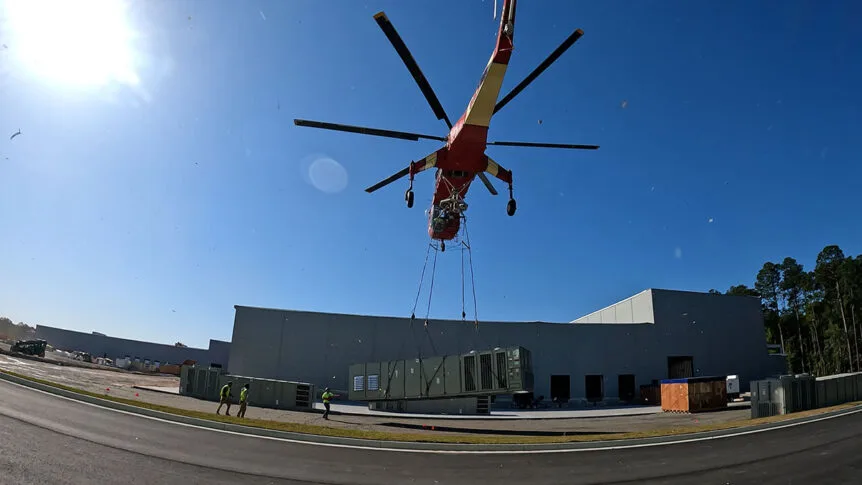
Proper flight planning and FAA coordination ensure heavy external loads are handled safely, especially when working over congested areas.
Helicopter external-load operations are covered by 14 CFR Part 133. Work over congested areas may require a plan coordinated with the FAA and local authorities. The exact requirements depend on the operation, location, airspace, load, and public exposure.
Contractors sometimes hear simplified rules, such as a fixed 150-foot radius or a universal twin-engine requirement. In practice, requirements depend on the aircraft, line length, load, jobsite, regulations, local authority requirements, contract terms, and safety plan. A lift specialist helps separate actual regulatory requirements from assumptions that may add unnecessary cost.
Crane Rules and Local Requirements
Crane projects must also account for federal, state, and local requirements. In addition to OSHA crane rules, local permits, road closures, storm preparation, traffic control, and site-specific requirements can influence the plan. Florida, for example, has enacted requirements related to hurricane preparedness planning for certain hoisting equipment under Florida Statutes Section 489.1132.
When Using Both a Crane and a Helicopter Makes Sense
A hybrid lift can be the most efficient plan, but only when it is intentional. Using both a crane and a helicopter usually means two mobilizations, so the split must save more than it costs. The test is simple:
Crane mobilization plus helicopter mobilization plus crane on-site cost plus helicopter on-site cost should be lower than the cost of one larger asset doing everything.
This can work well when each asset handles the work it does best.
Towers
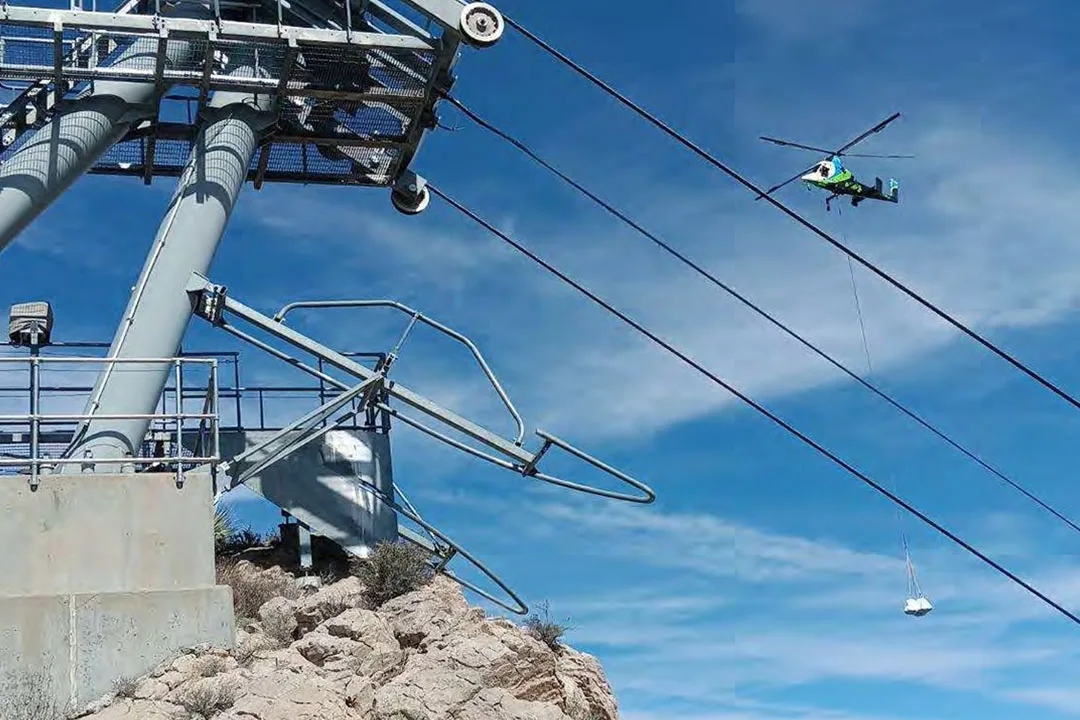
For tall structures, a hybrid approach, using a ground crane for heavy base sections and a helicopter for the high upper sections, often provides the best value.
Tower projects often create a natural split. A crane may handle heavy base sections at short radius, where cranes are strongest. A helicopter may handle lighter upper sections, where height and reach make a very large crane expensive. This avoids paying for a giant crane just to gain reach, or a larger helicopter just to handle heavy base sections.
Wide Roofs and Warehouses
On a large roof, a crane may set edge units or place units that can be moved by gantry or roof skate if the roof can support that path. A helicopter may place units deep on the roof where crane reach becomes expensive or where roof movement is not practical. Gantries can be valuable, but they are not a universal answer. Roof capacity, unit weight, placement distance, and access all matter.
When the Helicopter Should Do More
Once a helicopter is already mobilized, contractors should ask whether the aircraft can handle more of the job. If the helicopter minimum has unused capacity, adding additional picks may cost little compared with keeping a crane on site. This is why asking for per-pick pricing and unused-minimum capacity can reveal savings.
When Cranes Usually Make Sense
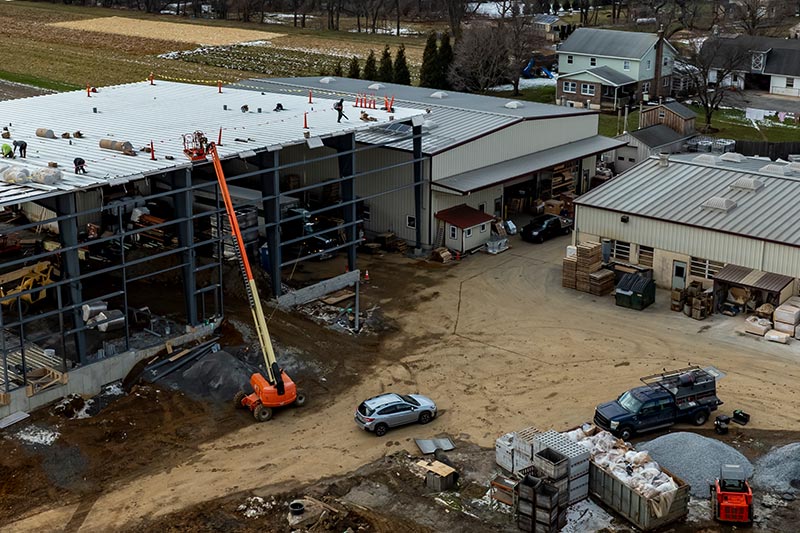
Ground cranes remain the most affordable option for sites with stable ground, a short reach radius, and plenty of room to stage equipment.
Cranes remain the right answer for many jobs. A ground crane is often more affordable when the site has stable access, enough setup space, short reach, a small number of picks, minimal public disruption, and no major ground-bearing concerns.
- The load is close to the crane setup position.
- The site has room for the crane, counterweights, support trucks, and safe swing radius.
- Ground conditions are known and suitable.
- The lift does not require costly street closures or extended facility shutdowns.
- The project can absorb setup and teardown time without major downstream costs.
- The number of picks is low enough that helicopter efficiency does not offset mobilization.
A crane also may be necessary when the heaviest single lift exceeds practical helicopter capacity and cannot be reduced, divided, or handled by a different method.
When Helicopters Often Deliver Better Value

When a site has poor access, weak ground conditions, or requires a massive crane just to gain reach, an aerial lift usually delivers the lowest total cost.
Helicopters often become more competitive when access, reach, time, and disruption create costs that a crane quote does not fully show. A helicopter lift may be the better option when:
- The project involves a high number of rooftop units or repeated picks.
- The roof is wide, tall, irregular, or hard to reach from the ground.
- A crane would need to be significantly oversized because of radius.
- The crane would need multiple staging locations.
- The jobsite has underground parking, soft ground, tight streets, or finished landscaping.
- Road closures, tenant disruption, or facility shutdowns are costly.
- The site is remote, mountainous, environmentally sensitive, or difficult to access by road.
- The work must be completed during a short shutdown window.
Fair Lifts describes its heavy lift helicopter services as a solution for precision placement, heavy equipment movement, remote access, and difficult-to-reach locations. Those are exactly the conditions where the cost of helicopter lifting should be evaluated against the full cost of a crane plan.
How to Compare Helicopter Lift Cost vs Crane Cost Before You Bid
The best time to compare options is before the equipment is purchased, before the project is fully bid, and before the site plan is locked. Once units are selected and dates are fixed, some of the best savings opportunities may already be gone.
Information Needed for a Strong Lift Evaluation
- Load details: Weight, dimensions, center of gravity, spec sheets, photos, pick points, and whether old units can be stripped or broken down.
- Pick count: Count each old unit removal, curb adapter, new unit placement, material bundle, and accessory lift.
- Placement plan: Roof layout, final equipment locations, pickup zone, drop zone, access roads, obstacles, and overhead lines.
- Site restrictions: Operating hours, tenant access, parking, loading docks, fire lanes, airport proximity, underground structures, and public exposure.
- Schedule flexibility: Date range, shutdown window, weekend needs, and whether multiple sites can be bundled.
- Business impact: Crew costs, facility downtime, lane closure costs, traffic control, customer access, and delay risk.
Why Contractors Should Call Before Selecting Units
Unit selection can affect lift cost. A heavier unit may appear profitable from an equipment standpoint, but it can push the lift into a larger crane or helicopter class and make the overall bid less competitive. In some cases, more lighter units may create a lower total project cost than fewer heavy units. In other cases, a manufacturer may be able to ship equipment in sections to keep each pick under a more affordable threshold.
For contractors bidding HVAC replacements, tower work, signage, construction materials, or utility infrastructure, early lift planning can improve both bid competitiveness and project execution.
Discuss Your Project With Fair Lifts
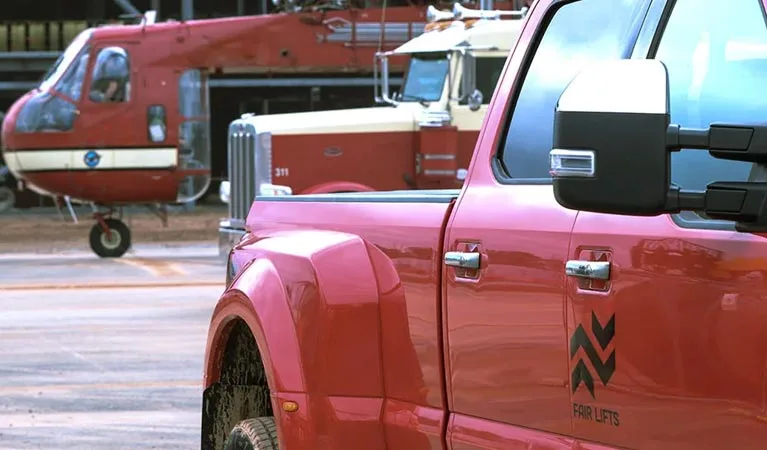
Compare your lift options before the bid is boxed in. Evaluating the entire site early reveals the safest, most cost-effective solution.
Fair Lifts helps contractors, HVAC companies, facility owners, utilities, construction managers, and tower contractors compare crane, helicopter, and hybrid lift options from a total-cost perspective. That includes aircraft selection, crane alternatives, mobilization strategy, bundling opportunities, rigging, site restrictions, road closure considerations, FAA coordination, and hidden costs that may not appear on a basic quote.
Discuss your project before the units are set and before the bid is boxed in. Share the load weights, photos, site address, pickup and placement locations, timing, and known access restrictions. Fair Lifts can help map the options and identify where the real savings live. Start through the Fair Lifts contact page or call 1-800-318-8940 to speak with a lift specialist.
FAQs About Helicopter Lift Cost vs Crane Cost
Is a helicopter lift more expensive than a crane?
Not necessarily. Helicopters often cost more per operating hour, but the total project cost may be lower when the helicopter reduces setup days, crew waiting, road closures, traffic control, crane repositioning, business disruption, and schedule delays. The right comparison is helicopter lift cost vs crane cost across the full job.
When is a helicopter cheaper than a crane?
A helicopter may be cheaper when a crane would require long reach, multiple setups, a large tonnage class, major street closures, extensive ground preparation, or a long facility shutdown. Rooftop HVAC projects, tower work, remote infrastructure, utility corridors, and dense urban sites are common examples.
What hidden costs are associated with crane lifts?
Common hidden crane costs include counterweight freight, crane mats, ground preparation, assembly, teardown, repositioning, police details, traffic control, lane closures, sidewalk closures, overtime, standby, site restoration, and business interruption. Ground conditions can also create additional requirements under OSHA crane ground condition rules.
How long does a helicopter lift take compared to a crane?
A helicopter lift can often complete the active lifting portion in hours, and some small projects require only minutes of flight time once the site is ready. A crane may take longer because setup, teardown, staging, road control, and repositioning can add days. The real timeline depends on load count, rigging tempo, reach, weight, access, and site restrictions.
How heavy of a load can a helicopter lift?
Commercial external-load helicopter capacity depends on aircraft type, temperature, elevation, wind, fuel, line length, load shape, and safety margin. Many construction lifts fall within common utility and medium-lift aircraft capabilities, while the largest heavy-lift aircraft are used for specialized loads. If the heaviest single pick exceeds practical helicopter limits and cannot be reduced or divided, a crane may be required.
The Practical Takeaway
The most affordable lift is not always the one with the lowest hourly rate. It is the one that finishes the job safely, quickly, and with the lowest total delivered cost. Cranes are often the right answer for open sites, strong ground, short radius, low disruption, and small pick counts. Helicopters often become the better value when access, reach, schedule, traffic, ground conditions, or high pick count make a ground crane expensive.
Before choosing, compare helicopter lift cost vs crane cost in the real world: mobilization, labor, minimums, overages, closures, permits, setup, teardown, disruption, and delay. The quote is only the starting point. The plan is where the money is won or lost.