
Executing a precision RTU HVAC helicopter lift in a strict security zone requires absolute coordination. Our team at Fair Lifts Helicopter Services partnered with Moores Electric to complete a complex rooftop replacement project. The job site was located at 1201 S Hayes St in Arlington, Virginia. We swapped out a massive commercial air conditioning unit in a highly secure urban area. By choosing a helicopter crane, we turned a difficult job into a fast, safe, and simple operation.
Moores Electric is a top mechanical and electrical contractor that cares deeply about quality. They work all over the Northeast and Southeast from their base in Virginia. For this project, they needed to replace an old 2,500-pound unit with a brand new one. That meant our team had to handle two precise aerial picks. Handling this heavy machinery near the nation’s capital required a smart plan and great communication.
The Challenges of Flight Restricted Zone Restrictions
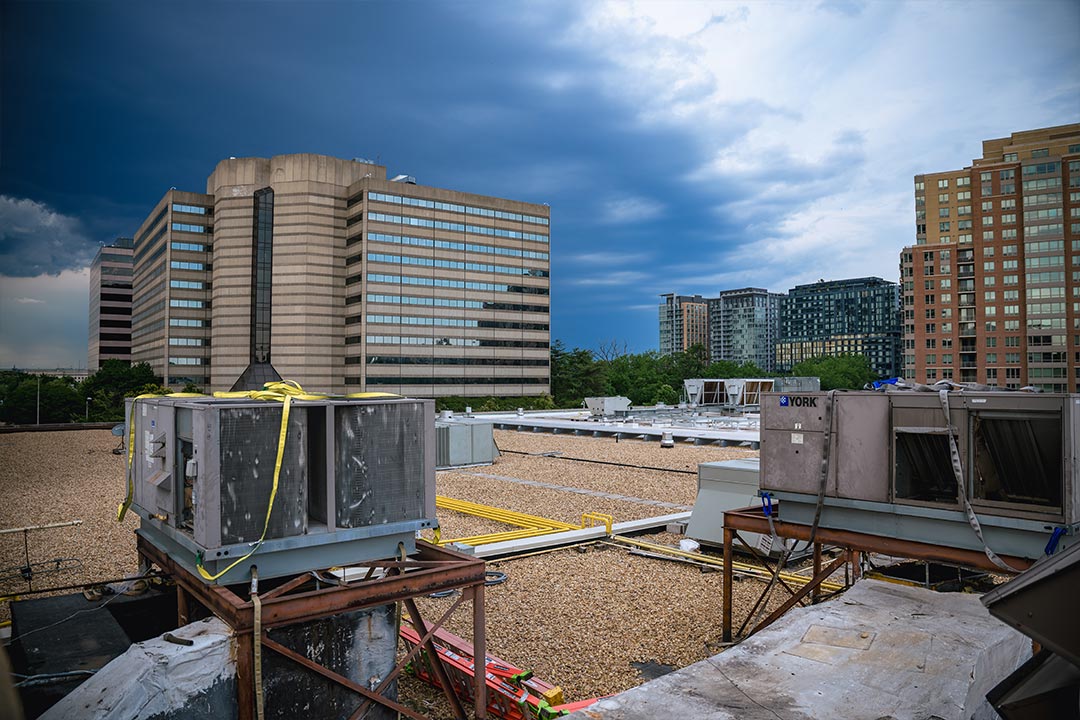
Existing rooftop HVAC units in the congested Arlington flight restricted zone. | Photo: Damon Bowe
When mechanical companies plan a project like this, they often look at ground cranes first. However, traditional cranes face major limits in a busy area like Arlington. The project site at the Fashion Centre is highly congested. It features heavy local traffic, tight spaces, and nearby buildings. A ground crane would have blocked busy streets and disrupted local commerce for days.
Furthermore, this site sits inside the Washington DC Flight Restricted Zone (FRZ). It is also right next to Ronald Reagan Washington National Airport. Operating a rooftop unit HVAC helicopter lift here means jumping through massive regulatory hoops. Fair Lifts provided the perfect alternative by taking the entire operation into the air. Our expert planning eliminated ground delays and kept the local streets completely open.
Choosing a Powerful and Reliable Aircraft

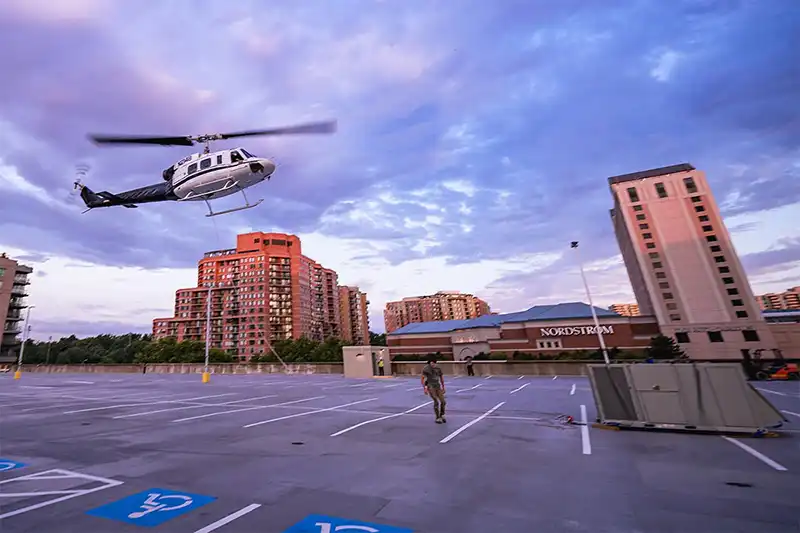
The Bell 214 helicopter hovering over the parking deck staging area. | Photo: Damon Bowe
To lift the 2,500-pound loads safely, we utilized a specialized aircraft for the job. Our team deployed the powerful Bell 214 utility helicopter. This helicopter has a long history of excellent performance in the aviation industry. It pairs a robust frame with a mighty engine to handle heavy payloads easily.
The design gives the helicopter incredible lifting power. It also gives the pilot a clear view of the cargo hook below. This clear view is vital when placing heavy objects onto narrow roof curbs. The pilot can see every inch of the movement. This level of control makes the Bell 214 the ultimate tool for a high-stakes commercial HVAC swap.
Managing Complex Federal Permits and Logistics
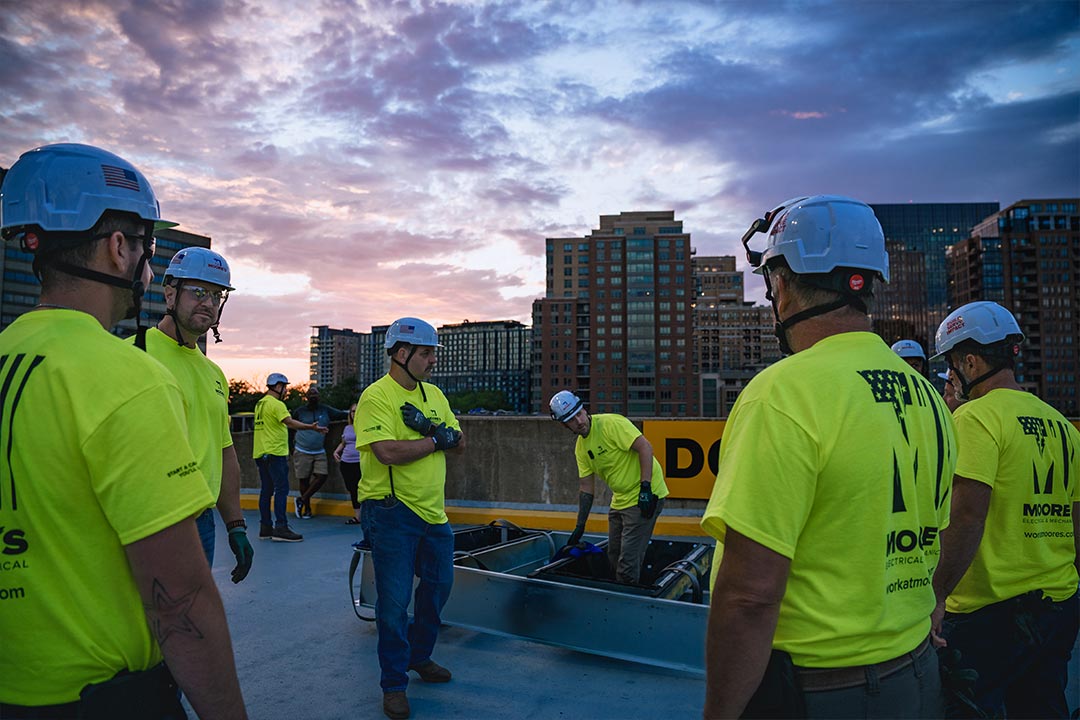
Technicians review strict compliance rules and coordination details during an early morning safety briefing on the deck. | Photo: Damon Bowe
Securing permission for an RTU HVAC helicopter lift in the FRZ requires unique expertise. Standard flight notifications are not enough for this high-security sector. Fair Lifts managed the intensive permitting process from start to finish. We worked directly with multiple federal agencies to clear the airspace.
This project required a mandatory Congested Area Plan (CAP) approved by the FAA. We also secured clearance from federal regulators, airport authorities, and security personnel. Every aspect of the flight schedule was coordinated with air traffic control. Our extensive planning process ensured a safe, efficient, and fully compliant operation.
Step by Step Execution on the Ground and in the Air
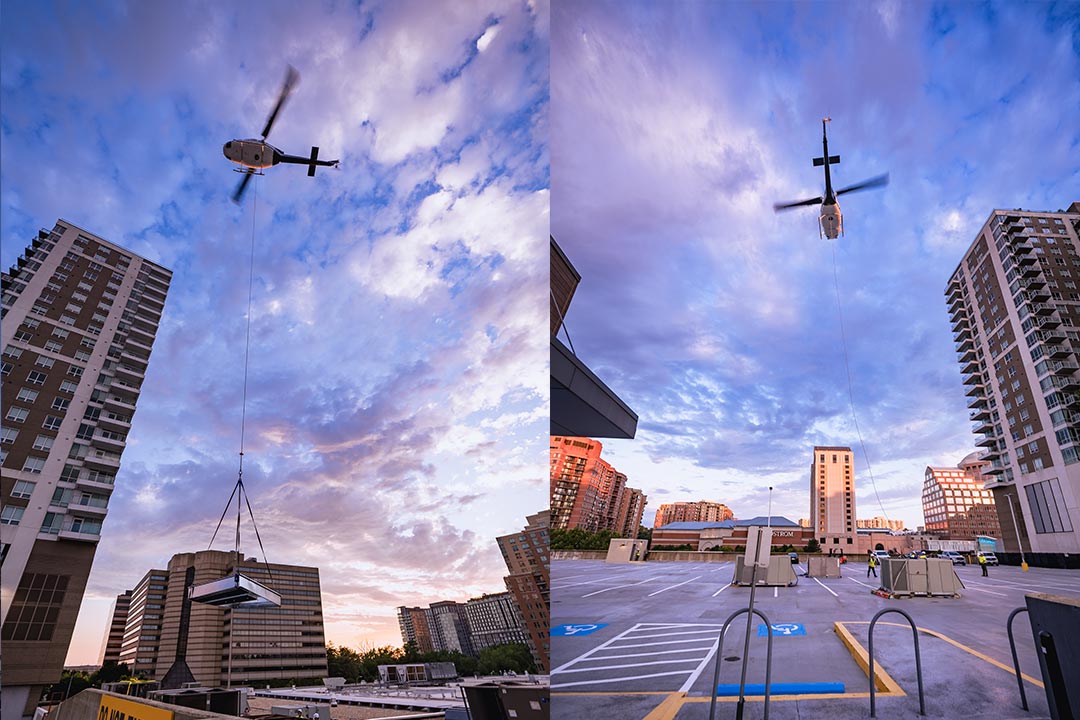
A composite view tracks the seamless sequence of moving equipment between the rooftop and the ground staging deck. | Photo: Damon Bowe
Because the project took place in a sensitive area, safety was our top priority. Fair Lifts created a detailed Congested Area Plan for the FAA. On the morning of the lift, a nearby parking deck served as our main staging area. The deck was cleared and blocked off to keep the public completely safe.
The ground crew worked side by side with the mechanical technicians from Moores Electric. Before the helicopter started its engine, every movement was fully mapped out. The team used a highly efficient workflow to keep the aircraft moving without any wasted time.
- Pre-Rigging: The ground crew attached strong straps to the old unit on the roof so it was ready to hook up instantly.
- The Quick Disconnect: The helicopter hovered above the roof, hooked onto the old 2,500-pound unit, and flew it to the parking deck.
- The Precision Placement: The crew then hooked the new HVAC unit from the staging deck. The pilot lifted it to the roof and lowered it gently onto the open curb.
This cycle went flawlessly. By using the helicopter, each individual pick took only a few minutes. The speed of the aircraft allowed the crew to swap the heavy equipment in a single morning. A ground crane would have taken much longer to organize and execute.
An Excellent Outcome for a Great Client
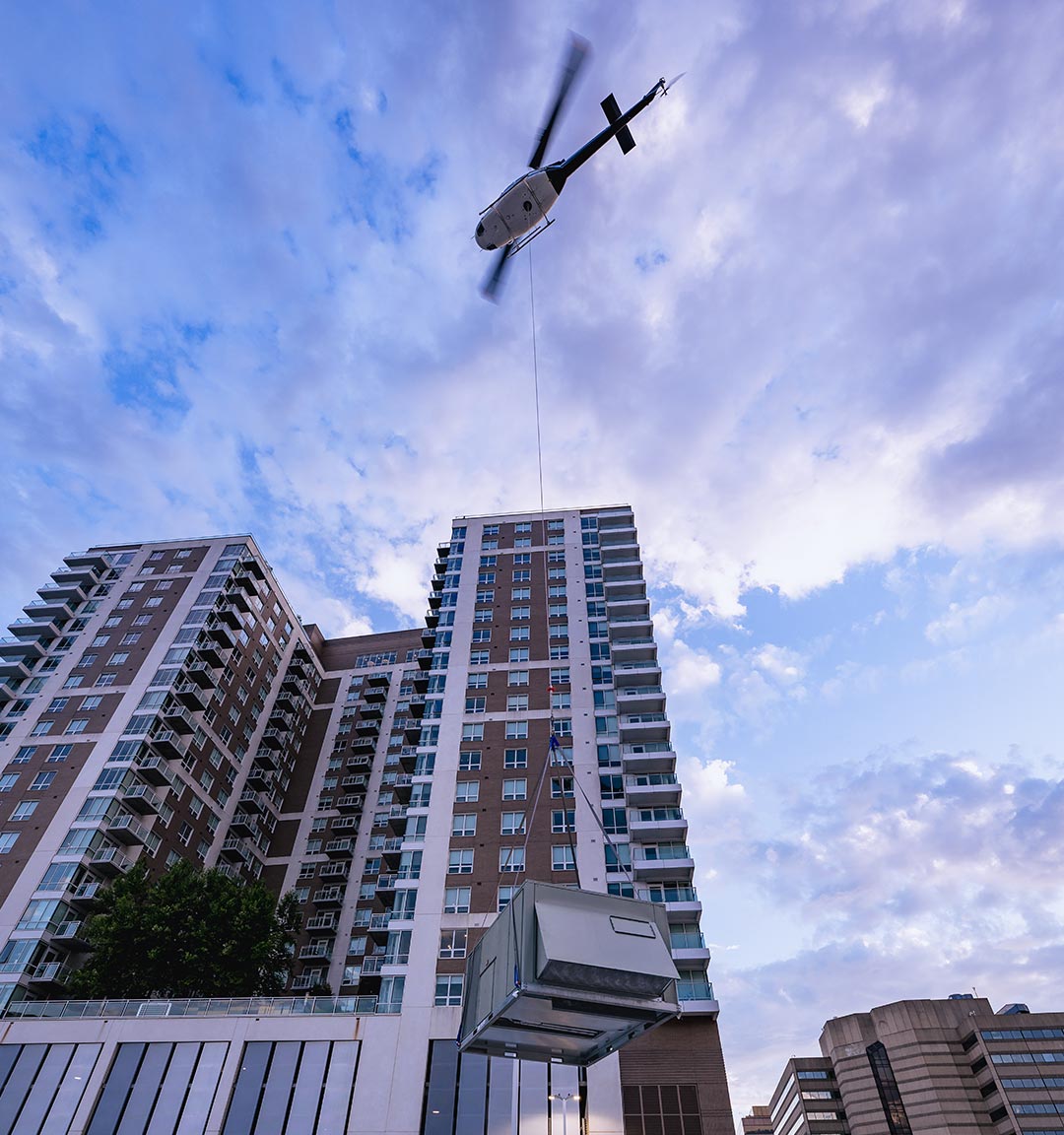
The HVAC unit, mid-lift, on its way to placement. | Photo: Damon Bowe
Just a few short hours after the lift began, the new unit was safely resting on its roof frame. The Bell 214 landed and the site was cleared. The entire job was finished ahead of schedule with zero safety issues. The busy Arlington commercial area returned to normal traffic immediately.
The team at Moores Electric was incredibly happy with how the morning went. They appreciated our seamless management of the strict FRZ airspace. This project showed how careful planning and smart choices can solve tough construction problems. Fair Lifts is proud to provide heavy-lift services that keep projects on time and on budget.
Bring Speed and Precision to Your Next HVAC Lift

The aircraft swiftly flies a frame section past nearby high rises. This demonstrates why airborne precision is the fastest path to success. | Photo: Damon Bowe
When access is limited, schedules are tight, or ground crane operations become impractical, helicopter lifting can provide a faster alternative. Fair Lifts specializes in coordinating rooftop HVAC installations, equipment replacements, and complex aerial construction projects throughout the United States.
Call Austin Quattrocchi at (470) 443-9800 to discuss your requirements with an experienced project manager.