

When a hiker in only shorts and a T-shirt became stranded and injured near Mount Seymour in North Vancouver, the recent North Shore helicopter rescue demonstrated both the power of mountain emergency systems and the dangers of under-preparation. This event, unfolding on September 15, 2025, underscores critical wilderness safety principles as volunteers and air crews race against worsening weather to save lives.
From Hike to Helicopter Rescue
An individual from Ontario embarked on a hike early in the morning and intended to climb Pump Peak near Mount Seymour Provincial Park. Descending, that person lost the correct trail and instead ended up on the Elsay Lake Trail. Along the way, a lower body injury rendered further travel impossible. Despite having no protective clothing beyond a T-shirt and shorts, no food, no water, and no trip plan disclosed to anyone, the hiker retained enough cell reception to make a 911 call.
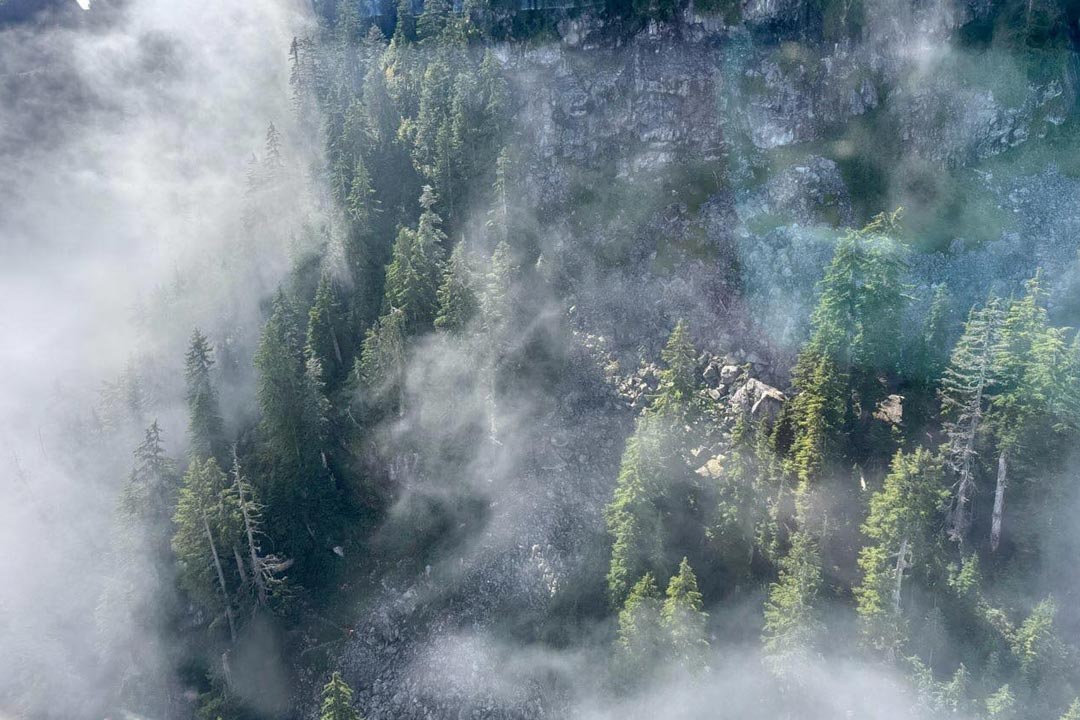
Clouds clearing during the rescue | Photo: facebook.com/NorthShoreRescue
Conditions were cold and damp, with ambient temperature around 43 degrees Fahrenheit. Cloud cover and low visibility prevented the helicopter from immediately accessing the rescue site. A ground rescue team departed from the Seymour Search and Rescue Station while aerial crews waited until conditions improved. Once the cloud lifted, a Talon helicopter winched a crew member to stabilize the injured individual, then evacuated the hiker by air to the Capilano Search and Rescue Station, where paramedics took over care.
North Shore Rescue & Helicopter Operations
North Shore Rescue (NSR) is a volunteer-based organization operating around Vancouver, British Columbia. It responds to dozens of wilderness emergencies each year, using both ground and aerial resources. Volunteers are trained in mountain rescue, first aid, search techniques, and night operations.

North Shore Rescue | Photo: facebook.com/NorthShoreRescue
The aerial component often employs a Helicopter Flight Rescue System (HFRS), where crews can insert or extract rescue personnel using ropes, or hoist stranded hikers when terrain or injury prevents ground access. Weather, visibility, and air safety protocols must be satisfied before aerial rescue is attempted. In this recent incident, low clouds delayed the helicopter’s access until conditions permitted safe flight.
The Conditions That Increased the Danger

NSR’s Airbus AS365 Dauphin navigates the mountain forest. | Photo: facebook.com/NorthShoreRescue
This event exposed several common risks in wilderness hiking: poor clothing choices, no backup layers, no food or water, lack of navigation planning, and travelling without informing others of your route. At 43 °F in damp and cloudy conditions, hypothermia becomes a real risk, even during daylight hours. Wet clothing, injury, and immobility compound the danger by accelerating loss of body heat. In remote terrain, limited cell reception can delay or block emergency calls.
Geographic features in the North Shore mountains make rescues especially challenging. Trails are steep, switchbacks common, and weather can change quickly. Snow and ice may persist year-round in shaded or high elevation slopes. Even trails that appear easy from a map may become technical when visibility is reduced, when terrain is unfamiliar, or when navigation errors lead hikers off course.
Smart Planning for Safer Adventures
- Carry the “10 Essentials”: extra warm clothing, waterproof layers, navigation tools, headlamp, first-aid kit, snacks and water, emergency shelter.
- Plan your route and let someone know: route, expected return time, and emergency contacts.
- Monitor weather and light: even in daytime, mountain conditions can change rapidly.
- Gear up for conditions: snow, ice, or cold temperatures require appropriate traction and layers.
- Stay calm and visible: if injured, remain in place, use bright clothing or signals, and conserve energy.
How Volunteer Crews Make It All Work

NSR’s Airbus AS365 Dauphin. | Photo: facebook.com/NorthShoreRescue
Search and rescue operations are often carried out by volunteers. North Shore Rescue is staffed by those who dedicate many hours to training, often in harsh conditions. The group serves a large wilderness area around Vancouver and depends on both government support and community donations for equipment, fuel, and medical supplies.
Public education is a constant need. Many incidents like this stem from people underestimating how challenging local trails can be. Despite proximity to urban areas, the North Shore mountains are rugged. Rescue teams frequently issue advisory warnings about weather, preparedness, and responsible hiking behavior.
Why Preparation Matters Most

North Shore Rescue team in action | Photo: facebook.com/NorthShoreRescue
The recent North Shore helicopter rescue near Mount Seymour is a powerful reminder that wilderness safety is not optional. Even experienced hikers can find themselves in serious trouble if they overlook basic planning, appropriate gear, and respect for mountain weather.
This incident ended well thanks to timely communication, rescue readiness, and the efforts of skilled volunteers and aerial crews. Let it serve as a call to action for all adventurers to prepare better before venturing into the mountains. Stay safe, stay prepared, and always respect the wild.