
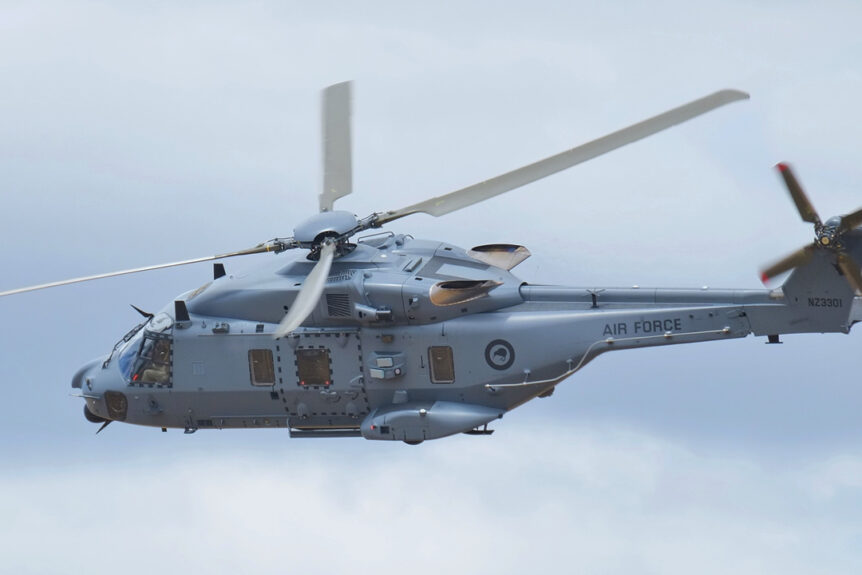
NH90 helicopters from New Zealand recently completed a record breaking overwater transit across the Tasman Sea, marking a milestone in the Royal New Zealand Air Force’s (RNZAF) rotary wing operational envelope. This achievement underscores both the aircraft’s capabilities and New Zealand’s increasing reach in regional operations.
Executing the Long Distance Flight
In a two day journey, two NH90 Tactical Transport Helicopters of RNZAF No. 3 Squadron flew from Royal Australian Air Force Base Amberley near Brisbane to RNZAF Base Auckland via Norfolk Island, before proceeding on to their home base at RNZAF Base Ohakea. The total overwater distance spanned approximately 1,765 miles (2,840 km).
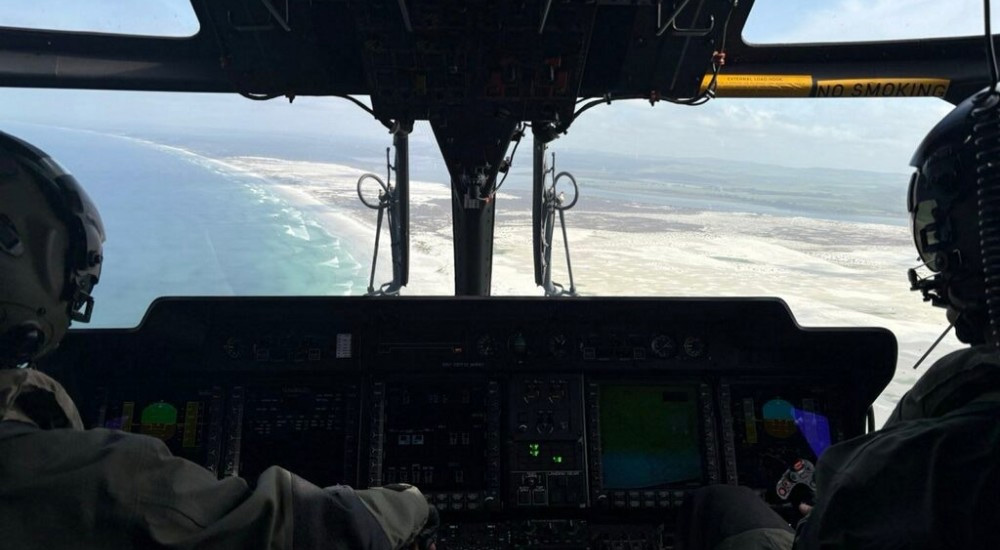
the aircraft flew from Royal Australian Air Force Base Amberley to RNZAF Base Auckland | Photo: nzdf.mil.nz
The longest single overwater leg in the transit was about 660 miles (573 nautical miles), which took around four and a half hours of continuous flight. Along the route, the helicopters made intermediate stops at Coffs Harbour, Rockhampton, and Norfolk Island to refuel and rest.
Significance of the Record
This mission shattered the RNZAF NH90’s prior overwater distance record of 521 miles across the Coral Sea Basin between Australia and Papua New Guinea. Only weeks before, the NH90’s longest overwater leg had been 453 nautical miles between Cairns and Port Moresby.

A Royal New Zealand Air Force NH90 helicopter en route to RNZAF Base Ohakea | Photo: nzdf.mil.nz
Beyond the headline distance, the Tasman Sea flight has great operational and symbolic value. It demonstrates the NH90’s ability to self deploy across broad maritime expanses without the support of transport aircraft, enhancing New Zealand’s strategic autonomy in the Southwest Pacific region. As Air Component Commander Air Commodore Andy Scott put it, “These types of flights give our crews confidence in the system”.
Preparing the Helicopters for the Long Journey
To enable such extended legs, each NH90 was fitted with two external fuel tanks weighing approximately 1,100 lb (500 kg) each. The added fuel capacity effectively extended the helicopter’s range and endurance, enabling safer margins over long stretches of open sea.

Royal New Zealand Air Force’s No. 3 Squadron | Photo: airbus.com
The capability to support such ferry flights was formally signed off by the RNZAF in 2023, though the opportunity for a mission of this scale had not previously aligned. In preparation, crews conducted detailed route planning, fuel consumption modeling, and risk assessments for weather, weight, and emergency contingencies.
In an earlier milestone, the NH90s had already flown their longest mission over water when two helicopters traveled from Cairns to Port Moresby (453 nm). That flight required external tanks and precise performance planning.
Strategic Benefits and Future Operations
This Tasman Sea flight enhances New Zealand’s ability to project rotary wing assets without dependence on fixed wing transports. In future, that could support disaster relief, regional partnerships, humanitarian support, or sovereignty patrols across the Pacific.

Royal New Zealand Air Force’s No. 3 Squadron of NH90 Helicopters | Photo: airbus.com
The successful deployment also strengthens interoperability and deterrence signaling: it proves that New Zealand can reposition helicopters across international sea lanes under its own power. The experience gained in planning and execution will level up crew skillsets and institutional confidence in conducting long overwater rotary operations.
Looking ahead, the RNZAF may leverage this capability for contested environment planning, as well as humanitarian missions in the Pacific island states. The record also demonstrates readiness to respond flexibly across wide maritime domains.