
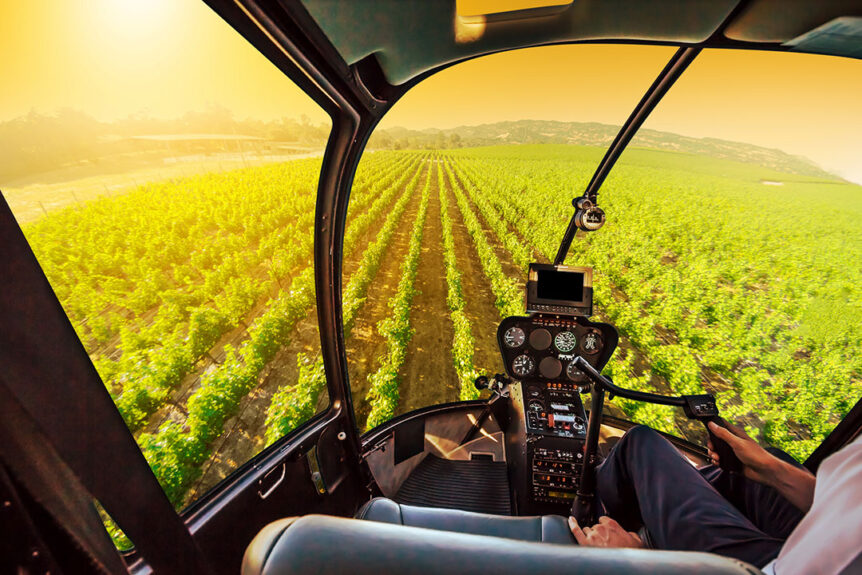
The technique of helicopter frost prevention uses rotor downwash to push warmer air down and disrupt cold air near crops. When a temperature inversion is confirmed, this method can raise canopy temperatures by several degrees during critical frost events to protect vulnerable tissues.
Why frost threatens crops
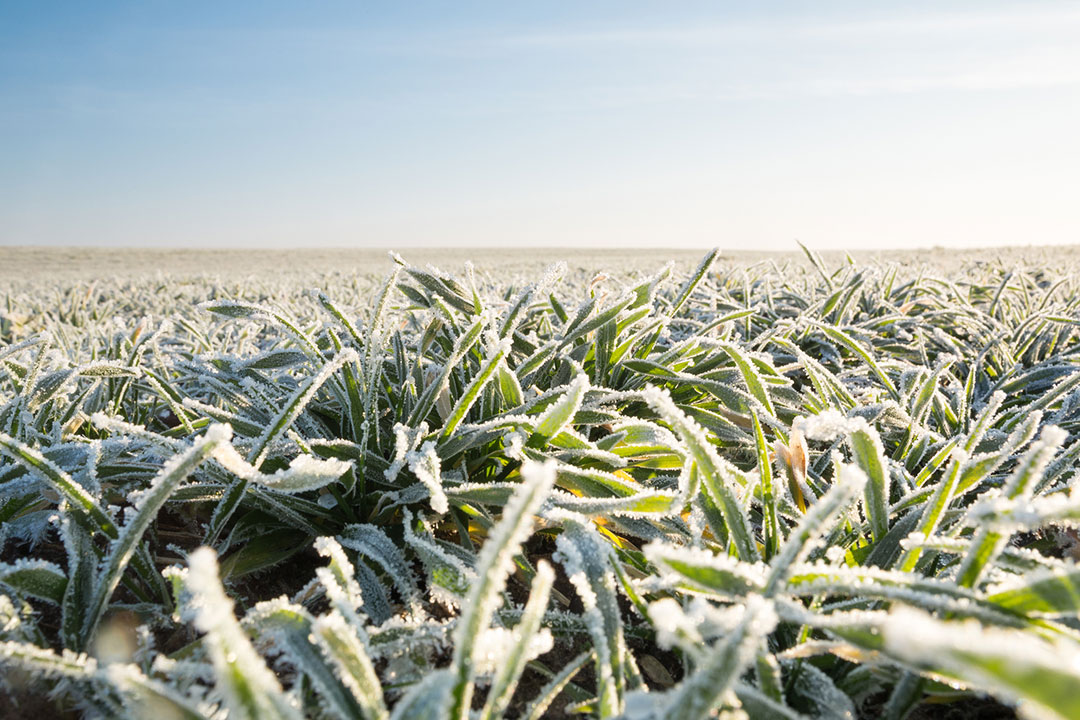
Frost covered winter cereals.
Frost forms when plant surfaces cool to 32 °F or lower, creating ice crystals that rupture cells and reduce fruit set and yield. Clear, calm nights favor strong radiative cooling near the ground. When a warmer layer sits above this cold surface layer, a temperature inversion exists. Inversions trap the coldest air near the orchard floor where buds and blossoms are located.
Practical thresholds for buds and blossoms are listed in extension tables that growers use for decision making, such as the critical temperature charts for apples, peaches, and other fruit crops.

Critical Temperatures | Photo: psu.edu
Since phenology matters, the same species can have different cold tolerance across growth stages. Early swell or tight cluster stages often tolerate a short dip below 28 °F, while open blossoms may be injured at 30 °F to 31 °F. Knowing these thresholds helps time helicopter frost prevention of crops so flights begin before temperatures pass the critical point.
How helicopter frost prevention works

An R44’s downwash on a wheat field.
Disrupting the inversion with rotor downwash
When a confirmed inversion places warmer air aloft, a helicopter can mix that air down into the crop zone. The downwash pulls the warmer layer down and stirs the surface air, raising temperatures around foliage and buds.
Operational flight patterns
Cold air behaves like a fluid, draining toward low points and pooling in pockets. Pilots often start on the upwind or cold air drift side, working inward to push warm air across the block. Ground crews place temperature sensors in frost prone sections, and pilots adjust altitude and speed using real time readings.
Conditions that limit effectiveness
- Inversion required. Without a warmer layer above the canopy, there is nothing to mix down. During advective freeze conditions, when a cold air mass arrives with wind and no inversion, mixing offers little benefit.
- Coverage constraints. Aircraft type, power, and inversion strength determine acreage per pass. Grower accounts often cite tens of acres per circuit under good conditions, with higher totals for powerful models.
- Rapid decay. The warming effect fades within minutes, requiring repeated returns while temperatures stay near critical thresholds.
- Terrain and obstructions. Slopes, trees, power lines, and irregular blocks complicate low level night operations.
Advantages for Growers

A vineyard being treated.
Helicopter frost protection offers growers several compelling benefits, chief among them being its superior speed and responsiveness. This method can be activated quickly when a forecast deteriorates, often much faster than installing or repositioning ground based systems. A single aircraft provides remarkable reach, capable of influencing multiple zones in one night, including blocks that are difficult to access by vehicle.
This capability allows for highly targeted intervention, as pilots can concentrate flights over critical areas like cold hollows or sensitive varieties in bloom, applying protection precisely where it delivers the greatest return.
An additional significant advantage is water conservation; since the process works entirely by mixing air, it consumes no water, which is a major benefit in regions where irrigation for overtree protection is limited.
Strategic Application for Best Results

Rows of snow covered carrots.
Helicopter frost protection is a powerful tool that delivers the best return when applied strategically. Its effectiveness is highest under specific conditions, namely a strong temperature inversion. When weather patterns shift, such as with increasing wind that erodes the inversion, integrating other frost protection methods ensures continuous coverage. To maximize value, many growers focus helicopter support on their high value blocks or during seasons with exceptional frost risk, creating a cost effective approach to safeguarding their harvest.
While future technologies like autonomous systems will add new capabilities, the piloted helicopter is the proven and reliable standard for rapid, large scale frost protection in orchards and vineyards today.
Partner with Fair Lifts for Expert Frost Protection
Fair Lifts connects growers with specialized helicopter services for effective frost protection. This approach centers on partnership, matching your operation with experienced pilots and aircraft specifically suited for agricultural frost control. The result is a reliable, strategic advantage against frost damage.
Call Fair Lifts today at 1-800-318-8940 to discuss your needs, learn about our standby agreements, and ensure you have the right team on your side when the temperature drops. Let’s work together to keep your harvest secure.