
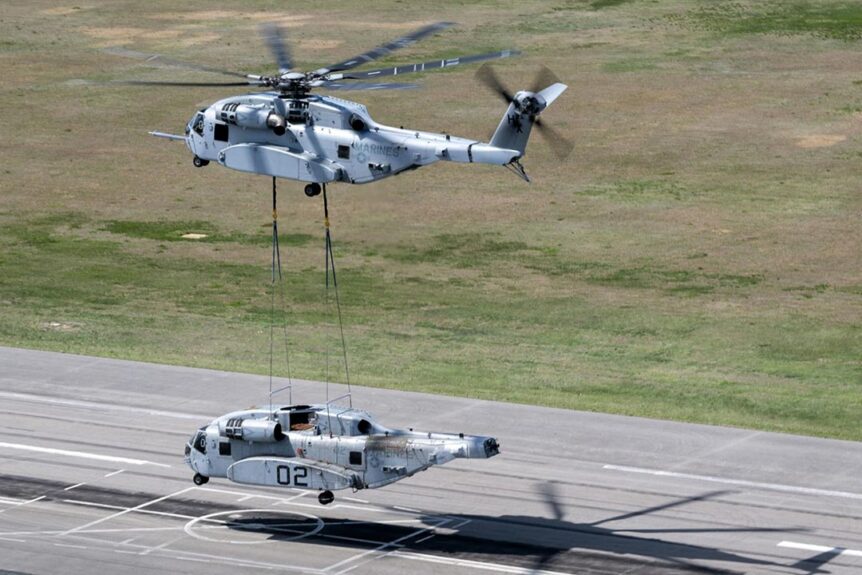
The CH-53K King Stallion has reached a new milestone in modern aviation. In a recent demonstration, the aircraft successfully lifted another CH-53K, showcasing a level of power and control rarely seen in rotorcraft operations. This moment highlights not only raw lifting capability, but also the engineering precision behind one of the most advanced heavy lift helicopters in the world.
This milestone operation reinforces the aircraft’s role as a next generation platform for demanding aerial missions. Developed by Lockheed Martin, the King Stallion continues to set the standard for heavy lift performance.
A Historic Demonstration of Lift Capability
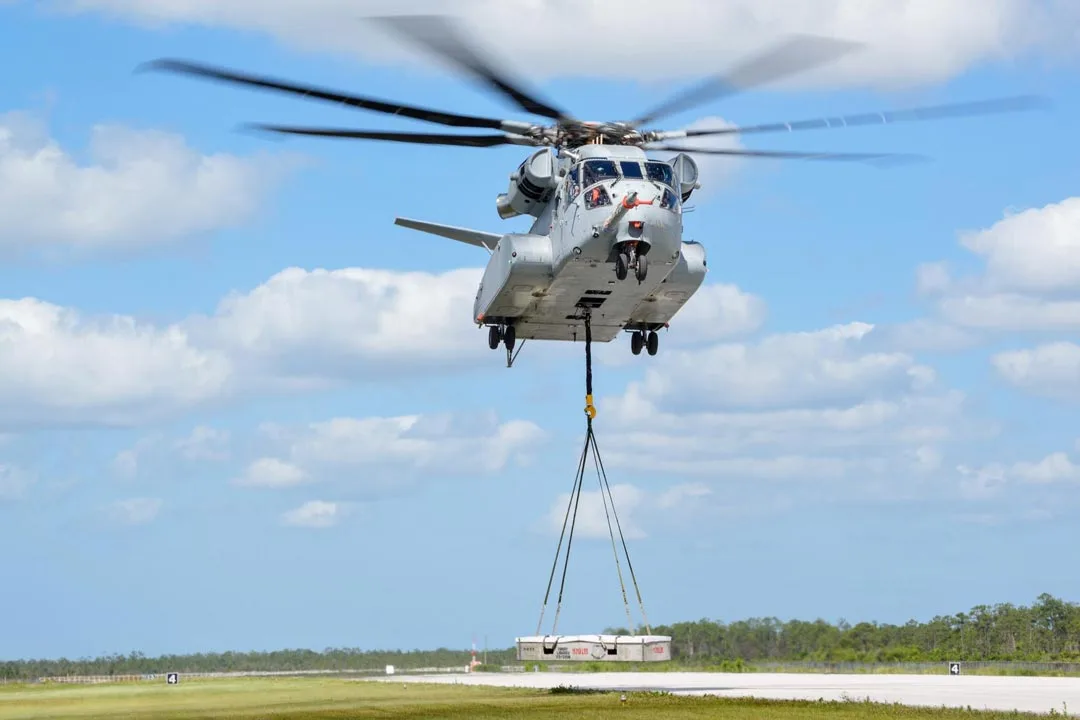
A CH-53 helicopter executes a heavy lift. | Photo: navair.navy.mil
The ability to lift another helicopter of similar size is more than a visual achievement. It validates the aircraft’s structural integrity, lift performance, and flight stability under extreme conditions. While the CH-53K is rated to carry loads exceeding 27,000 pounds, this demonstration pushes beyond typical mission profiles.
It is important to note that this type of lift is not part of routine operations. Instead, it serves as a proof point. It shows what is possible when advanced engineering, power, and control systems come together in a single platform.
Engineering Behind the Power
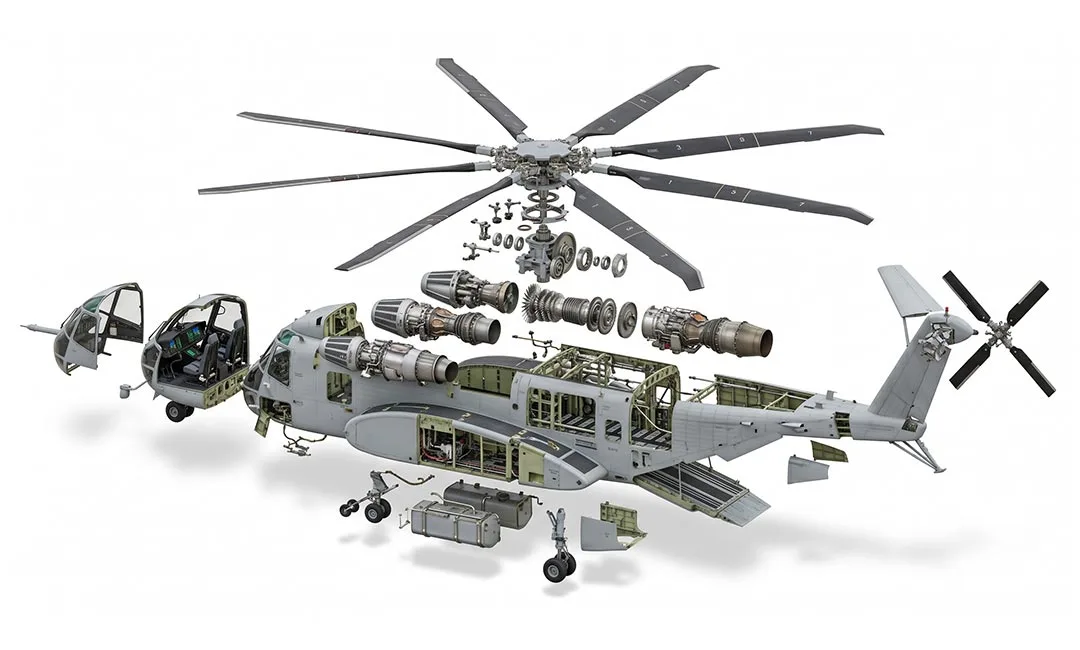
Sikorsky CH-53K King Stallion heavy-lift helicopter, all components separated
This capability is driven by several key advancements built into the aircraft’s design:
- Three GE T408 engines delivering a significant increase in horsepower
- Composite rotor blades that improve lift efficiency in demanding conditions
- A reinforced airframe designed for high external load stress
- Fly by wire controls that allow precise handling during complex lifts
Together, these systems create a helicopter that remains stable and responsive, even under extreme load conditions. Lifting another aircraft requires exact control, and this demonstration shows that the CH-53K can deliver it.
What This Means for Military Operations
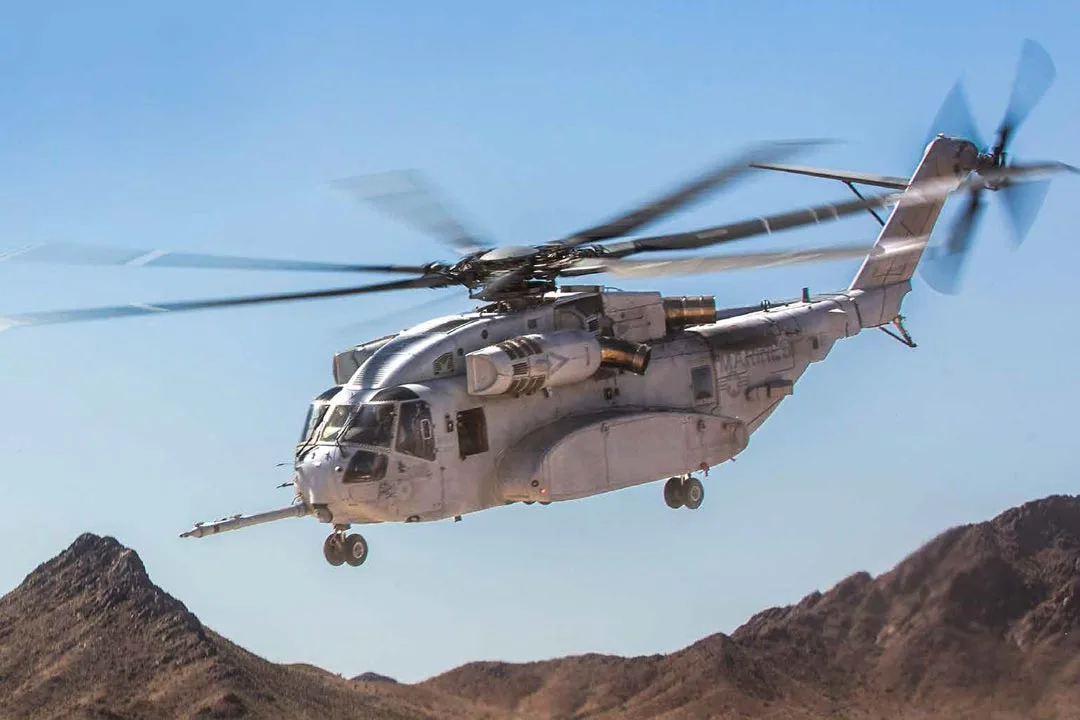
The CH-53K King Stallion helicopter is the unparalleled king of heavy lifts. | Photo: lockheedmartin.com
This level of lift capability has real operational value. In military environments, the ability to recover or reposition large assets without ground support can significantly reduce risk and response time.
For example, a disabled aircraft in a remote area could be extracted quickly without waiting for ground transport. This improves mission flexibility and helps maintain operational readiness in challenging environments.
It also supports expeditionary missions where infrastructure is limited. Heavy lift helicopters like the CH-53K allow teams to operate in areas that would otherwise be difficult or impossible to access.
Relevance to Commercial Heavy Lift Applications
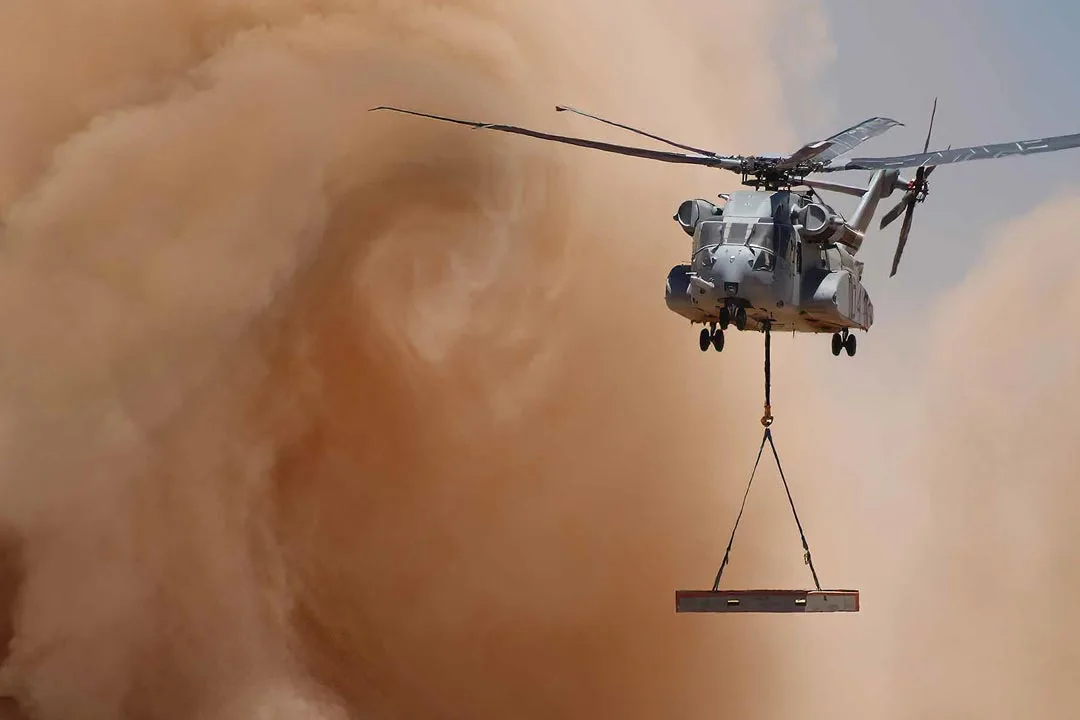
The CH-53K is a heavy-lift powerhouse in all weather conditions. | Photo: lockheedmartin.com
While this demonstration took place in a military setting, the underlying capabilities have clear parallels in commercial aviation. Heavy lift helicopter services are widely used across construction, energy, and infrastructure projects where ground access is limited.
In these environments, aerial lift solutions often provide the safest and most efficient path forward. Similar approaches are used to:
- Install rooftop HVAC systems in dense urban areas
- Transport utility equipment across remote terrain
- Support emergency response with rapid deployment
This demonstration reinforces a broader trend. As lift capabilities continue to improve, helicopters are becoming essential tools for solving complex logistical challenges.
Digital Precision Meets Raw Power
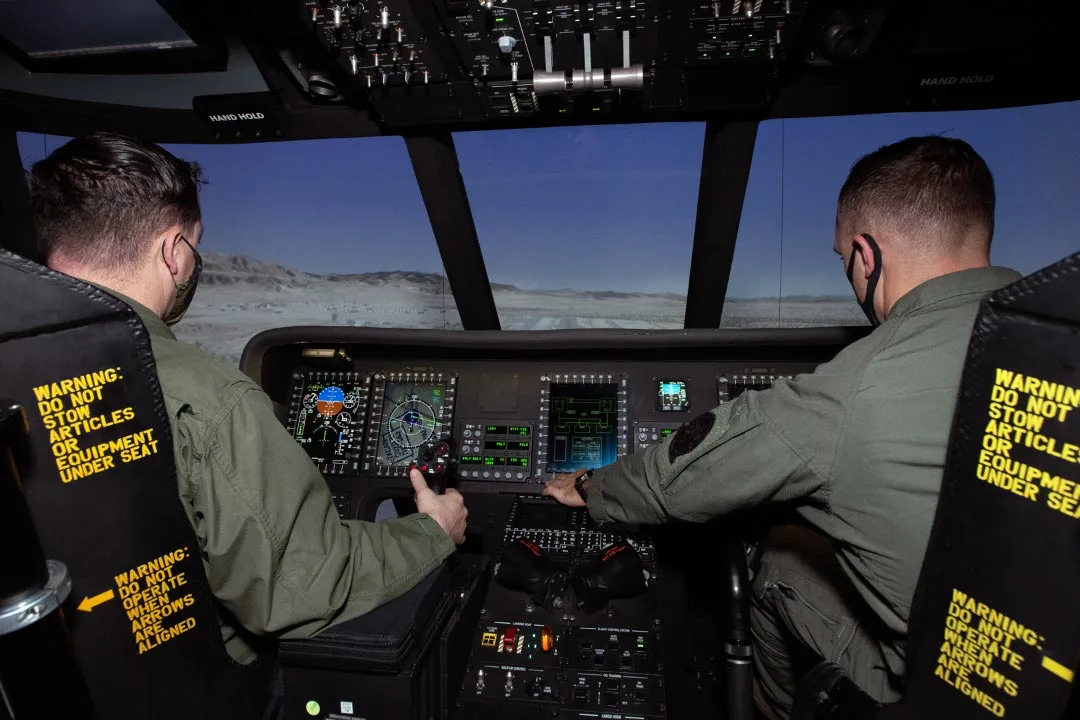
The Containerized Flight Training Device (CFTD) is a full-mission flight simulator that will allow flight crews to train on the full scope of Marine Corps heavy lift missions. | Photo: lockheedmartin.com
Power alone does not make this type of lift possible. Precision is just as important. The CH-53K’s fly by wire flight control system allows pilots to maintain stable positioning during hover and load movement, even under extreme conditions.
This level of control is critical when handling large and complex loads. Small adjustments in balance or positioning can have a major impact on safety and success. The aircraft’s avionics help reduce pilot workload while improving overall accuracy.
The platform was designed to meet the evolving needs of modern missions, with a strong focus on reliability and operational efficiency.
The Future of Heavy Lift Aviation
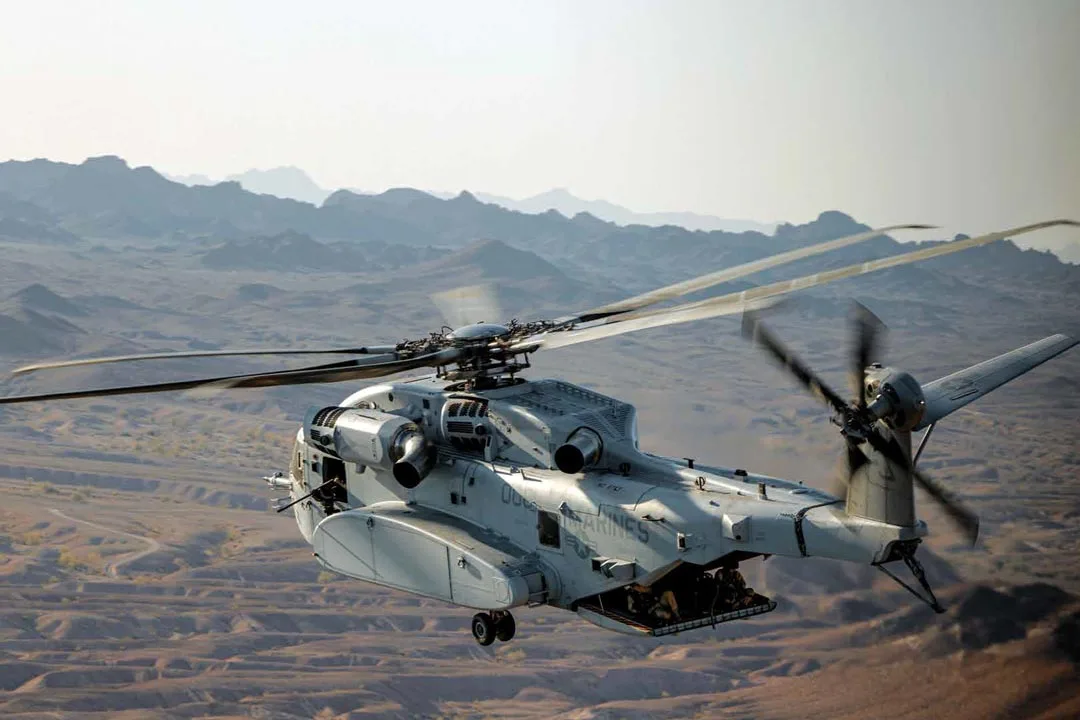
CH-53K King Stallion Helicopter | Photo: lockheedmartin.com
This demonstration is more than a headline moment. It reflects the direction of heavy lift aviation as a whole. Aircraft are becoming more capable, more precise, and more adaptable to complex environments.
The ability to move extremely heavy loads quickly and safely is becoming increasingly valuable across both military and commercial sectors. As technology continues to evolve, these capabilities will only expand.
The CH-53K stands at the leading edge of this shift, showing what is possible when power, control, and engineering are fully aligned.
For industries facing difficult lift challenges, this is a glimpse into the future. A future where even the most demanding lifts can be completed with confidence, precision, and efficiency.