
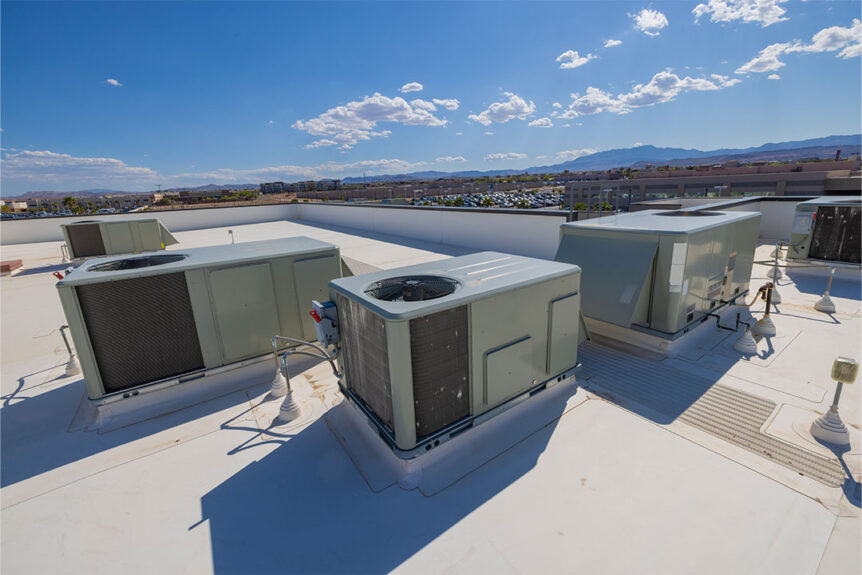
For decades, massive street cranes were the only option for rooftop HVAC installations. This traditional approach usually meant road closures, stacks of permits, and major business disruptions. Today, property managers and contractors are choosing a faster path: the helicopter.
Whether you manage an office, a warehouse, or a hospital, rooftop work impacts tenant experience and your budget. Aerial lifts are designed to protect those priorities by offering speed and precision that ground cranes cannot match.
The Real Cost of Ground Cranes
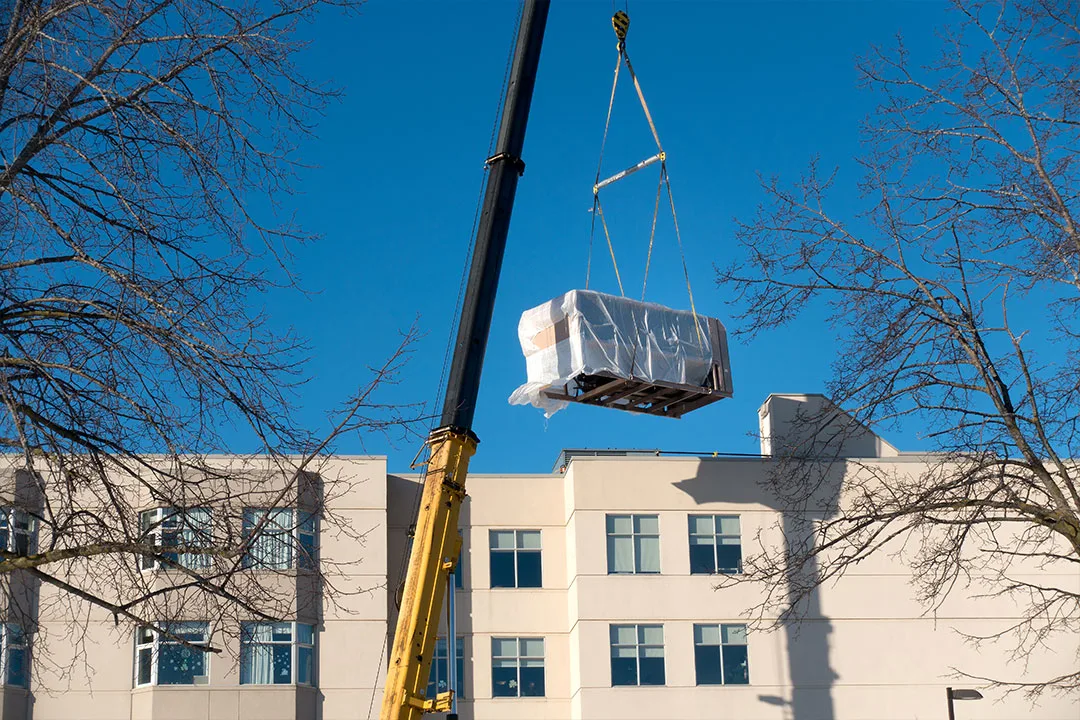
A ground crane positions an HVAC unit onto a roof top.
Property managers often look only at the daily rental rate of a crane. However, the total bill is much higher. Beyond the $800 to $1,500 daily fee for a mobile unit, you must account for:
- Mobilization fees: The cost to bring the crane to the site.
- Assembly overhead: A tower crane can cost $60,000 to $100,000 just to set up and tear down.
- Permit costs: Urban projects often require lane-use fees, traffic control, and police details.
- Operational downtime: Road closures and blocked loading docks can frustrate tenants and stop business operations for days.
The Helicopter Advantage
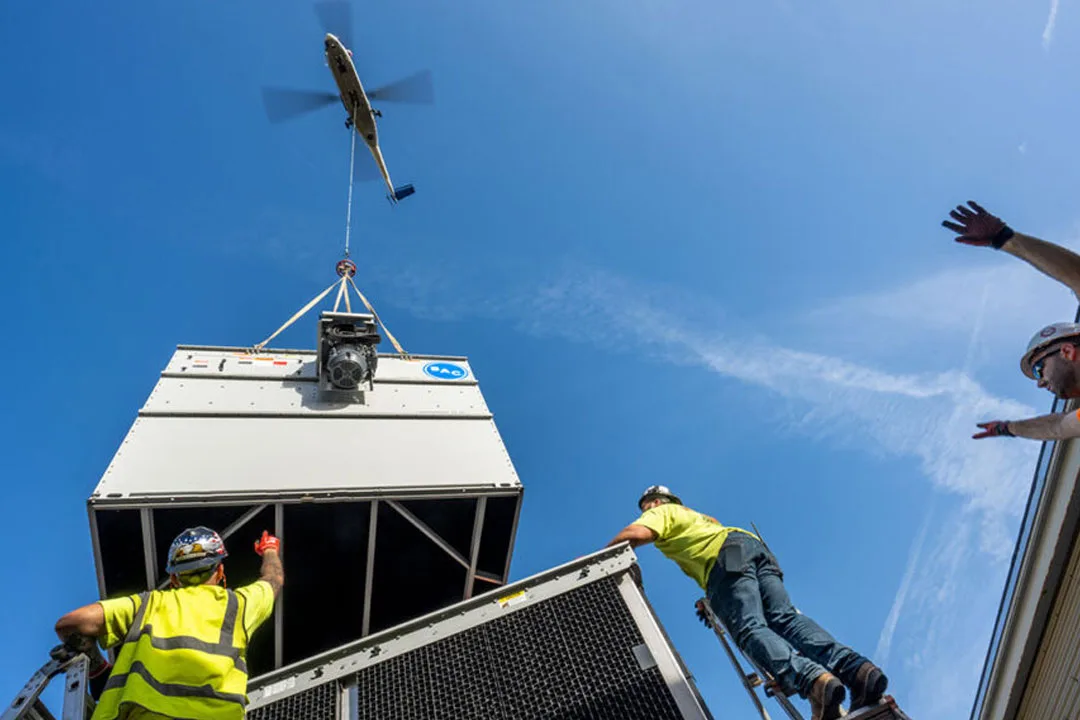
A helicopter positions a rooftop unit into place with guidance from the lift crew.
Helicopter-assisted lifts work on a different timeline. Instead of staging equipment for days, a helicopter completes the job in a small window and leaves. A heavy-lift helicopter can install 10 to 15 units per hour. For a project with multiple rooftop units, this means a single morning of work instead of a multi-day ordeal.
| Factor | Ground Crane | Helicopter Lift |
|---|---|---|
| Timeline | 2 to 3 days typical | 2 to 3 hours typical |
| Street Access | Road closures required | No street closures needed |
| Site Risk | Risk to buried utilities | No heavy ground staging |
| Permits | Complex city and road permits | Streamlined FAA flight plan |
Three Best Uses for Aerial Lifts
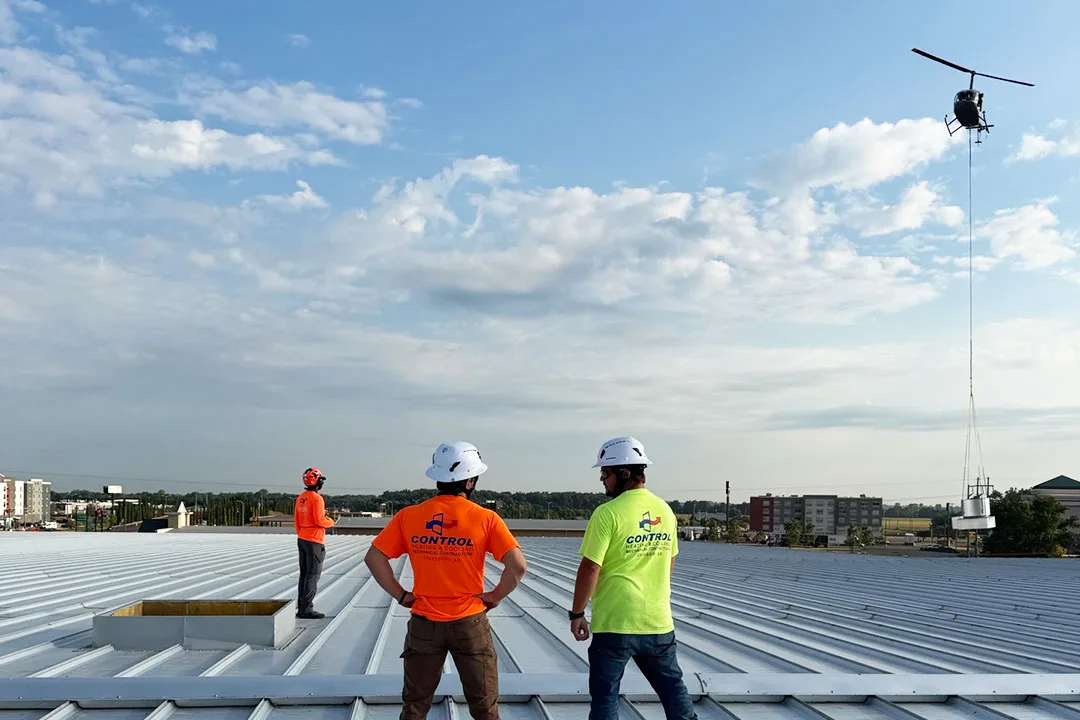
A large HVAC unit is lifted into place by helicopter.
1. Dense Urban Centers
In downtown areas, cranes often cannot reach a roof without blocking traffic. Helicopters bypass this by operating from a small parking area or nearby lot.
2. Occupied Properties
Shopping malls and distribution centers cannot afford to close. A helicopter can swap 15 units in a few hours, keeping the building open and the climate controlled.
3. Sensitive Sites
Properties with underground parking or expensive landscaping face structural risks from heavy cranes. Helicopters never touch the ground near the building, which reduces your liability.
A Simplified Planning Process
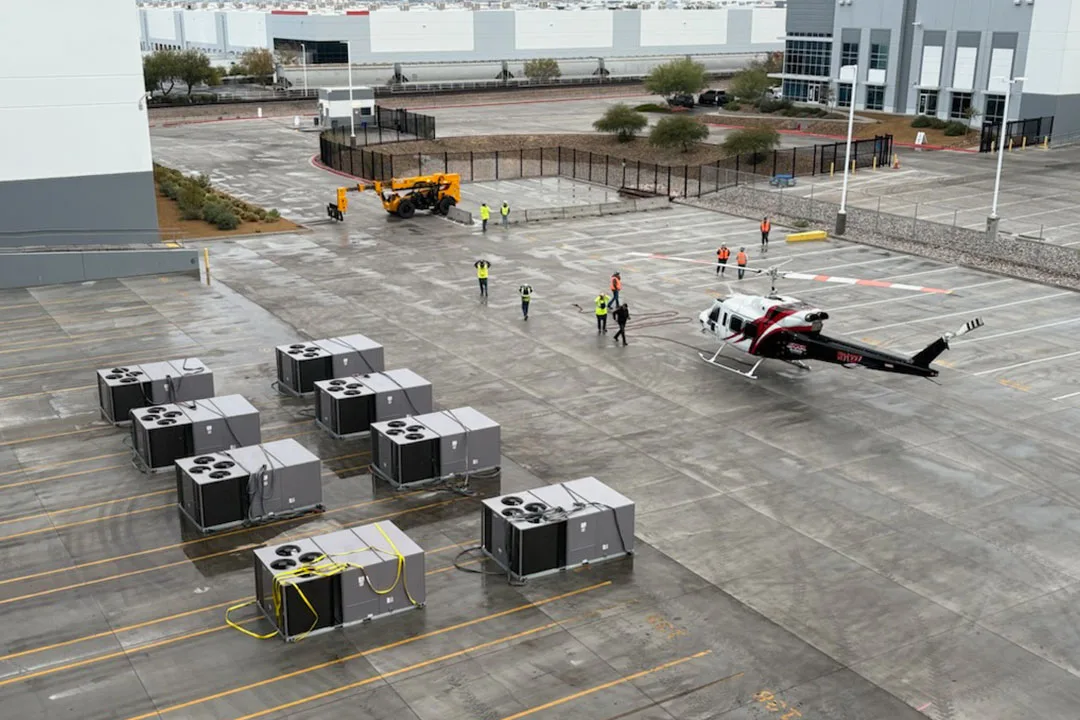
8 HVAC units are positioned for lifting in the staging area.
One of the biggest benefits for property managers is the reduced workload. A professional aerial provider, like Fair Lifts, manages the logistical complexity, including:
- Site Assessment: Engineers inspect the roof and hazards.
- FAA Filings: The flight team handles all regulatory paperwork.
- Rigging and Safety: Expert crews ensure precise unit placement.
- Insurance: Full coverage is arranged specifically for the lift day.
The Bottom Line
The helicopter approach is often the most cost-effective choice for commercial projects. When you account for the combined costs of crane assembly, road permits, and lost business time, aerial lifts frequently result in a lower total project cost. On your next HVAC bid, ask for a helicopter quote to see the efficiency and savings for yourself.