
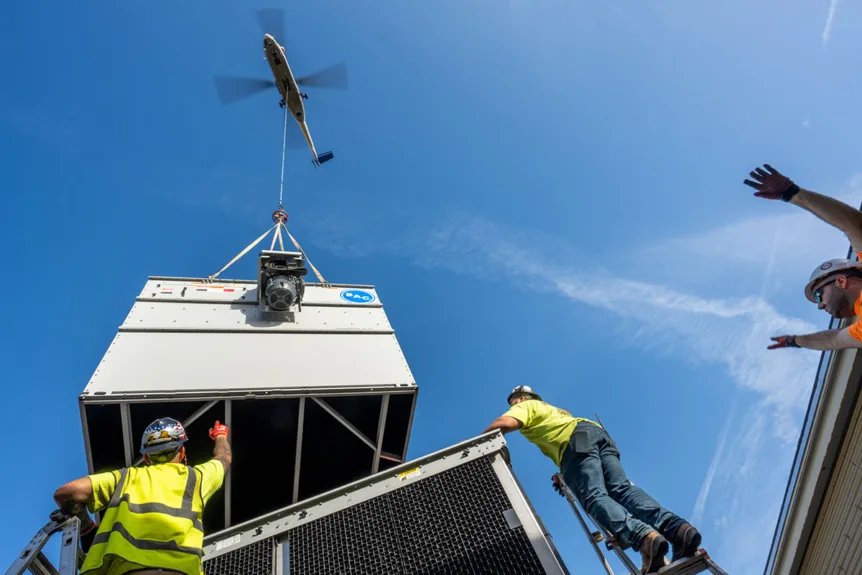
When it comes to lifting and transporting heavy loads, helicopters have proven to be indispensable assets in various industries, particularly construction. But how much weight can be lifted by a helicopter? The answer depends on the specific model and its design capabilities. In this article, we delve into the lifting capacities of different helicopter models, from the heavy-lift Sikorsky S-64 Skycrane to the versatile Airbus H225 Super Puma, and explore how these powerful machines have revolutionized the construction industry with their unique lifting capabilities, precision, and maneuverability.
The Sikorsky S-64 Skycrane
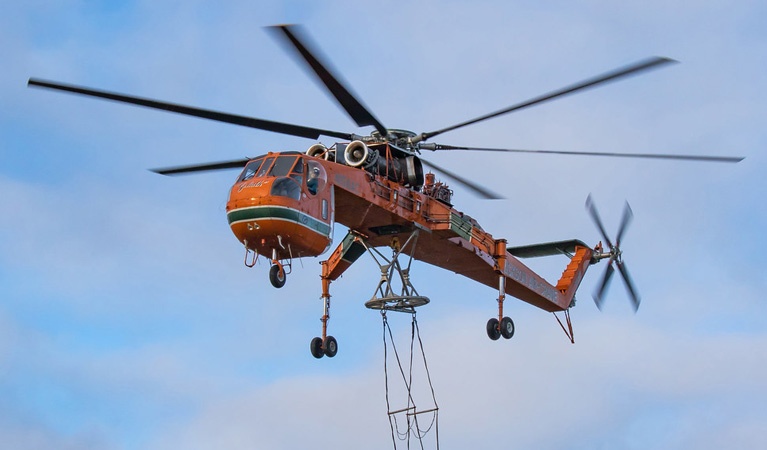
The Sikorsky S-64 Skycrane
The Sikorsky S-64 Skycrane is a heavy-lift helicopter designed for specialized operations. Renowned for its impressive lifting capacity, the S-64 can carry loads up to 20,000 pounds (9,072 kilograms) with its unique center payload system. This helicopter’s versatility has made it a popular choice for complex tasks, such as transporting heavy equipment, positioning HVAC units, and supporting firefighting efforts.
The Boeing CH-47 Chinook

Boeing CH-47 Chinook
The Boeing CH-47 Chinook is a tandem-rotor, heavy-lift helicopter utilized by military forces and commercial operators worldwide. With a maximum payload capacity of approximately 28,000 pounds (12,700 kilograms) externally and 24,000 pounds (10,886 kilograms) internally, the Chinook has the power to carry oversized loads and equipment. It’s often used for disaster relief, military logistics, and large-scale construction projects.
The Kaman K-MAX
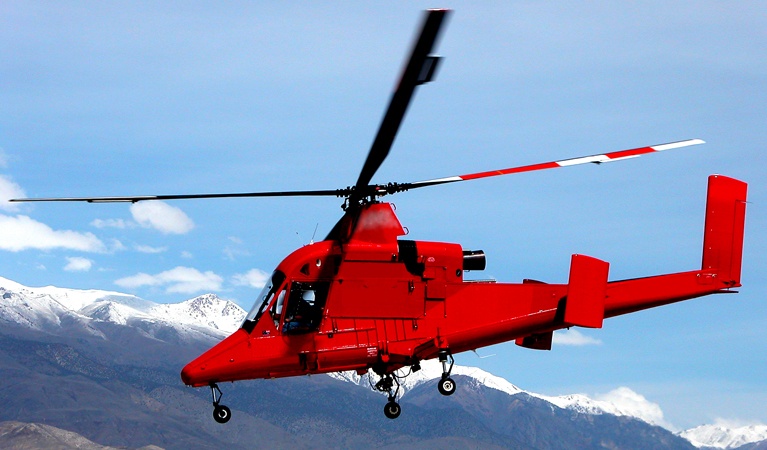
Kaman K-MAX
The Kaman K-MAX is a single-engine, single-seat helicopter designed explicitly for external load operations. Its intermeshing rotor system provides exceptional stability and lifting capabilities, allowing it to carry up to 6,000 pounds (2,722 kilograms) externally. The K-MAX is favored for its efficiency in repetitive lifting tasks, such as logging, power line construction, and firefighting.
The Airbus H225 Super Puma
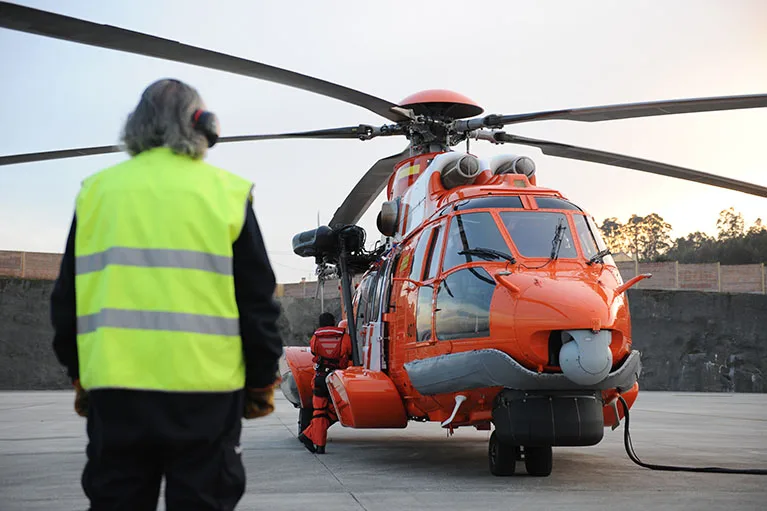
Airbus H225 Super Puma
The Airbus H225 Super Puma is a long-range, heavy-lift helicopter capable of carrying up to 11,000 pounds (4,990 kilograms) externally. This twin-engine aircraft is highly versatile and can be used for various applications, such as search and rescue missions, passenger transport, and offshore operations. The Super Puma is also an ideal solution for carrying heavy construction materials, thanks to its powerful engines and spacious cargo hold.
The Bell 412

Bell 412HP
The Bell 412 is a medium-lift, twin-engine helicopter known for its reliability and performance. With a maximum external load capacity of 4,500 pounds (2,041 kilograms), the Bell 412 is suitable for various construction applications, such as transporting building materials, erecting towers, and stringing power lines. Its spacious cabin can also accommodate up to 14 passengers, making it an ideal choice for crew transport.
The Mil Mi-26

Mil Mi-26
The Mil Mi-26 is a Russian-made heavy-lift helicopter with an impressive payload capacity of up to 44,000 pounds (19,958 kilograms). Its powerful engines and large, eight-blade main rotor system allow it to transport heavy equipment and materials, such as construction cranes and concrete slabs. The Mi-26 is widely used in remote and challenging environments, including the Arctic and mountainous regions.
Several factors can affect the lifting capacity of a helicopter, with some of the most significant ones being the helicopter model, altitude, temperature, and the weight of the aircraft itself. Each helicopter model is designed with a specific maximum load capacity, which is determined by the rotor size, engine power, and structural strength of the aircraft. Generally, larger helicopters with more powerful engines and larger rotor systems can lift heavier loads, whereas smaller helicopters with less powerful engines and smaller rotor systems have lower lifting capacities.
Altitude and temperature also play crucial roles in determining the lifting capacity of a helicopter. As altitude increases, air density decreases, resulting in reduced rotor lift efficiency. This reduction in lift efficiency means that helicopters must work harder to generate the same amount of lift at higher altitudes, effectively reducing their overall lifting capacity. Similarly, temperature affects air density, with warmer temperatures leading to less dense air. In hot conditions, helicopters may experience a decrease in their lifting capacity due to reduced engine performance and the need for more power to maintain lift.
In addition to these factors, the weight of the helicopter itself, including its fuel, cargo, and passengers, must be taken into account when calculating the available lifting capacity. This weight, known as the gross weight, must not exceed the maximum gross weight specified by the manufacturer, as doing so can compromise the safety and structural integrity of the aircraft. Moreover, external factors such as wind speed and direction can also impact a helicopter’s lifting capacity. Strong winds can create turbulence and make it challenging to maintain stable flight, while sudden changes in wind direction can cause unexpected shifts in the helicopter’s lift capability.
To ensure the safe and efficient execution of helicopter lift operations, it is essential to carefully consider these factors and consult with experienced professionals who can help assess the specific conditions and requirements of the job. By doing so, operators can make informed decisions that maximize the helicopter’s lifting capacity while minimizing risk.
The weight lifting capacity of a helicopter depends on various factors such as the helicopter model, altitude, temperature, and the weight of the aircraft itself. Modern heavy-lift helicopters like the CH-47 Chinook and the Mil Mi-26 have exceptional lifting abilities, with the latter able to carry up to 44,000 pounds. However, the weight capacity may decrease at higher altitudes and temperatures. Therefore, when planning a helicopter lift operation, it is crucial to consider these factors and consult with experienced professionals to ensure safety and efficiency.