
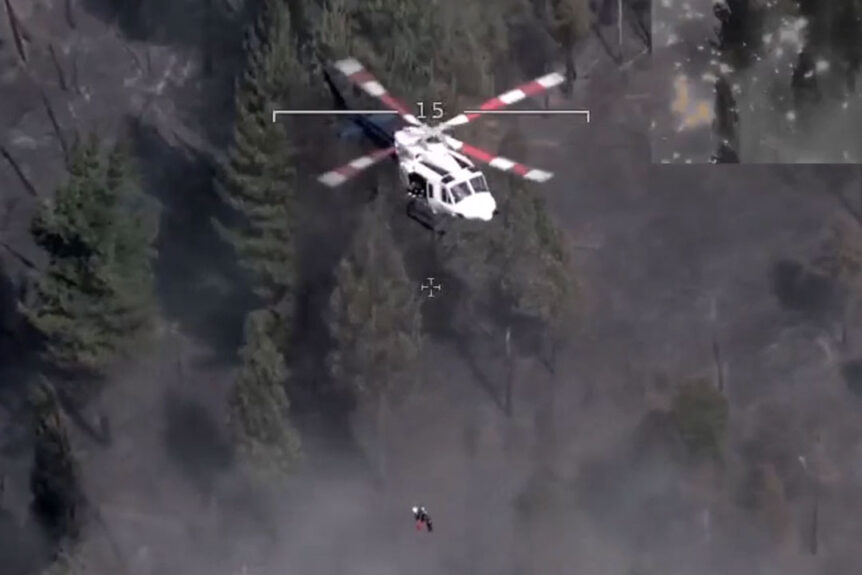
A helicopter bushfire rescue in Australia showcased the high-stakes reality of aerial emergency response on February 6th, 2026. A flight crew spotted a trapped woman near Geeveston in southern Tasmania and winched her to safety just as flames surrounded her position. The rescue, stands as a premier example of modern aerial firefighting coordination.
How the Rescue Unfolded
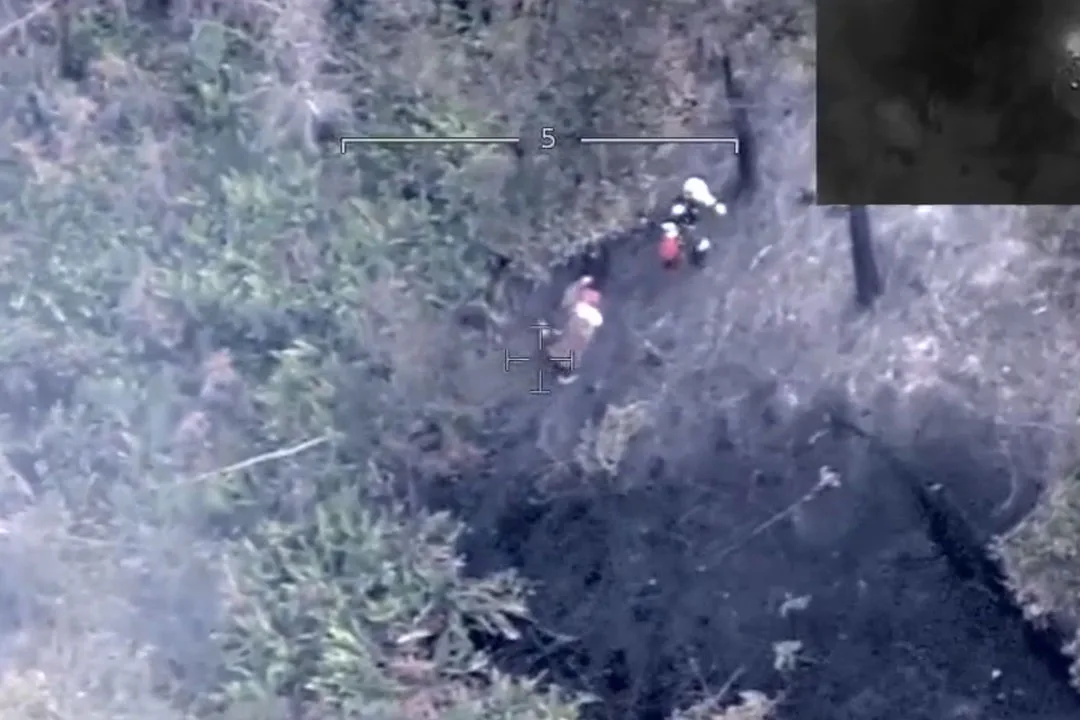
Aerial surveillance footage showing a rescue specialist leading a woman across charred terrain during a helicopter bushfire rescue in Tasmania.
The Tasmania Fire Service received the emergency call at approximately 2:00 PM on a Monday. A bushfire had ignited west of Huonville and intensified rapidly. Within two hours, the blaze consumed nearly 24 hectares of land.
Ground crews found the area inaccessible because the terrain was remote and the fire moved too quickly. When firefighting aircraft arrived, pilots noticed a woman trapped within the fire’s footprint. She was waving a towel to signal for help. That simple action saved her life.
The pilots evaluated the environment and determined there was no safe landing site. Tasmania Fire Service Deputy Chief Officer Matt Lowe described the tactical shift: “The pilot considered landing to evacuate the person but due to lack of landing sites, they decided to call in the winch rescue helicopter to perform a winch rescue.”
The specific aircraft called to the scene was a Bell 412 Type 2 Helicopter, often referred to as a Helitak. This twin-engine workhorse is renowned for its stability during complex winch operations. While the Helitak diverted to the scene, other firefighting aircraft circled the woman and dropped water to create a buffer against the flames. The rescue helicopter arrived in under 15 minutes. A specialist descended via winch to secure the survivor, and paramedics later confirmed she was uninjured after an airlift to the Ranelagh Showgrounds.
The Essential Role of Helicopters
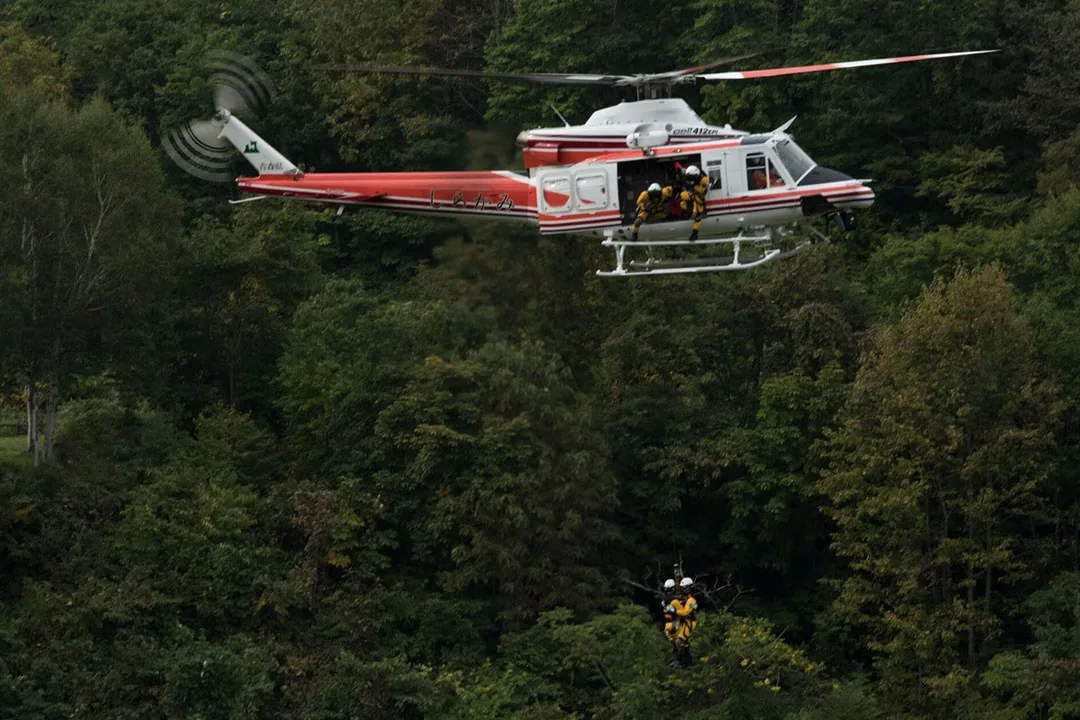
A Bell 412 helicopter hovers over a dense green forest while performing a precision winch rescue operation with two specialists suspended below the aircraft. | Photo: bellflight.com
In an active bushfire, ground vehicles face major limitations. Blocked roads and engine-stalling heat can render traditional response impossible. Helicopters overcome these obstacles by providing a vertical solution to a horizontal threat.
This mission succeeded because of the winch system. This tool allows crews to reach survivors in dense bushland where landing is impossible. Beyond extraction, helicopters provide real-time visibility to identify shifting fire lines. These aircraft are the primary assets used to scout for civilians while simultaneously suppressing flames.
Technical Challenges in the Heat of the Moment
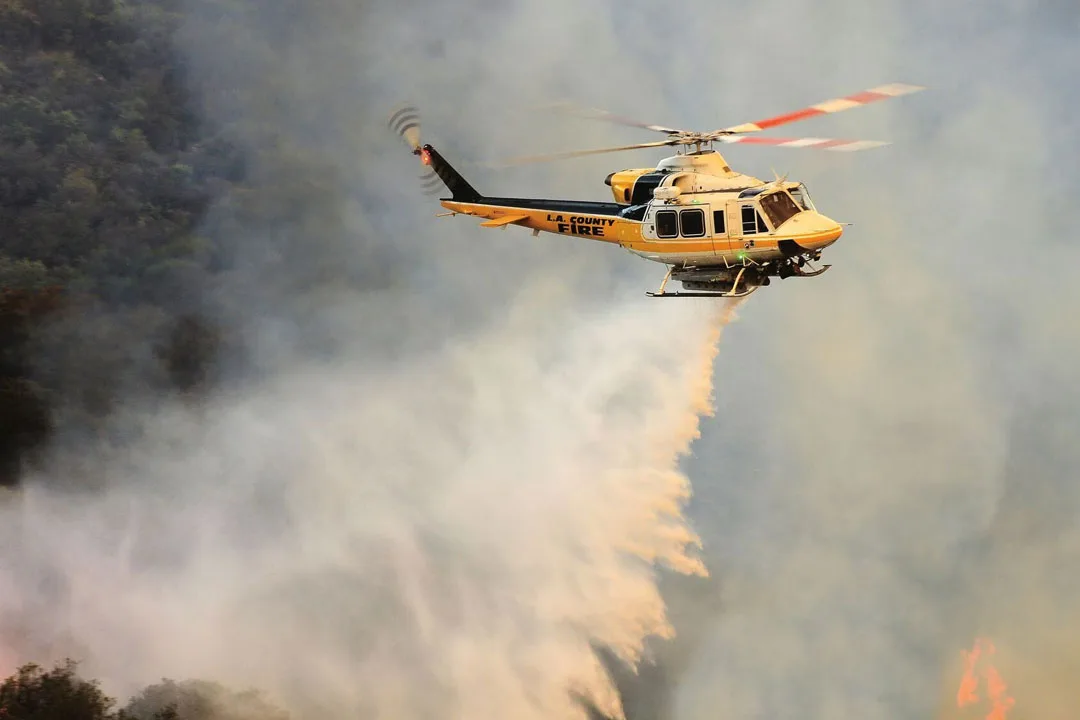
A Bell 412 Helitak firefighting helicopter releasing a high-volume water drop over an active wildfire. | Photo: bellflight.com
Flying near a wildfire is technically exhausting. Smoke often reduces visibility to near zero, forcing pilots to rely on thermal imaging. Additionally, the extreme heat creates powerful updrafts that cause severe turbulence. Maintaining a steady hover for a winch operation in these conditions requires elite piloting skills.
During this specific helicopter bushfire rescue in Australia, the crew held a hover above active flames while other aircraft performed water drops nearby. Acting Commander Andrew Keane of the Tasmania Police confirmed that all agencies coordinated through a shared radio network to manage the complex airspace. This seamless interaction is the result of rigorous inter-agency training.
A Multi-Agency Success Story
This operation relied on a synchronized system of responders. While aircraft suppressed the fire, ground crews prepared for the handoff and paramedics waited at the landing zone. Every stage of the mission had to be perfect.
Deputy Chief Officer Lowe noted that while crews train for these exact scenarios, it was the first real-life rescue of its kind in his professional experience. Integrated responses like this one significantly improve survival rates by keeping the rescue window open longer.
The Future of Australian Aerial Rescue
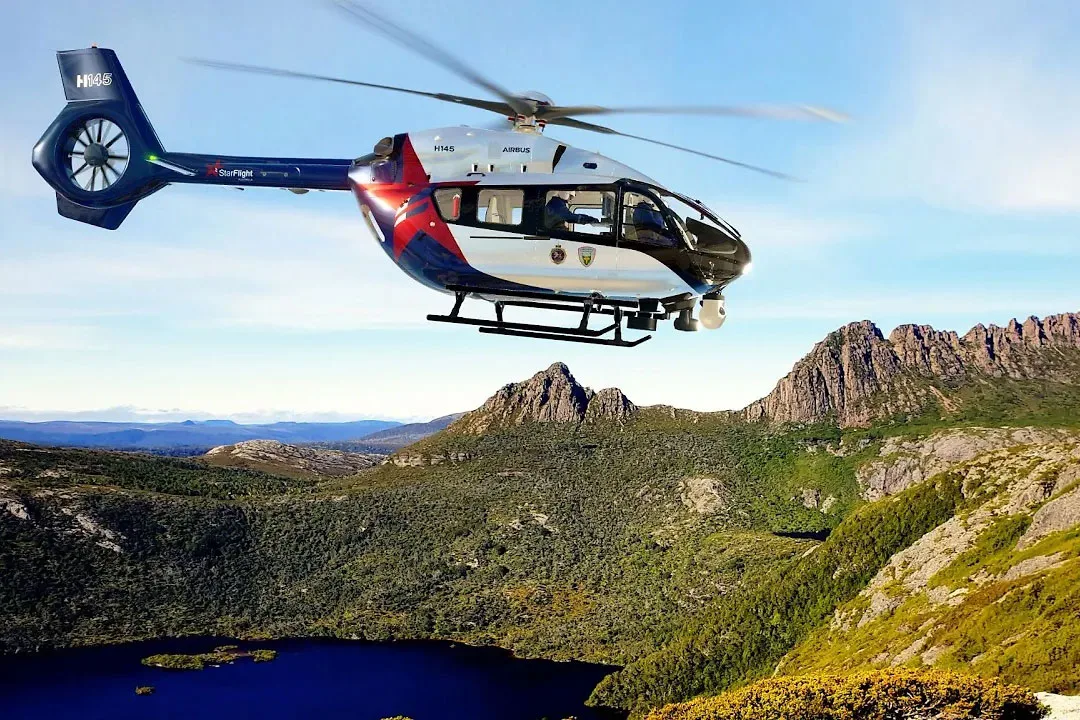
Rendering of an H145 in StarFlight livery | Photo: airbus.com
Australia continues to expand its aerial emergency fleet. StarFlight Australia recently ordered three Airbus H145 helicopters for Tasmania. These aircraft will enter service in late 2027 and can transition rapidly between search and rescue and medical roles.
Furthermore, the National Emergency Management Agency is investing over $100 million to strengthen the nation’s aerial crisis response. This funding acknowledges that as fire seasons grow more intense, the speed and coordination of aerial teams remain the most effective tool for saving lives.
Key Takeaways
The survival of the woman in Tasmania proves that training and technology save lives. From the initial towel signal to the final winch extraction, the mission was completed in under 15 minutes. As bushfire threats persist, the helicopter bushfire rescue in Australia will continue to be the definitive lifeline for those trapped by the flames.