

Some jobs are challenging because they are heavy. Others are complicated by limited access, tight timelines, or surrounding obstacles. In those situations, an aerial crane helicopter lift, also known as an external or sling load operation, can turn a complex move into a controlled and efficient solution.
Whether placing HVAC units on a rooftop, setting tower sections along a ridge line, or delivering materials to a site without road access, the right aircraft and lift plan can reduce downtime and simplify logistics. At Fair Lifts, we help teams determine when aerial lifting makes sense and coordinate the aircraft, rigging, permits, and safety planning required for smooth execution.
What is an aerial crane or sling load helicopter lift?
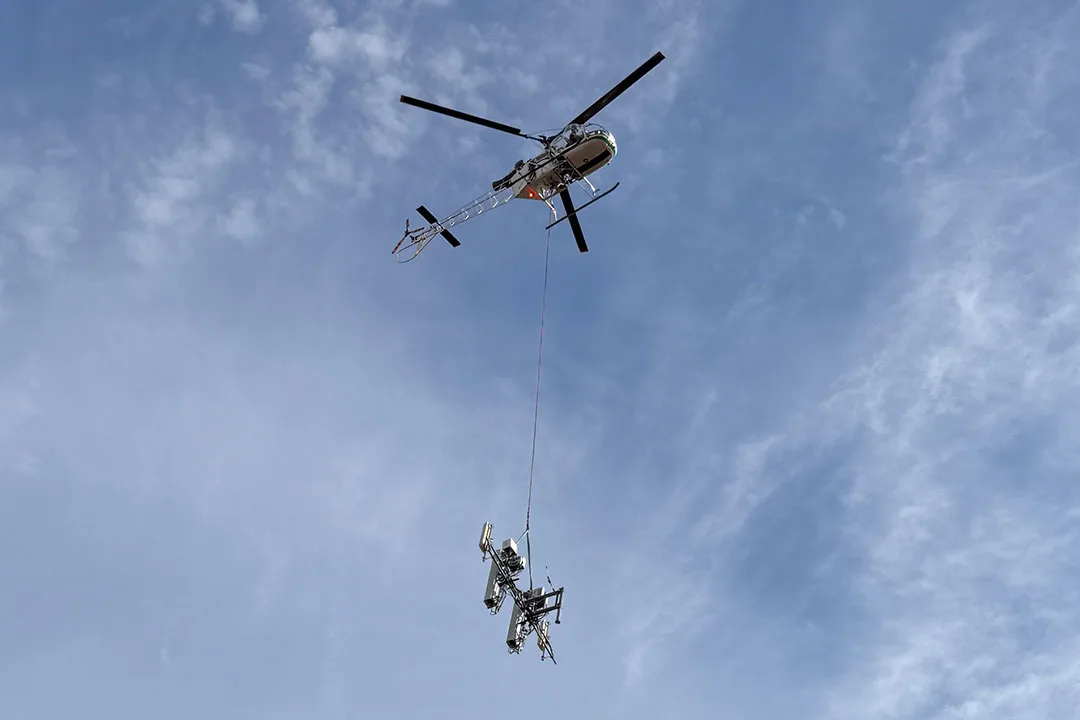
Helicopter performing an external load operation, lifting telecommunications equipment suspended on a long line against a clear blue sky.
An aerial crane helicopter lift uses a helicopter to carry cargo outside the aircraft, typically suspended on a long line and hook system. The load stays below the aircraft, allowing the pilot to position it precisely while ground crews guide placement. In U.S. operations, these missions fall under external load rules in Title 14 of the Code of Federal Regulations, Part 133.
External load operations are common across construction, utilities, telecom, environmental projects, and emergency response. They can range from short, high precision rooftop placements to multi-cycle material shuttles into remote terrain.
When helicopter lifting beats ground equipment

Heavy-lift helicopter rigging a suspended external load near a large stadium, demonstrating long-line precision placement in an urban infrastructure environment.
Not every lift should be done by helicopter. However, there are clear scenarios where aerial lifting can be the most practical option. The key is evaluating total project impact, not just the lift itself.
1) Access is limited or impossible
If roads are weak, seasonal, blocked, or simply do not exist, moving a crane or hauling oversized loads can be more disruptive than the job. Helicopters can stage from a nearby landing zone and move loads to the work site without building temporary roads.
2) The site is sensitive
Wetlands, protected areas, steep slopes, and congested urban sites can make ground staging costly. Helicopter lifts can minimize ground disturbance by reducing heavy vehicle traffic and avoiding repeated trips through sensitive terrain.
3) Time matters more than mobilization
There are projects where the cost of delay is higher than the cost of aircraft time. Examples include restoring utilities, replacing critical rooftop units at hospitals, or setting components before a weather window closes. The FAA notes external load operations as a defined category with specific safety and operational requirements under Part 133, enabling specialized operators to conduct these missions in a structured regulatory framework.
4) Precision placement reduces downstream work
Helicopters can often place a load exactly where it needs to go, reducing secondary handling. That can mean fewer crane repositions, less manual carry, and fewer hours of crew exposure to a challenging work area.
How lift planning works: the parts that make or break a mission
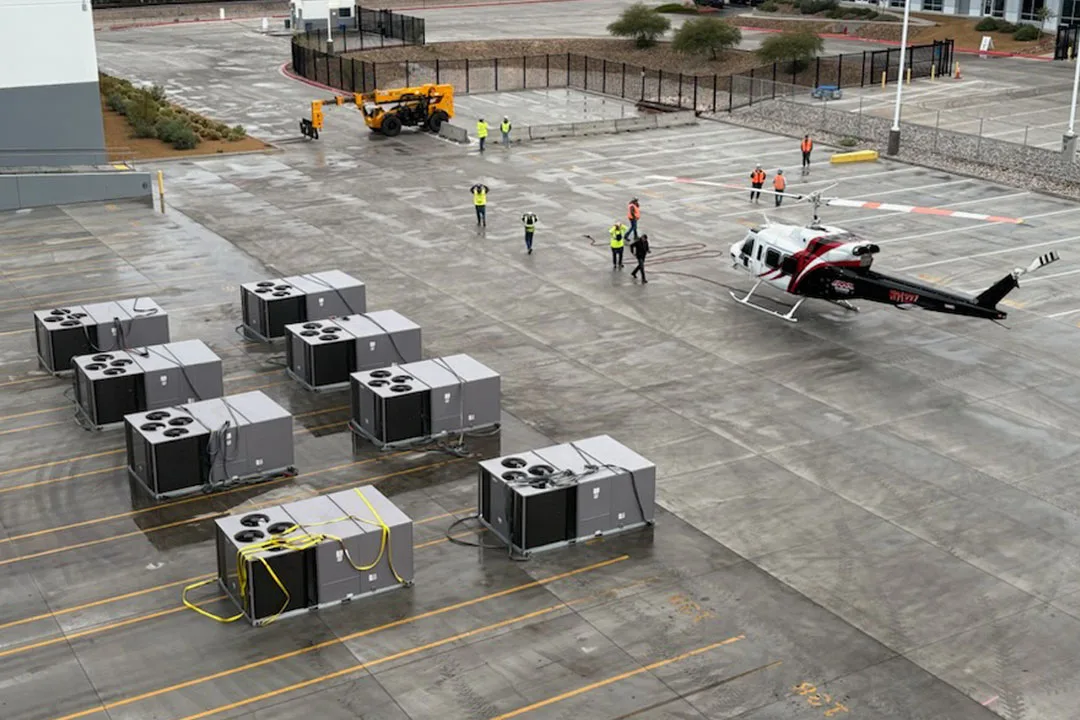
Staging area with multiple HVAC units arranged on a rooftop parking deck as a helicopter prepares for sequential aerial crane lifts with coordinated ground crew support.
A safe, efficient helicopter lift is mostly planning. The aircraft arrival is the visible moment, but the real work happens beforehand.
Load details and rigging
Good lift planning starts with accurate load data and proper rigging. In the U.S., external load operations are regulated under FAA Part 133, which sets requirements for operators, maintenance, and operating limitations:
- Verified weight, including packaging, pallets, and rigging hardware
- Lift points and center of gravity considerations
- Appropriate slings, shackles, and taglines for control
- Inspection and documentation of rigging gear
Aircraft performance and density altitude
Performance planning considers temperature, elevation, and pressure. Hot days at higher elevations reduce lift capability, which can change aircraft selection or require splitting loads into smaller picks.
Staging areas and flight paths
The project needs a safe pickup zone, a safe set down zone, and a planned route between them. For urban or complex environments, we also consider obstacles, wires, and approach paths. If operations occur near controlled airspace or airports, teams may coordinate with ATC and comply with local procedures.
Communications and crew roles
Clear roles reduce risk. A typical lift team includes a pilot, ground lead, hook-up crew, set-down crew, and sometimes a dedicated safety officer. Standardized briefings, radio discipline, and hand signals help keep the operation smooth.
Safety essentials: what professional lift teams prioritize
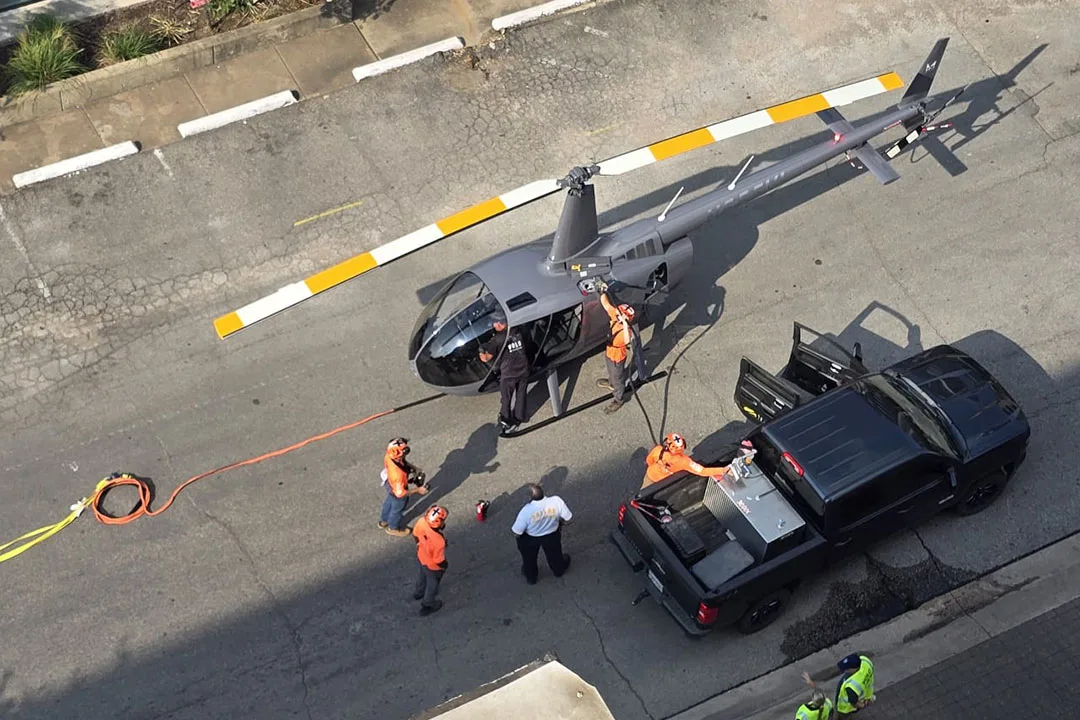
Overhead view of a helicopter on the ground during pre-lift staging, with crew members in high-visibility safety gear coordinating equipment and load preparation beside a support truck.
External load work demands disciplined safety culture. The FAA’s Helicopter Flying Handbook highlights critical hazards such as rotor downwash, wire strikes, and the need for thorough preflight planning:
- Rotor wash management: Secure loose materials, establish exclusion zones, and protect personnel from flying debris.
- Wire and obstacle awareness: Identify wires, cranes, antennas, and trees, then plan approaches that keep the long line clear.
- Weather minimums and go, no-go discipline: Wind, gusts, and visibility can quickly degrade lift stability.
- Human factors: Fatigue management and clear stop-work authority for any team member.
- Emergency release planning: Brief procedures for load jettison scenarios, including safe drop zones when applicable.
Professional operators follow the regulatory requirements for external load operations under FAA Part 133 and apply company procedures to manage risk on every lift.
Common use cases for aerial crane helicopter services
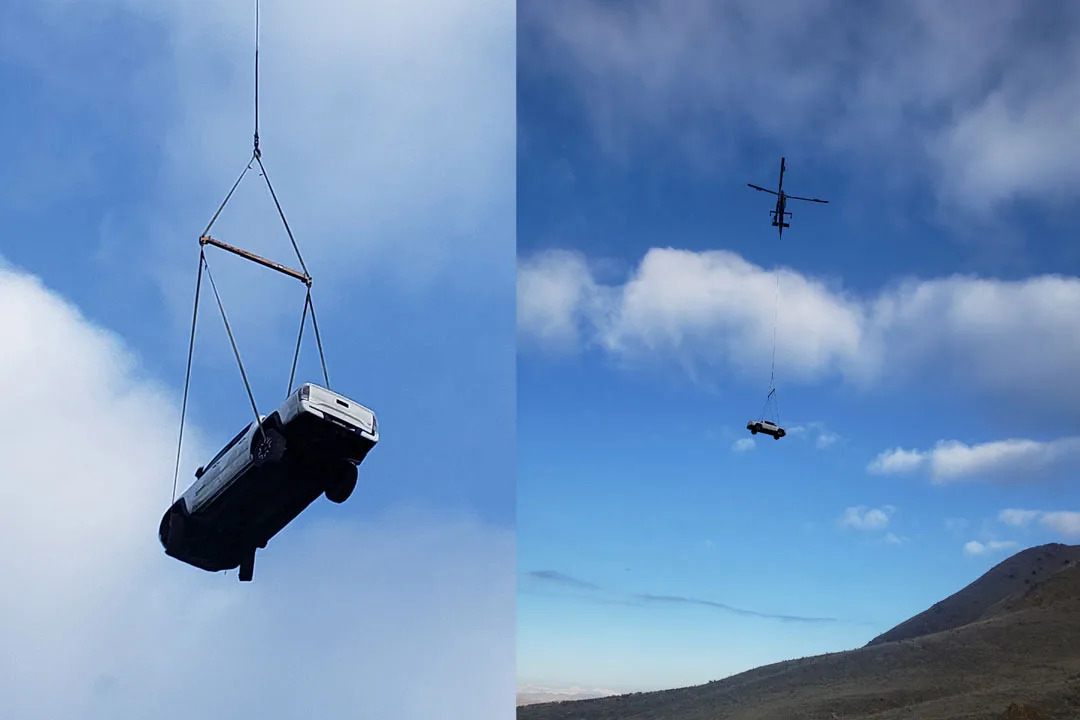
Side-by-side images showing a helicopter performing a vehicle recovery lift, with a pickup truck suspended beneath a long-line rigging system against a blue sky and mountainous terrain in the background.
Helicopter lifting is more common than many teams realize. Here are frequent project types where Fair Lifts is often asked to support planning and execution.
Construction and rooftop placements
- HVAC units, generators, chillers, and rooftop equipment swaps
- Structural components for hard-to-reach additions or retrofits
- Material moves when street closures are limited
Utilities and infrastructure
- Transmission and distribution support, including moving poles, crossarms, and tools into remote corridors
- Pipeline and right-of-way logistics where ground access is constrained
Telecommunications
- Tower sections, shelters, battery cabinets, and remote site resupply
- Ridge line and backcountry placements that would require extensive ground build-out
Remote logistics and seasonal access
Seasonal conditions can either open or close access. Spring thaw, wildfire season constraints, or winter road limitations can push teams toward aircraft-based logistics. NOAA’s guidance on how atmospheric conditions influence aviation performance is a useful planning reference when seasonal heat or elevation may affect payload.
Plan Your Aerial Crane Lift with Fair Lifts
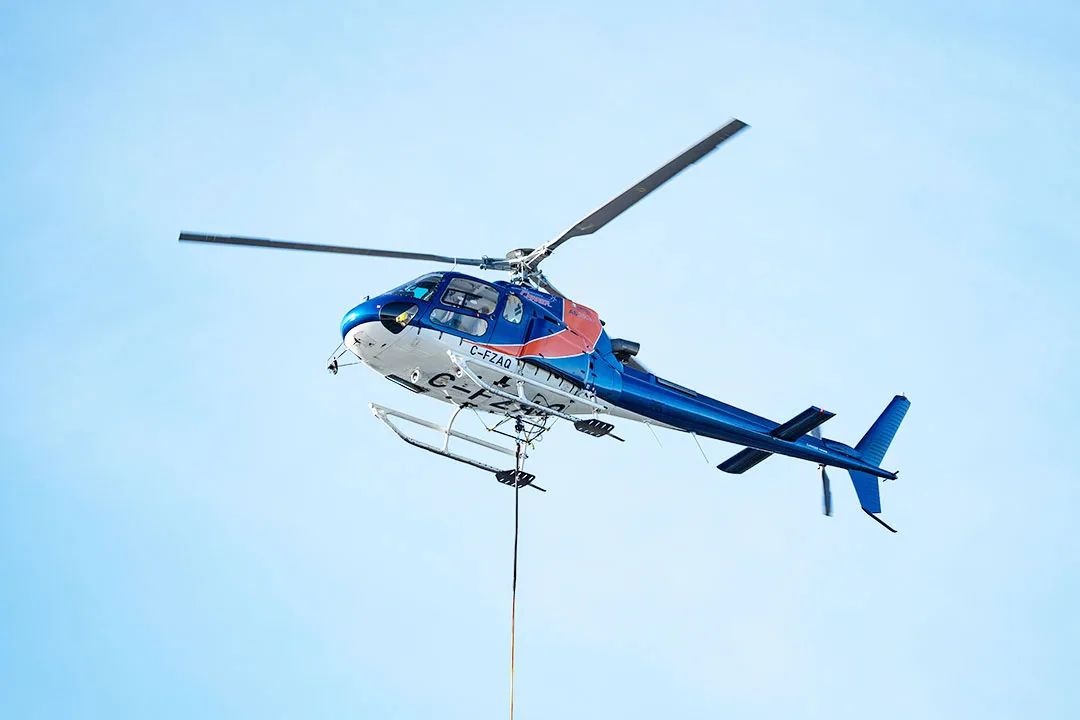
An Airbus H125 Helicopter conducting a precision sling load operation with a long line attached, captured mid-flight during an external load mission.
Every successful aerial crane lift starts with the right strategy. Aircraft selection, rigging approach, staging zones, regulatory alignment, and crew coordination all need to work together long before the rotors turn.
Fair Lifts partners with contractors, utilities, telecom providers, and facility teams to evaluate feasibility early, reduce risk exposure, and align the aircraft to the mission. From rooftop HVAC placements to remote infrastructure logistics, our role is to simplify complex lift scenarios and coordinate experienced Part 133 operators who execute with discipline.
If you are considering a helicopter lift for an upcoming project, a brief planning discussion can help clarify options, identify potential constraints, and determine whether aerial placement is the most efficient path forward. When conditions are right, helicopter lifting can reduce downtime, limit ground disruption, and keep your project moving on schedule.
Contact Fair Lifts, or call 1-800-318-8940 today, to scope your next aerial crane operation with confidence.