
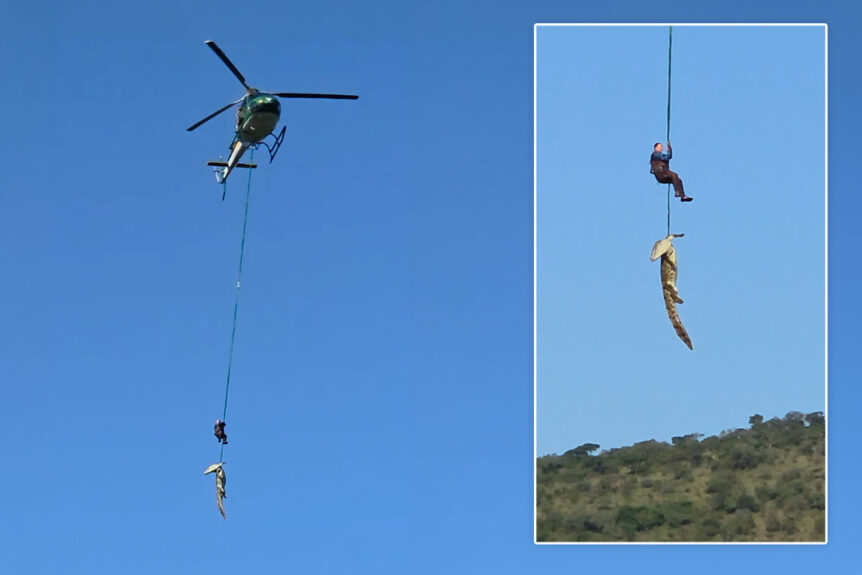
A police diver lowered into crocodile-infested waters in South Africa has drawn global attention after dramatic footage showed an officer being winched from a helicopter into a dangerous river during a high-risk recovery mission tied to a missing man, with video of the operation widely shared online.
Missing Man Triggers Large-Scale Search Operation
The incident began when a 59-year-old businessman went missing near the Komati River, close to Kruger National Park, after attempting to cross a flooded bridge where his vehicle became stuck and was overtaken by strong currents in what became a rapidly escalating situation.
Search teams launched a coordinated effort involving ground crews, aerial surveillance, and water-based assessments. The river system, known for its high concentration of Nile crocodiles, added urgency and complexity to the search operation.
Aerial Surveillance Identifies Key Evidence
During the search, aerial teams spotted a large crocodile displaying unusual behavior. The animal appeared bloated and inactive, raising concerns it may have consumed human remains, a critical development in the investigation.
This discovery shifted the focus of the mission. Investigators determined that retrieving the crocodile could provide critical forensic evidence, leading to the decision to conduct a high-risk aerial recovery.
Police Diver Lowered Into Crocodile-Infested Waters
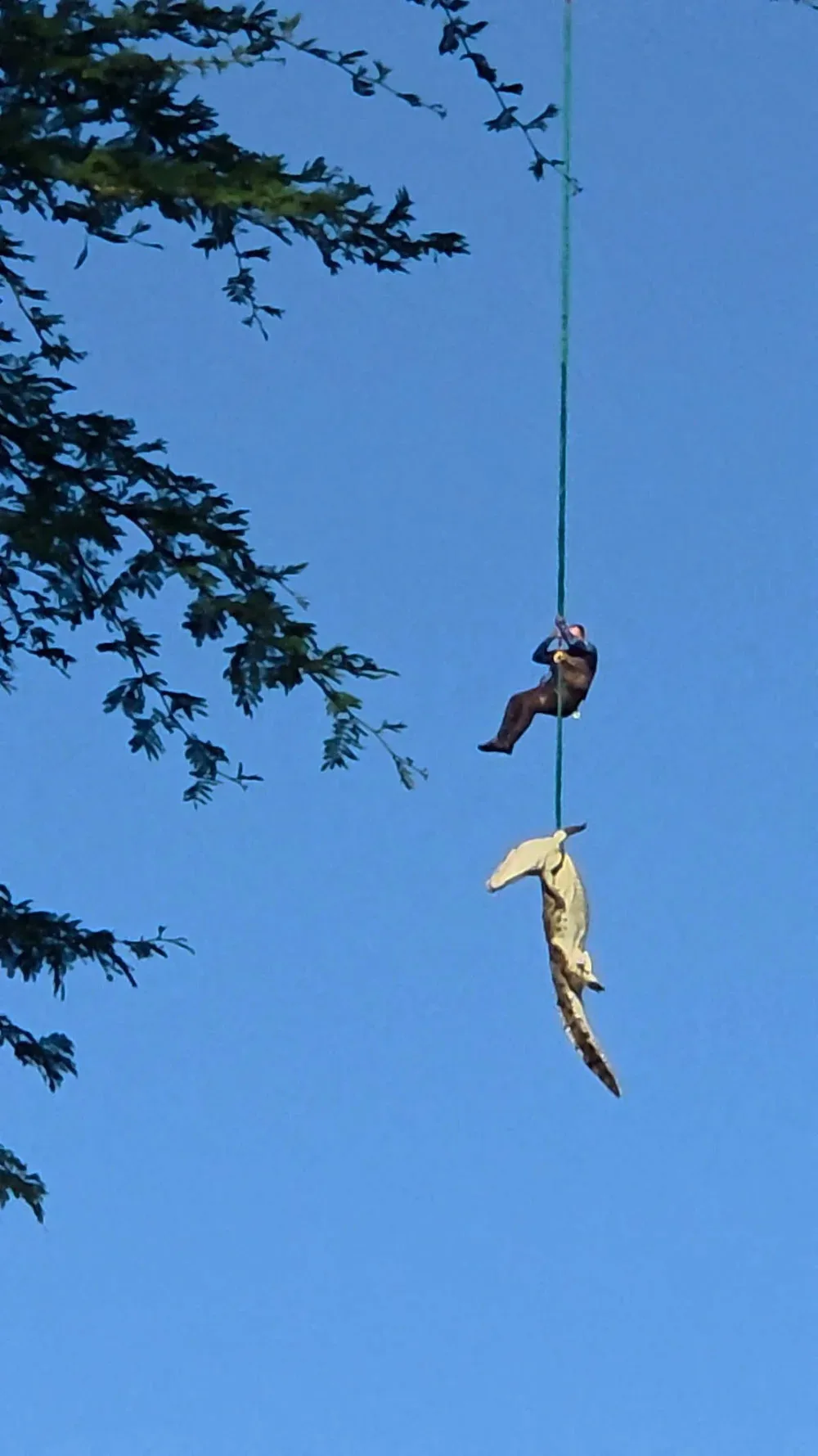
The 1,100-pound crocodile was transported to Kruger National Park, where human remains were discovered during examination | Photo: REUTERS.com
The most striking moment came when a police diver lowered into crocodile-infested waters was deployed from a hovering helicopter. Suspended by rope, the diver descended into the river to secure the crocodile for extraction in a maneuver captured in widely viewed footage.
The operation required careful coordination and advanced training. The diver’s responsibilities included:
- Approaching the crocodile in a high-risk environment
- Attaching a harness to prepare it for lifting
- Maintaining constant awareness of surrounding wildlife
- Communicating with the helicopter crew throughout the process
Once secured, both the diver and the crocodile were lifted from the river in a controlled aerial maneuver, a complex recovery process requiring precise timing.
Extreme Conditions Increase Operational Risk
The river environment presented significant hazards, including multiple crocodiles, fast-moving floodwaters, and reduced visibility. The police diver lowered into crocodile-infested waters relied entirely on aerial support for both descent and extraction.
Nile crocodiles are among the most powerful predators in Africa, capable of sudden and forceful attacks. The level of risk involved in this operation, including proximity to active wildlife, is reflected in the conditions faced on site.
Human Remains Found During Examination
Following recovery, forensic examination of the crocodile revealed human remains believed to belong to the missing businessman, marking a significant breakthrough in the case.
Details emerging from the examination included the presence of multiple shoes, raising questions about whether the crocodile may have been involved in previous incidents, a detail noted in further findings. DNA testing is ongoing to confirm identification.
Why the Helicopter Recovery Mission Was Critical
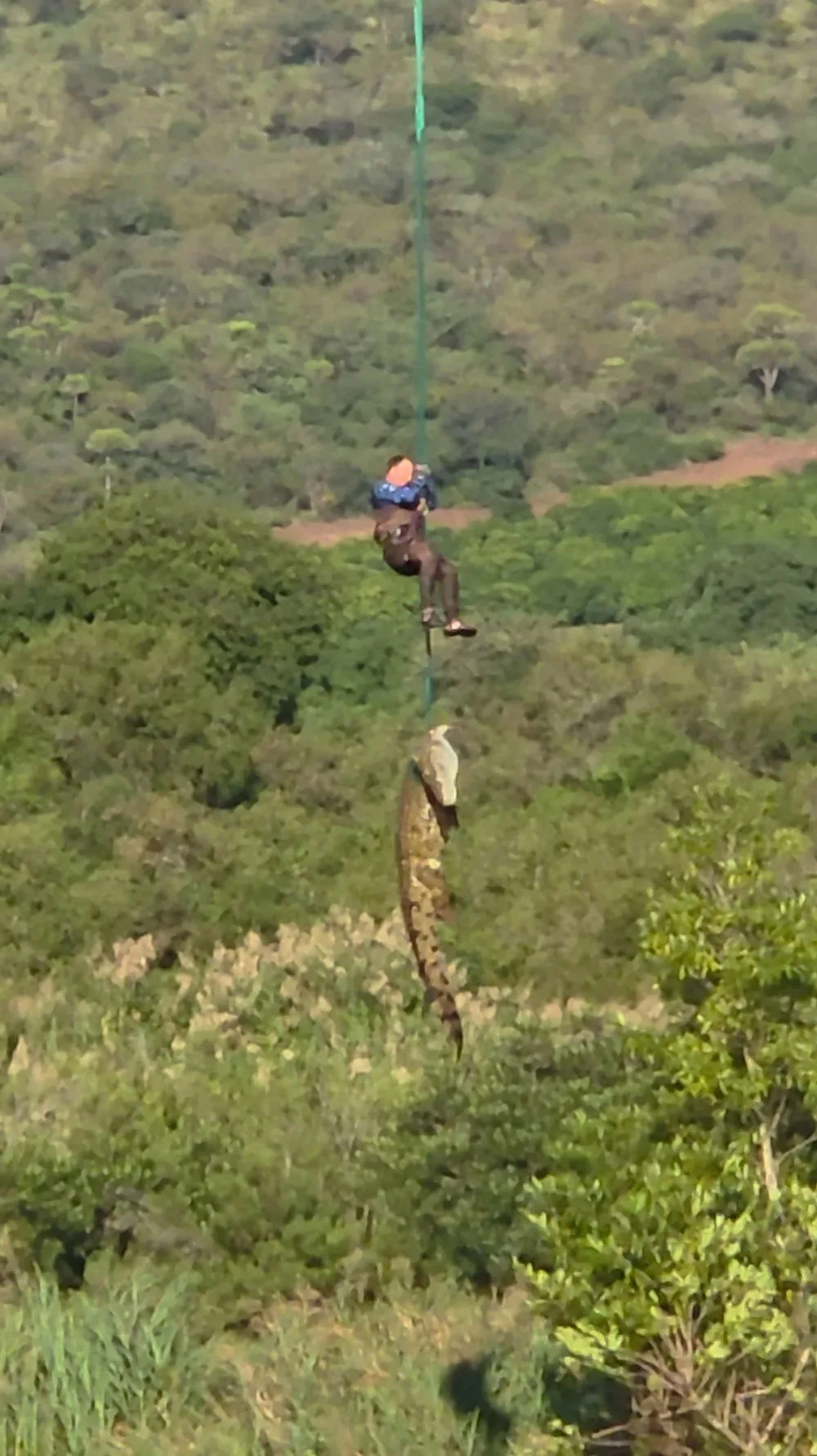
Capt. Johan “Pottie” Potgieter, head of a police diving unit, secured the euthanized 15-foot crocodile with a rope before both were lifted from the Komati River in northeastern South Africa | Photo: Reuters.com
Deploying a police diver lowered into crocodile-infested waters was a necessary step in obtaining definitive forensic evidence. Wildlife-related incidents often require physical recovery of remains to establish both identity and cause of death.
Without retrieving the crocodile, investigators would have faced significant limitations in reconstructing the sequence of events. The operation brought together aviation, law enforcement, and wildlife management expertise in a single coordinated effort.
Global Attention on Viral Footage
Footage of the police diver lowered into crocodile-infested waters quickly circulated across global media, drawing attention and discussion.
Beyond the viral moment, the scene reflects the reality faced by recovery teams working in remote and hazardous environments, where every decision carries weight and even routine missions can turn into life-threatening situations.