
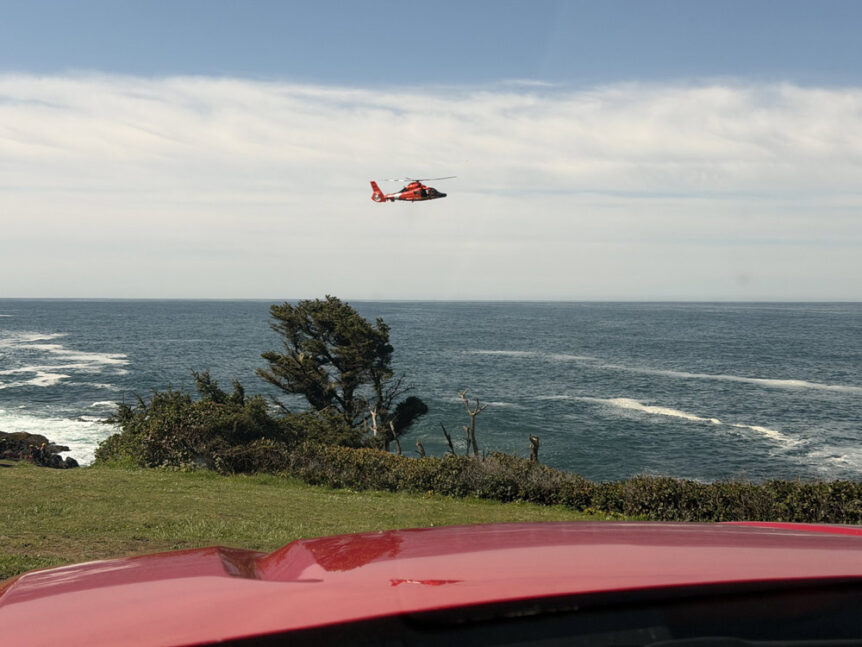
Oregon Coast rescues kept emergency crews busy during a single day as two separate incidents unfolded along the rugged Pacific shoreline. Both emergencies involved individuals stranded in dangerous terrain, and in each case, helicopters played a critical role in reaching and safely extracting those in distress.
First Rescue: Cliffside Emergency Near Cannon Beach
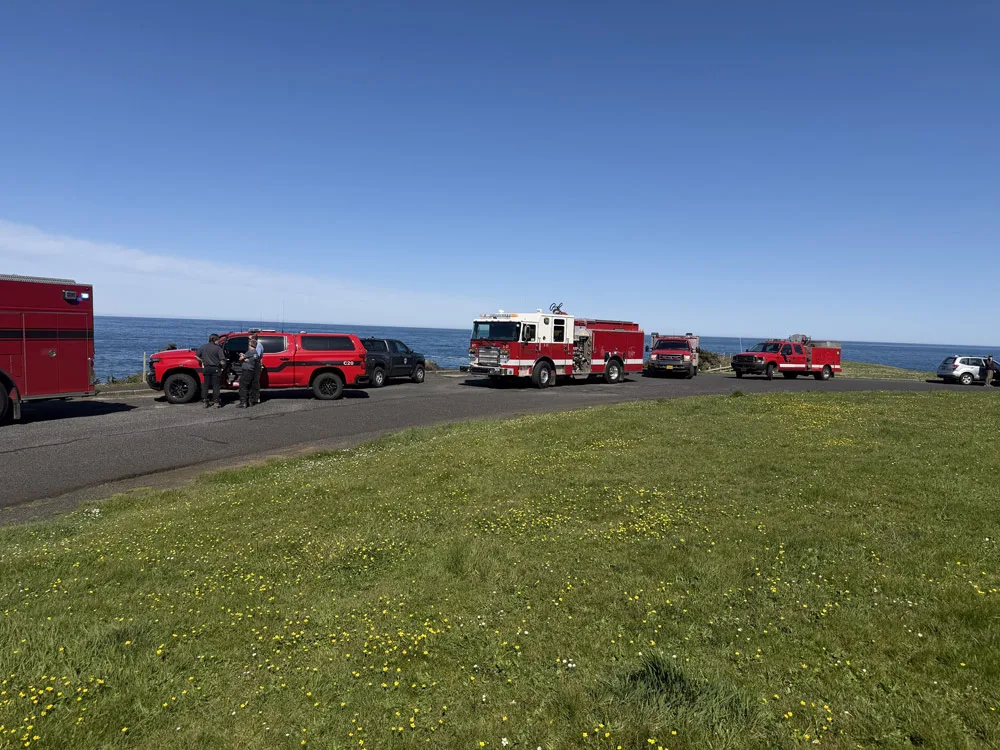
Depoe Bay Fire District was dispatched to Rocky Creek State Park for a reported fall on the rocks. | Photo: Depoe Bay Fire District
The first incident occurred near Cannon Beach, where an individual became stranded along a steep coastal cliff. The combination of unstable footing, sharp elevation changes, and exposure to ocean conditions created a dangerous scenario that limited safe access for ground crews.
Responders quickly determined that aerial support was necessary. A rescue helicopter was deployed, allowing crews to assess the scene from above and position for a controlled extraction. Using a hoist system, rescuers were able to reach the individual directly and lift them safely away from the cliffside.
The terrain significantly complicated the rescue effort, reinforcing how quickly coastal conditions can become hazardous even for experienced visitors.
Second Rescue: Rapid Response Near Depoe Bay
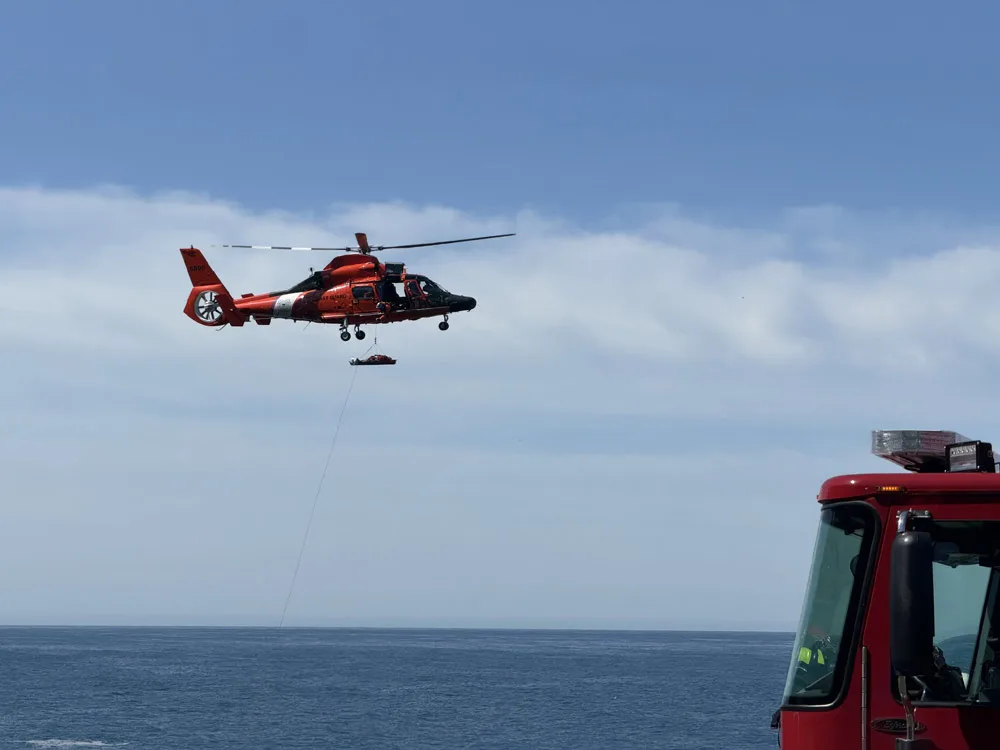
Suspended beneath the helicopter, the victim is carried to shore and transferred to a waiting ambulance for further care. | Photo: Depoe Bay Fire District
Later that same day, crews were dispatched to a second emergency near Depoe Bay. Another individual was reported in distress in a difficult-to-access area along the shoreline, where rocks, elevation changes, and wave activity created immediate risk.
Despite the short turnaround from the first rescue, teams mobilized quickly. A helicopter was again deployed to provide aerial visibility and direct access. From above, crews were able to locate the individual and execute a safe extraction without relying solely on ground access.
Both incidents required coordinated response efforts and highlights how quickly multiple emergencies can develop along the coast.
Cliffside Hazards Continue to Drive Rescue Calls
Steep drop-offs, loose rock, and changing conditions frequently contribute to rescue incidents in the region.
These same hazards were present in both rescues, where traditional access routes were either too slow or too dangerous to rely on alone. Helicopters allowed responders to bypass those obstacles and operate more safely from above.
Helicopters Played a Critical Role in Both Rescues
Across all reports, one detail stands out. Helicopters were not just helpful, they were essential. In both Oregon Coast rescues, aerial response allowed crews to overcome terrain challenges and complete extractions quickly and safely.
- Access to steep and remote coastal terrain
- Safe hoist operations in high-risk areas
- Faster response times compared to ground-only efforts
- Reduced risk to both victims and rescue personnel
Two Incidents, One Clear Pattern
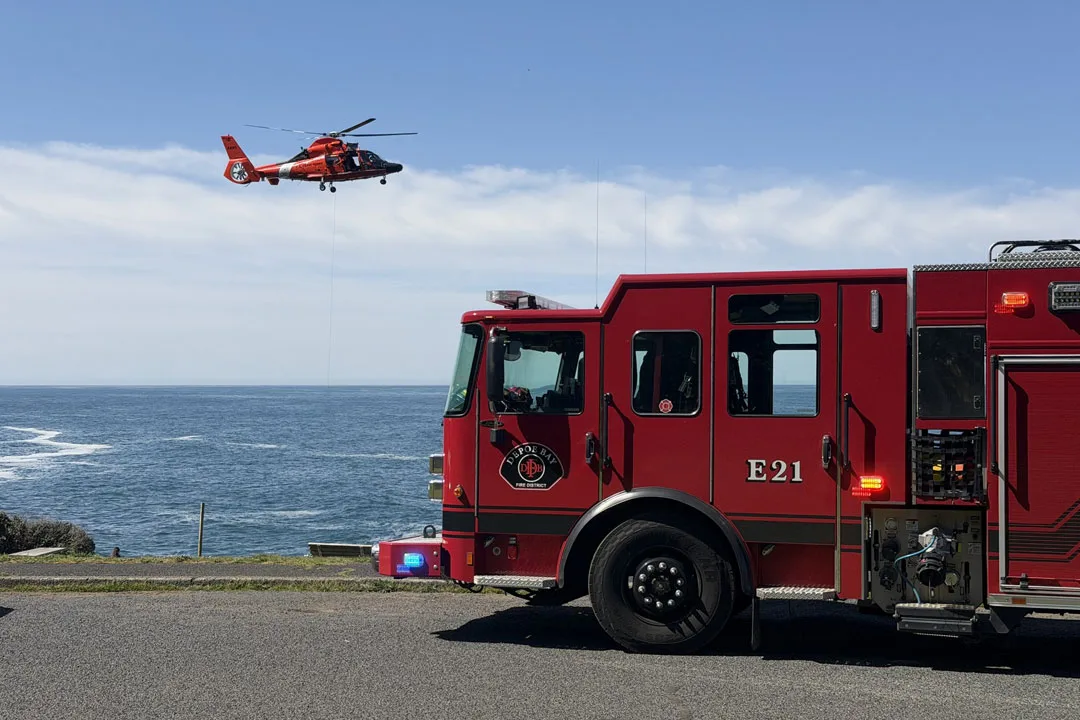
A Coast Guard MH-65 Dolphin helicopter crew from Air Facility Newport | Photo: Depoe Bay Fire District
The fact that two separate rescues occurred within hours highlights how unpredictable the Oregon Coast can be. These situations are not isolated events.
In both cases, helicopter response made the difference. By providing rapid access and precise extraction capabilities, crews were able to bring both individuals to safety without escalation.
What These Rescues Show
These back to back Oregon Coast rescues demonstrate how critical aerial support has become in modern emergency response. When terrain, time, and safety all create challenges, helicopters provide the access and control needed to complete rescues effectively.
Along Oregon’s coastline, where conditions can change in seconds, that capability continues to save lives.