
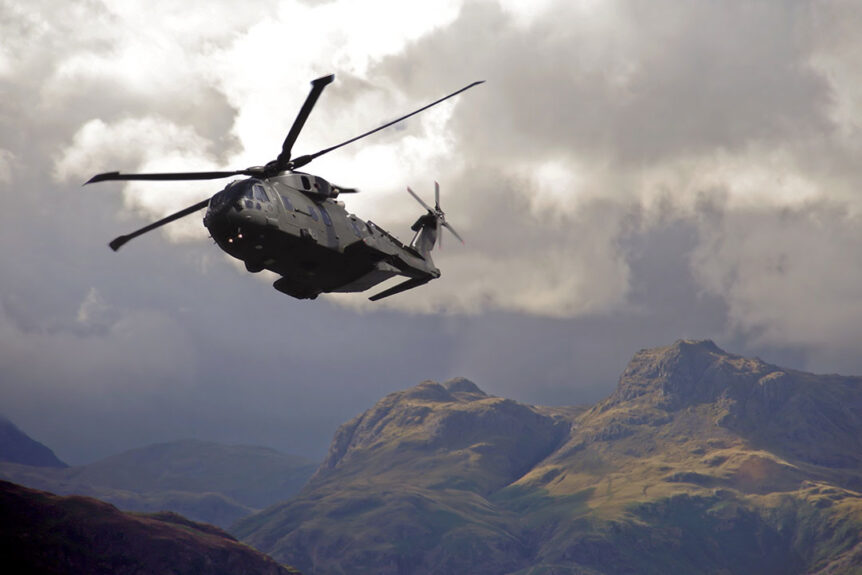
When most people envision a helicopter losing engine power, they imagine an uncontrollable plummet. However, helicopters possess a remarkable ability to descend safely without engine power, thanks to a maneuver known as autorotation. This technique showcases the helicopter glide capability, allowing pilots to manage emergencies effectively.
Understanding Autorotation
Autorotation is a flight condition where the helicopter’s main rotor system is driven not by engine power but by the upward flow of air through the rotor blades during descent. This upward airflow maintains rotor speed, enabling the pilot to control the descent and execute a safe landing. It’s a critical procedure taught extensively during pilot training to prepare for potential engine failures.
The Mechanics Behind Autorotation

Left: Airflow through a helicopter rotor. Above, the rotor is powered and pushing air downward, generating lift and thrust. Below, the helicopter rotor has lost power, and the craft is making an emergency landing. | Right: Blade regions in vertical autorotation descent.
In autorotation, the rotor disc is divided into three regions:
- Driving Region: Located near the blade’s midsection, this area generates the torque necessary to keep the rotor spinning.
- Driven Region: Found towards the blade tips, it produces lift and experiences aerodynamic drag.
- Stall Region: Closest to the rotor hub, this area experiences airflow separation and contributes minimally to lift.
By managing the collective pitch and cyclic controls, pilots can optimize these regions to maintain rotor RPM and control the descent path.
Glide Ratio in Helicopters
The glide ratio refers to the distance a helicopter can travel forward compared to the altitude it loses during autorotation. Typically, helicopters have a glide ratio of approximately 4:1, meaning for every 1,000 feet of altitude lost, the helicopter can travel about 4,000 feet forward. This ratio is lower than that of fixed-wing aircraft but sufficient for pilots to identify and reach suitable landing areas during emergencies.
Execution of an Autorotative Landing
An autorotative landing involves several key phases:
- Entry: Upon engine failure, the pilot lowers the collective pitch to reduce lift and drag, initiating a controlled descent.
- Descent: The helicopter descends with airflow maintaining rotor RPM. Pilots adjust the cyclic to manage airspeed and direction, aiming for a safe landing zone.
- Flare: As the helicopter approaches the ground, the pilot raises the nose to reduce descent rate and forward speed.
- Touchdown: Using the remaining rotor energy, the pilot cushions the landing, bringing the helicopter to a stop.
Each phase requires precise control and timing to ensure a successful landing.
Training and Safety Considerations
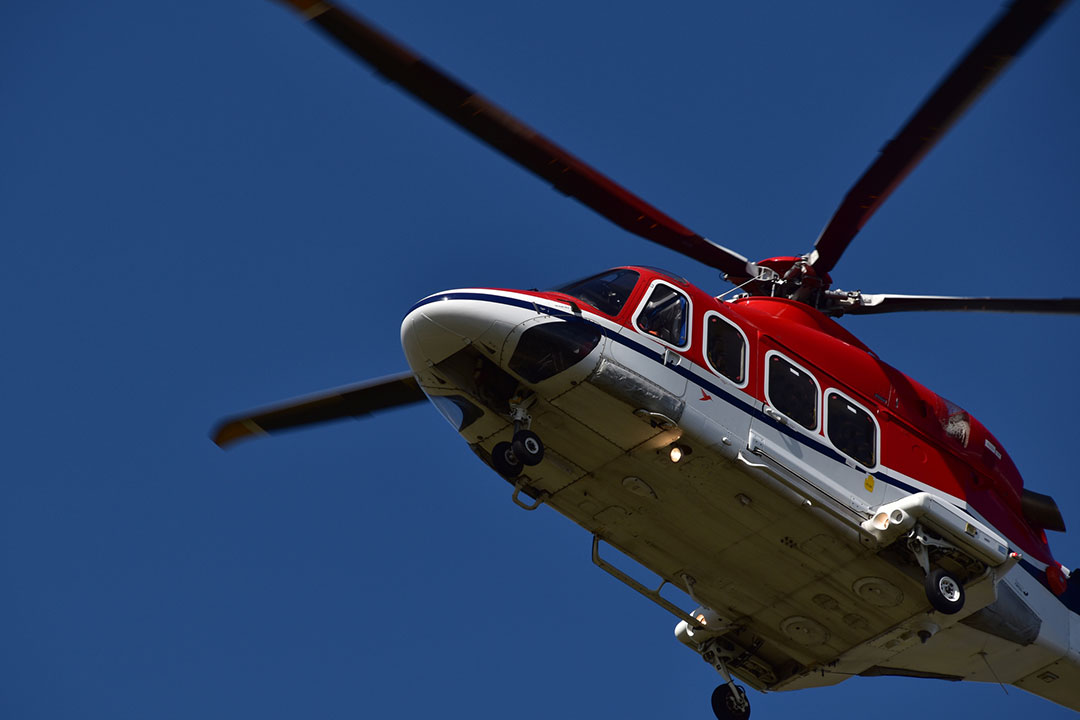
Helicopter flies over low to start landing in Den Helder airport
Pilots undergo rigorous training to master autorotation, practicing various scenarios to build proficiency. Regular drills help pilots react promptly and effectively during actual emergencies. Additionally, advancements in helicopter technology, such as automated systems, assist in managing autorotation, enhancing safety margins.
Limitations and Challenges
While autorotation is a valuable safety maneuver, it has limitations:
- Altitude: Sufficient altitude is necessary to execute a complete autorotation.
- Terrain: The availability of suitable landing areas can impact the success of the maneuver.
- Pilot Response: Immediate and correct pilot actions are crucial; delays can reduce the effectiveness of autorotation.
Understanding these factors is essential for pilots to make informed decisions during emergencies.
Mastering the Art of Emergency Descents
The helicopter glide capability, achieved through autorotation, is a testament to the aircraft’s design and the pilot’s skill. While helicopters cannot glide in the traditional sense like fixed-wing aircraft, autorotation provides a controlled method to descend safely during engine failures. Comprehensive training and awareness of the maneuver’s intricacies ensure that pilots are prepared to handle such critical situations effectively.