
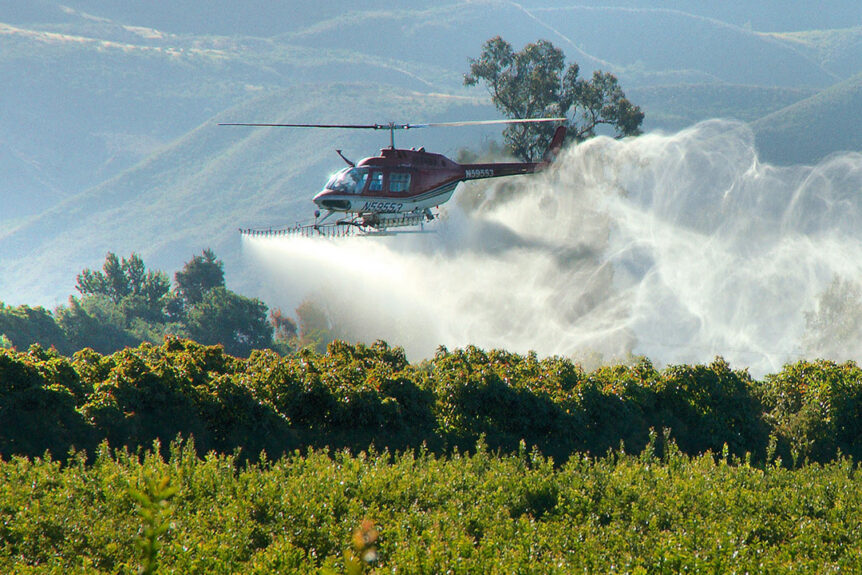
Helicopter Spraying: Delivering Solutions from the Sky
Helicopter spraying is an aerial application method that uses specially equipped helicopters to distribute liquid solutions—such as fertilizers, pesticides, herbicides, and other treatments—over large areas. This technique is particularly valuable in industries like agriculture, forestry, pest control, and industrial operations, where speed, precision, and accessibility are critical. By leveraging the unique capabilities of helicopters, this method ensures efficient and targeted coverage, even in challenging environments.

Helicopter Agricultural Spraying
Why Helicopter Spraying Outperforms Traditional Methods
Helicopter spraying offers distinct advantages over traditional ground-based methods, making it a preferred choice for many applications. Key benefits include:
- Increased Efficiency: Helicopters can cover vast areas in a fraction of the time required by ground equipment, significantly reducing application time.
- Precision Application: Advanced GPS technology and specialized nozzles enable highly targeted spraying, minimizing chemical drift and maximizing effectiveness.
- Reduced Crop Damage: Unlike ground sprayers, which can compact soil and damage crops, helicopters operate without physical contact, preserving field integrity.
- Accessibility: Helicopters can reach remote or difficult-to-access areas, such as steep terrains, wetlands, or dense forests, where ground equipment cannot operate.

Spraying of lucerne crops | Credit: Sheryl Watson
Applications of Helicopter Spraying
Helicopter spraying is a versatile solution with applications across multiple industries. Below are some of its most common uses:
Agriculture
In modern farming, helicopter spraying plays a crucial role in protecting crops and ensuring optimal yields. Key agricultural applications include:
- Fertilizer Application: Ensures uniform nutrient distribution across large fields, promoting healthy crop growth.
- Pesticide and Herbicide Spraying: Effectively controls weeds, insects, and diseases without damaging crops or soil.
- Defoliation: Used in cotton farming to prepare plants for harvest by removing leaves.
Forestry Management
Helicopter spraying is essential in forestry for protecting trees from insect infestations, fungal diseases, and wildfires. It is also used to apply fire retardants, creating firebreaks that help control and prevent the spread of wildfires.
Vector Control & Public Health
Helicopters are instrumental in controlling mosquito populations by spraying larvicides over large water bodies and marshlands. This helps prevent the spread of mosquito-borne diseases such as malaria, dengue, and West Nile virus.
Industrial Applications
Industries rely on helicopter spraying for tasks like dust suppression at mining sites, oil spill remediation, and de-icing infrastructure such as power lines and wind turbines. Its ability to operate in challenging environments makes it indispensable for industrial operations.
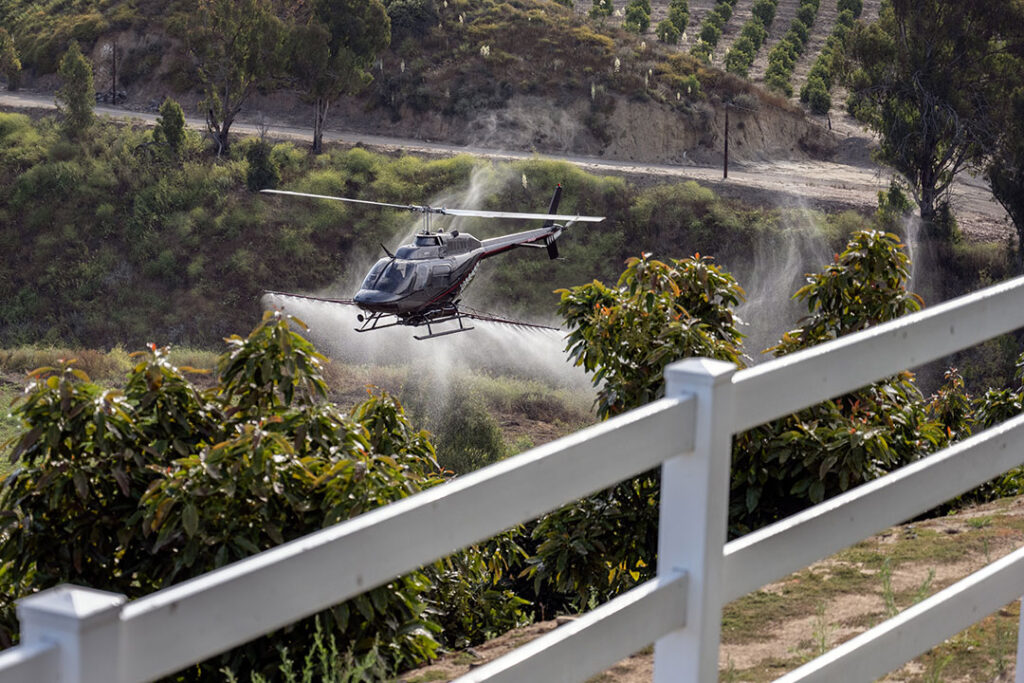
Spraying of avocado trees
How Helicopter Spraying Delivers Precision from the Sky
Aerial spraying involves a combination of advanced technology and meticulous planning to ensure effectiveness and safety. The process includes the following key components:
Equipment Used
- Specialized Spray Systems: Helicopters are equipped with booms and nozzles designed to distribute droplets evenly across the target area.
- GPS Technology: Enables precise mapping of application zones, ensuring accurate spraying and avoiding sensitive areas.
- Mixing Tanks: Used to prepare chemical formulations, either onboard the helicopter or at a staging area, ensuring consistency and accuracy.
Safety & Environmental Considerations
Aerial spraying is conducted under strict regulations to protect the environment and public health. Best practices include:
- Drift Reduction: Using low-drift nozzles and adjusting flight altitude to minimize chemical drift beyond the target area.
- Weather Monitoring: Applications are timed based on wind speed, humidity, and temperature to optimize effectiveness and reduce environmental impact.
- Regulatory Compliance: Operators adhere to government guidelines for chemical usage and restricted zones, ensuring safe and responsible practices.
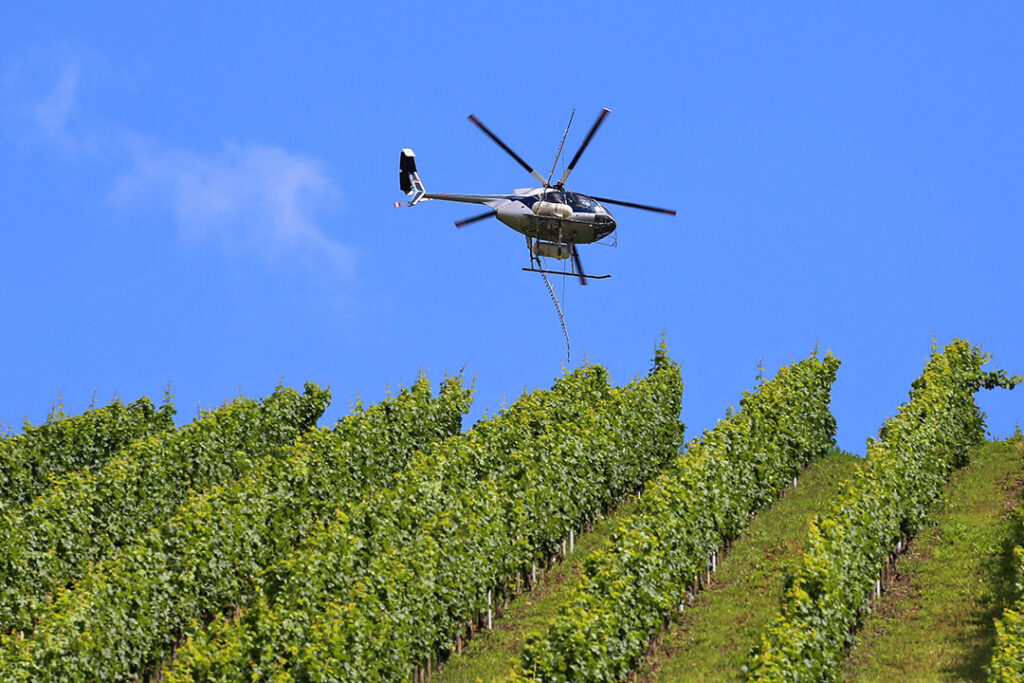
Fungicide application
Real-World Examples of Helicopter Spraying
Aerial spraying has proven its effectiveness in various real-world scenarios:
Successful Agricultural Applications
In California’s Central Valley, helicopter spraying has transformed almond farming by enabling the rapid application of fungicides during the critical bloom period. This approach has helped farmers protect thousands of acres from disease outbreaks, which would be nearly impossible with ground-based methods.
Wildfire Prevention in Forests
In the Pacific Northwest, helicopters are frequently deployed to apply fire retardants ahead of wildfire seasons. These aerial applications create firebreaks, helping to slow or stop the spread of wildfires and protect vulnerable ecosystems.
Emergency Mosquito Control
Following Hurricane Katrina, helicopter spraying played a vital role in controlling mosquito populations in Louisiana. By treating standing water with larvicides, these operations helped prevent the spread of mosquito-borne diseases in the aftermath of the disaster.

Drone helicopter spraying rice fields
What’s on the Horizon?
The future of helicopter spraying is being shaped by technological advancements that promise greater efficiency, precision, and sustainability. Key innovations include:
- Autonomous Spraying Systems: AI-driven technologies will enable even more precise applications, reducing chemical usage and improving outcomes.
- Drone Integration: Combining helicopters with unmanned aerial vehicles (UAVs) will allow for hybrid spraying solutions, enhancing flexibility and targeting.
- Eco-Friendly Solutions: The development of biodegradable and organic spray formulations will further minimize environmental impact.
As these advancements continue to evolve, helicopter spraying will remain a cornerstone of modern agriculture, forestry, public health, and industrial operations. Its ability to deliver rapid, precise, and large-scale solutions ensures its ongoing relevance in addressing complex challenges across diverse industries. By embracing innovation and adhering to sustainable practices, helicopter spraying is set to become an even more effective and environmentally responsible tool for the future.
At Fair Lifts, we’re committed to providing effective and environmentally responsible solutions for aerial spraying services. Contact us or call 1-800-318-8940 today to learn more about our services and how we can assist with your aerial application needs.