
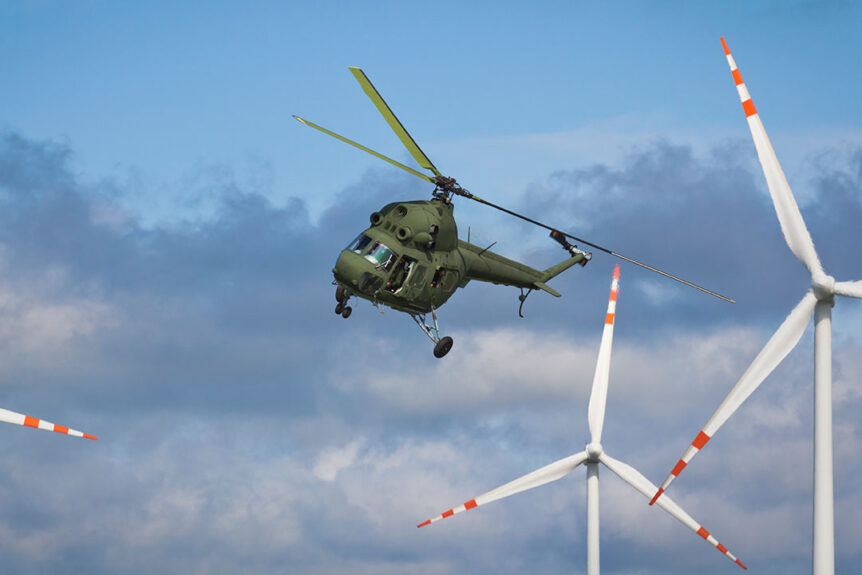
Wind power is expanding quickly across the United States and around the world. In 2023, the global wind energy sector installed a record 117 gigawatts of new capacity, marking a 50 percent increase from the year before, according to reporting based on the Global Wind Energy Council’s industry data. As turbine hubs rise taller and projects extend into remote landscapes and offshore environments, safe ground and marine access becomes more difficult and costly.
Helicopter support for wind farms helps fill that gap. Aerial services allow developers, construction teams, and operators to move people, parts, and tools directly where they are needed without relying solely on roads, vessels, or heavy civil construction. For many wind projects, especially offshore or in rugged terrain, helicopters are no longer a luxury. They are a strategic part of logistics planning.
Why Helicopters Are a Natural Fit for Wind Energy Projects
Wind turbine silhouette at sunrise
Wind projects demand precision, access, and reliability. Turbines are often located on ridgelines, in desert environments, across wide agricultural tracts, or far offshore. These are areas where traditional ground access can be slow, seasonal, or sometimes impossible.
Helicopter services help solve several recurring challenges:
- Limited road access in mountainous, forested, or wetland regions
- Long travel times from ports, staging yards, or urban centers to turbine sites
- Weather related access issues such as snow, flooding, or soft ground
- Marine constraints for offshore wind, where vessel operations can be restricted by sea state and visibility
By flying directly to towers, offshore platforms, or substations, helicopters can reduce travel time, improve schedule certainty, and support safer access for specialized technicians.
Key Helicopter Services Across the Wind Farm Lifecycle
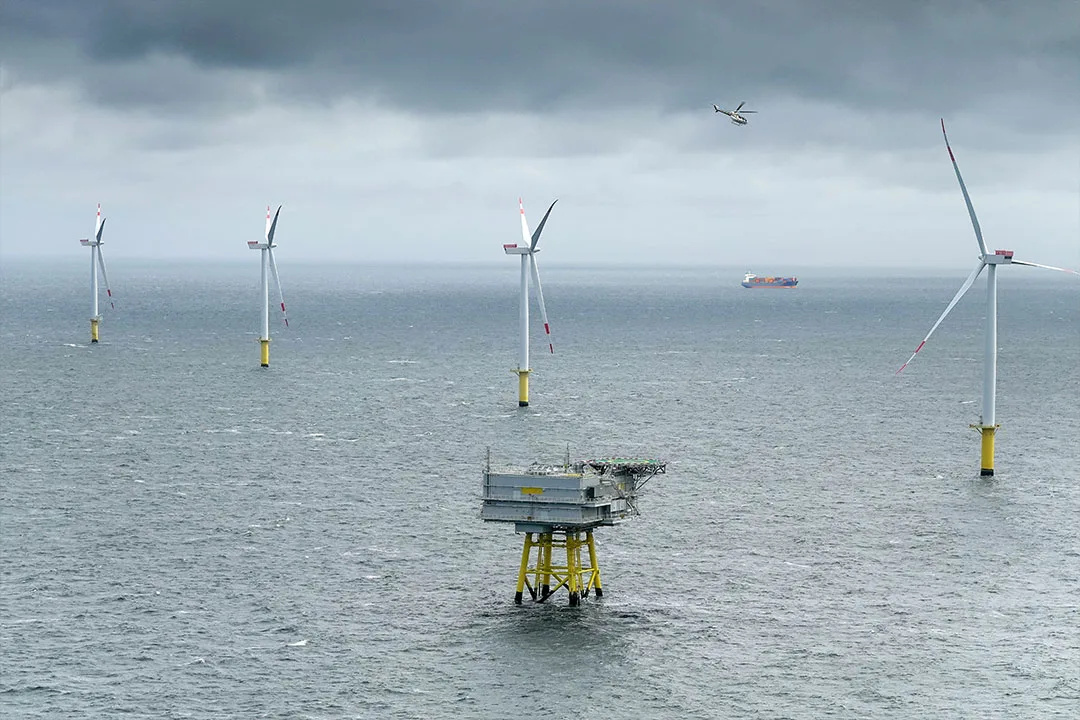
A helicopter flies in the sky above an offshore wind farm.
Helicopter support can be incorporated at nearly every stage of a wind energy project, from early planning through operating phases and end of life activities.
1. Site Survey, Planning, and Environmental Assessment
Before construction begins, developers need accurate data on terrain, wildlife, vegetation, and optimal access routes. Aerial services are especially valuable at this stage:
- Aerial reconnaissance helps planners visualize ridgelines, access corridors, and potential transmission routes quickly compared to ground surveying alone.
- LiDAR and photogrammetry flights generate detailed terrain models and land use maps. Helicopter supported LiDAR surveys provide dense topographic data that supports site layout and design decisions.
- Wildlife and habitat monitoring from the air allows environmental teams to gather critical assessment data with minimal disturbance to sensitive areas.
2. Construction and Heavy Lift Support
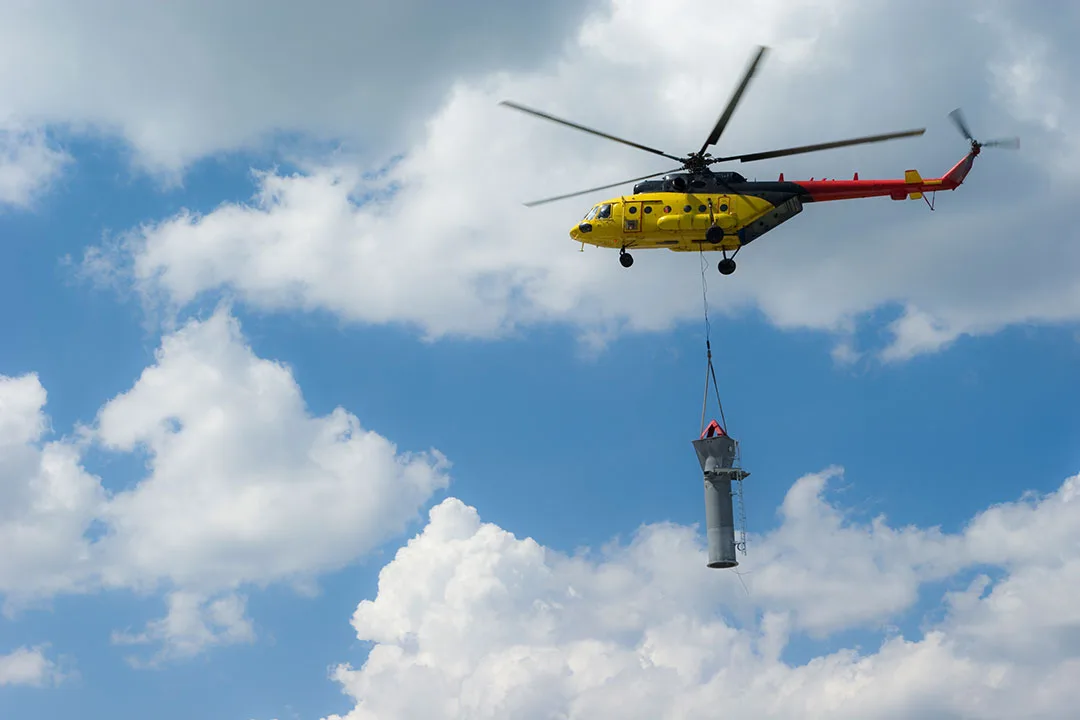
A heavy-lift helicopter transporting construction materials.
While large cranes and ground transport still move primary components, helicopters provide support that can streamline timelines and reduce the need for temporary infrastructure.
- Precision lifts for smaller but important components such as meteorological towers or obstruction lighting
- Delivery of tools and materials into ridgelines or offshore transition pieces where deck space is limited
- Support for transmission and substation work that resembles helicopter use in powerline construction and other utility projects
For onshore projects, targeted helicopter operations can reduce the need for new access roads or extensive grading, lowering environmental impacts and right of way costs.
3. Crew Transport and Offshore Access
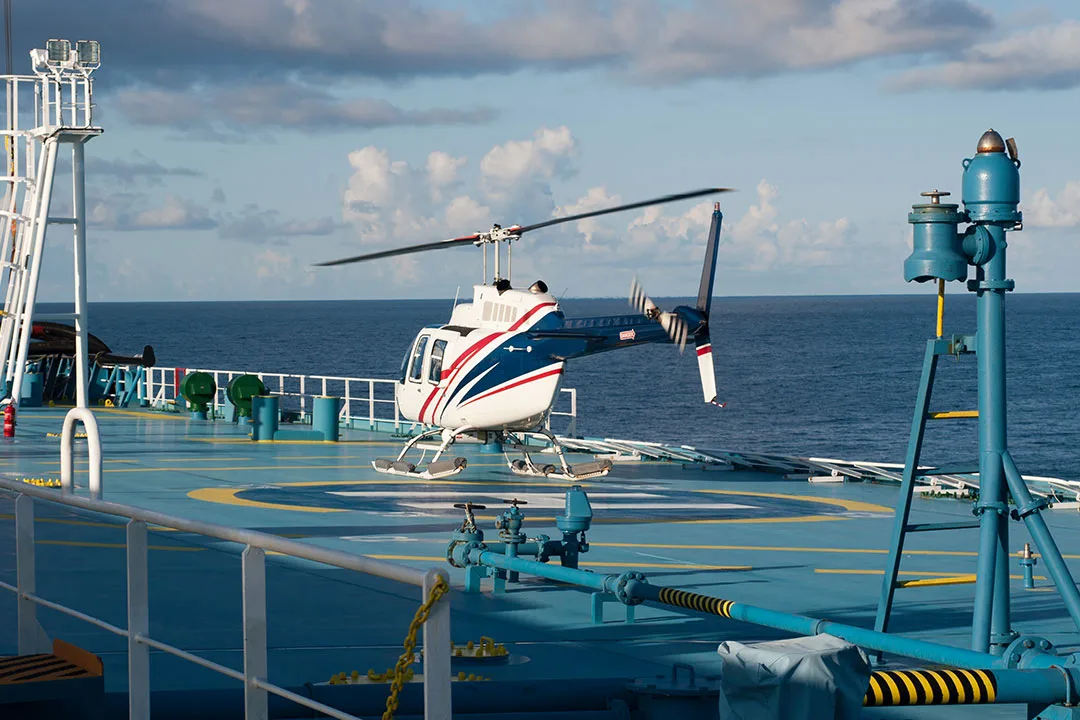
A crew transport helicopter sits at rest at an offshore operation.
Helicopter transport for offshore wind follows models long established in offshore oil and gas operations. Modern standards and aviation best practices support this work through international and national regulatory frameworks.
Helicopters support:
- Technician shuttles directly to turbine platforms, service vessels, or offshore substations
- Time sensitive maintenance visits in narrow weather windows where marine access is restricted
- Inspection and management visits that enable project owners, lenders, and regulators to check progress without days of travel
These capabilities lead to more flexible scheduling, higher turbine availability, and reduced lost energy production due to access delays.
4. Blade, Tower, and Nacelle Inspections
In the operational phase, maintaining turbine performance and safety is critical. Damage to blades, lightning strikes, and leading edge erosion can all degrade performance over time. Wind turbine safety guidance notes that rigorous inspection and preventative maintenance protocols are essential to protect workers and assets in the industry.
Helicopter supported inspections and aerial imaging often complement ground based techniques:
- High resolution aerial imaging that captures detailed photos and video of blades, towers, and nacelles for later analysis
- Thermal imaging that reveals internal component issues when equipped onboard aircraft
- Hybrid workflows where helicopters deploy drones or rope access teams for close up inspection
These methods reduce the need for turbine shutdowns and complex ground based lifting. Many turbines can be surveyed in a single flight day across a large project.
Safety, Regulations, and Best Practices
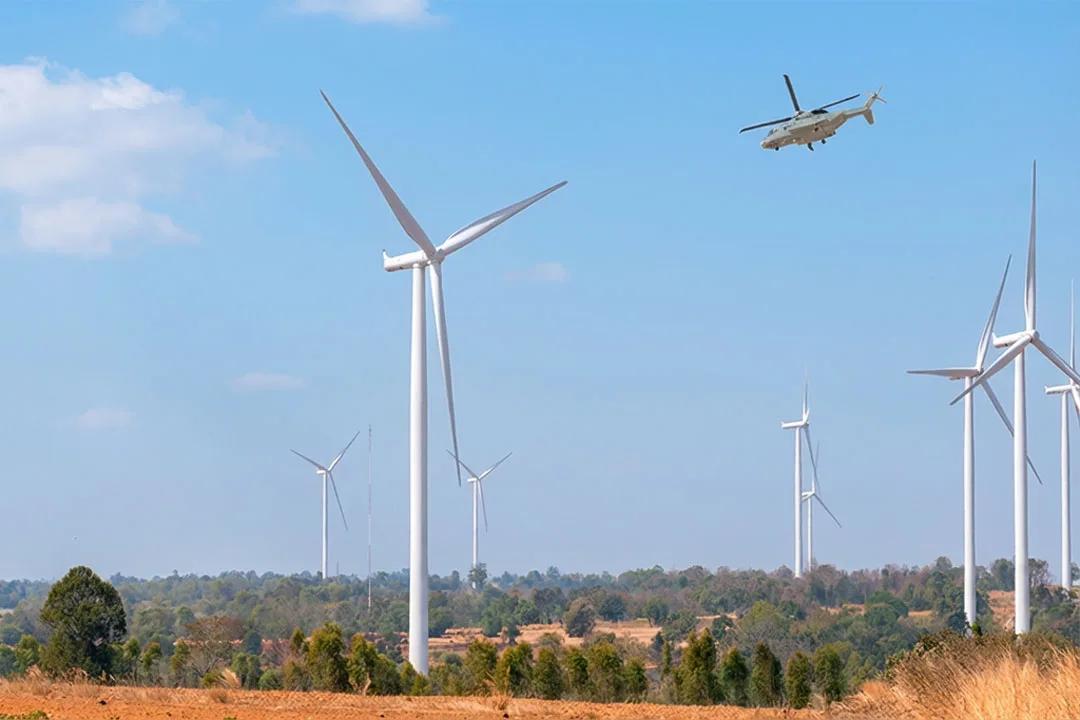
A helicopter surveys a wind farm.
Helicopter operations around wind farms require careful planning, defined communication, and compliance with both aviation and workplace safety standards.
Coordinating Aviation and Wind Operations
Modern wind turbines stand over 300 feet tall, and moving blades create airflow and turbulence conditions that must be accounted for during aerial operations. Safe operations typically include:
- Clear approach and departure paths identified during project planning
- Communication protocols between pilots, turbine control centers, and ground or marine teams
- Lockout and tagout procedures for turbines when work requires blades to be stopped or secured
- Weather related limits that align aviation and marine safety requirements, especially offshore
Certifications and Training
Reputable helicopter operators supporting wind projects typically maintain:
- Part 135 or equivalent commercial certification from national aviation authorities for approved passenger and cargo operations
- Specialized training for offshore operations, hoist work, and low level flight proficiency
- Maintenance standards that meet or exceed industry and regulatory requirements
Selecting experienced and fully certified helicopter partners is a key component of wind farm risk management.
Emerging Technologies: What Is Next for Aerial Wind Farm Support
Both aviation and wind energy industries are innovating. New tools are expanding helicopter capabilities and increasing operational efficiency.
- Hybrid helicopter drone operations where helicopters act as mobile airborne platforms for multiple drones, enhancing inspection coverage
- Advanced sensors and analytics that turn aerial imagery into actionable maintenance plans
- Electric and hybrid electric rotorcraft concepts being developed for short range missions, with potential to reduce emissions and operating costs
As these technologies mature, aerial logistics for wind farms may become even more integrated, precise, and efficient.
Planning Helicopter Support for Your Wind Project
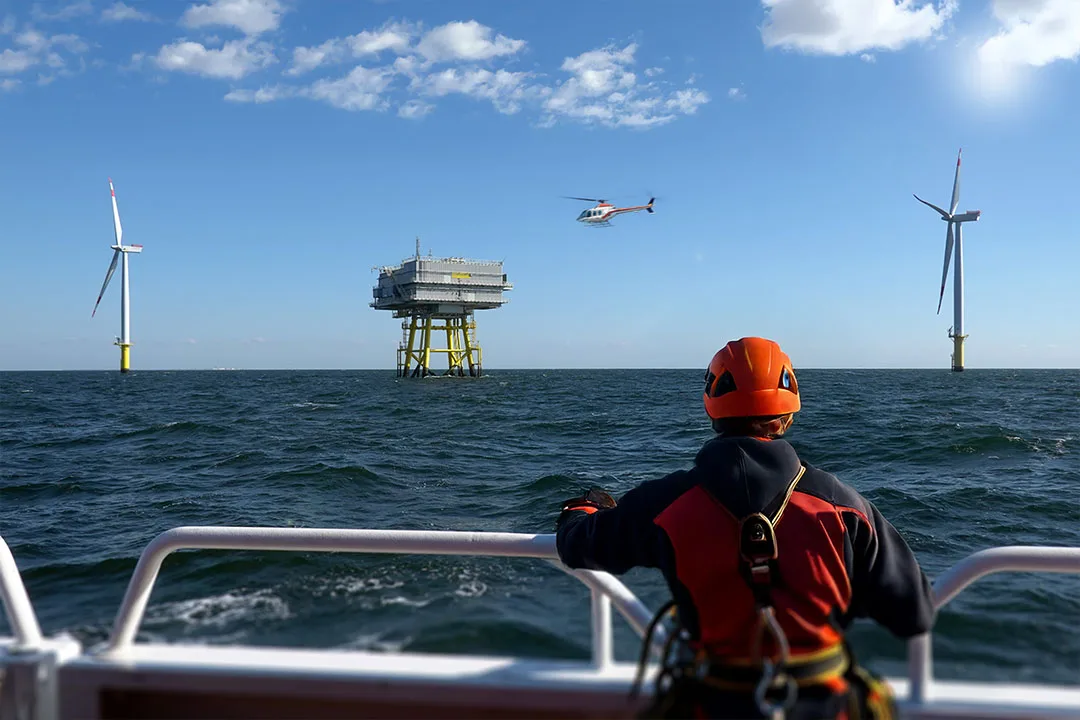
A helicopter flies to an offshore wind farm providing transportation to the turbines.
Whether developing a new onshore wind farm, expanding an offshore array, or optimizing operations on an existing project, integrating helicopter services early in planning delivers clear advantages.
Project teams typically gain the most value when they:
- Engage helicopter providers early during feasibility and design so aerial access, landing zones, and flight corridors are considered up front
- Align aviation and safety procedures with site rules, marine operations, and turbine OEM recommendations
- Build aerial support into maintenance and operations strategies for inspections and emergency response
- Use aerial inspection data to feed predictive maintenance and asset management systems
By treating helicopter support as a strategic component of project logistics rather than a last minute afterthought, wind developers and operators can improve safety, protect production, and maintain better control over schedules and costs.
As wind turbines continue to grow taller and move into increasingly challenging locations, the connection between aviation and renewable energy will deepen. With the right planning and providers, helicopter services can help keep modern wind fleets turning reliably for many years to come.
Supporting Wind Projects Through Smart Aviation Planning
For wind developers and operators navigating complex access challenges, working with an aviation partner that understands renewable energy logistics is essential.
Fair Lifts helps coordinate helicopter support for wind projects by connecting teams with experienced operators and aircraft suited to onshore and offshore environments, supporting safer access, efficient operations, and long-term project reliability.