
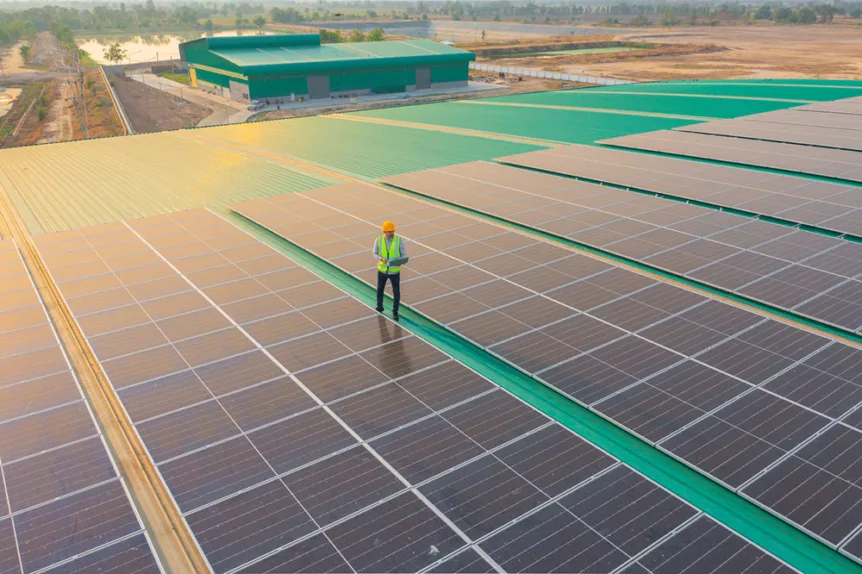
The world has seen a significant shift toward renewable energy sources, with solar power playing a key role in this transition. Installing and replacing solar panels on hard-to-reach areas, such as warehouses, tall buildings, and other structures, can be a challenging task. One innovative solution that has emerged is the use of helicopter lifts to facilitate the installation and replacement process. This article will explore the benefits, challenges, and potential applications of this approach.
Benefits of Using Helicopters for Solar Panel Installation and Replacement
- Time-saving and efficient: Traditional methods of solar panel installation and replacement on tall structures involve the use of cranes, scaffolding, and rope access systems. These methods can be time-consuming and labor-intensive. In contrast, helicopters can quickly transport and position solar panels, significantly reducing installation time.
- Enhanced safety: Working at height can be dangerous, and traditional installation methods expose workers to various risks, such as falls and injuries. By using helicopters, the number of workers required to operate at elevated heights is minimized, reducing the risk of accidents.
- Minimal impact on building integrity: Traditional installation methods often require alterations to the building’s structure, including drilling and bolting, which can compromise its integrity. Helicopters can deliver solar panels without necessitating significant structural alterations, thus preserving the building’s original design and stability.
- Versatility and adaptability: Helicopters can easily access remote or hard-to-reach locations, making them an ideal solution for installing solar panels on a wide range of structures. This adaptability is particularly beneficial in areas with challenging terrain or limited road access.
Challenges and Considerations
- Cost: Helicopter operations can be expensive, particularly when factoring in fuel, maintenance, and pilot fees. However, the time and labor savings, as well as the reduced risk of accidents, can offset these costs in the long run. When compared to ground cranes that require extensive boom length and large tonnage capacity, a helicopter is much faster and more cost-effective per pick.
- Weather dependency: Helicopter operations are highly dependent on favorable weather conditions. Poor visibility, high winds, and precipitation can all affect the safety and efficiency of solar panel installation and replacement using helicopters.
- Noise and environmental concerns: Helicopters generate noise and air pollution, which may be a concern for nearby residents and businesses. Careful planning and communication with local communities can help mitigate these concerns.
Potential Applications
- Warehouses: Large warehouses often have expansive, flat roofs that are ideal for solar panel installations. Helicopters can quickly transport and position solar panels on these roofs, saving time and reducing the need for extensive scaffolding or crane usage.
- Tall buildings: Skyscrapers and other tall buildings present unique challenges for solar panel installation, as conventional methods may be slow, costly, and potentially dangerous. Helicopters can more efficiently transport and position solar panels in these hard-to-reach locations, minimizing disruption to building occupants and surrounding areas.
- Infrastructure projects: Bridges, dams, and other infrastructure projects can benefit from the use of helicopters for solar panel installation. These structures often have limited access points and require specialized equipment for installation, making helicopters an attractive option.
- Remote locations: In areas with limited road access or challenging terrain, helicopters can provide an efficient means of transporting and installing solar panels. This can be particularly beneficial for off-grid projects or those in environmentally sensitive areas.
Helicopters offer a promising solution for installing and replacing solar panels on warehouses, tall buildings, and other hard-to-reach areas. By reducing installation time, enhancing safety, and minimizing structural impact, this innovative approach holds significant potential for the renewable energy sector. While there are challenges and considerations to be addressed, such as cost and weather dependency, the benefits of using helicopters for solar panel installation and replacement are undeniable. As the demand for renewable energy sources grows, it is crucial for the industry to adopt innovative and efficient methods for solar panel installation. The use of helicopters in this process presents an exciting opportunity to overcome traditional challenges and expand the reach of solar power to even the most hard-to-reach locations. By embracing this technology and refining the process, we can accelerate the global transition to cleaner, more sustainable energy sources.
To capitalize on the advantages offered by helicopter-based solar panel installation, it is essential for industry stakeholders to work closely with helicopter service providers, regulatory authorities, and local communities. Collaboration and communication will be key in addressing concerns, mitigating risks, and optimizing the process for maximum efficiency and safety.
As we move forward, the renewable energy sector must continue to explore new and innovative solutions, such as helicopter-based solar panel installation, to meet the increasing demand for clean and sustainable energy. By doing so, we can not only improve the efficiency and safety of solar panel installations but also contribute to the global effort to combat climate change and secure a greener future for generations to come.