
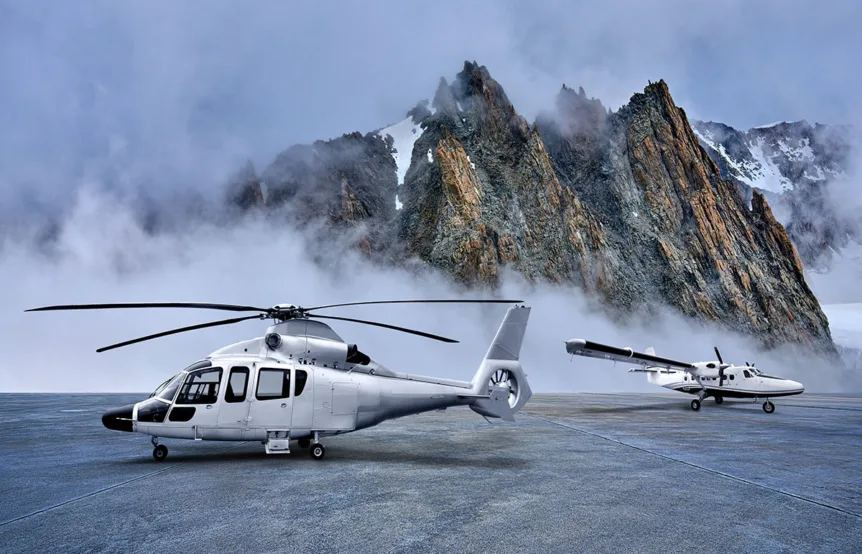
The debate over whether helicopters are faster than planes is not just a matter of simple comparison but involves a nuanced understanding of aviation mechanics, operational contexts, and technological advancements. This comprehensive exploration aims to dissect various aspects of this question, providing a deeper insight into the world of aviation.
Key Differences Between Helicopters and Planes
Understanding the fundamental differences in the design and operation of helicopters and planes is crucial in assessing their speed capabilities and applications.
Vertical Takeoff and Landing: A Helicopter’s Edge
Helicopters are equipped with rotors that enable them to take off and land vertically. This unique capability allows them to operate in confined spaces and remote locations, making them indispensable in rescue operations and urban air mobility. For instance, during natural disasters like earthquakes or floods, helicopters are often the first to reach and evacuate victims from areas inaccessible to other vehicles.
Hovering Ability: More Than Just Staying Still
The ability to hover is another defining feature of helicopters. This capability is not just about staying in one place but also about performing precise maneuvers in mid-air. Helicopters are extensively used in construction to transport heavy materials to high-rise buildings, in firefighting to douse wildfires, and in law enforcement for surveillance.
Fixed Wings vs. Rotors: Planes’ High-Speed Advantage
Planes, with their fixed-wing design, are built for speed and efficiency at high altitudes. This design allows them to cover long distances quickly, making them the preferred choice for commercial air travel. For example, a Boeing 747 can cross continents in a matter of hours, a task unfeasible for helicopters.
Top Speed Comparison: Context Matters
Comparing the top speeds of helicopters and planes reveals their intended operational roles and environments.
Helicopter Speeds: Versatility Over Velocity
While helicopters may not match the top speeds of planes, their operational versatility is unmatched. The Eurocopter X3, for instance, holds the speed record for helicopters at over 250 mph, but this is an exception rather than the norm. Helicopters like the Bell 206, widely used in civilian operations, cruise at speeds around 130 mph.
Small Plane Speeds: The General Aviation Spectrum
Small planes, often used in general aviation, exhibit a wide range of speeds. Aircraft like the Cessna 172, a popular training aircraft, have cruising speeds of about 140 mph. In contrast, high-performance small planes such as the Mooney M20 can reach speeds of over 200 mph.
Jet Airliners: The Speed Giants
Commercial jet airliners are designed for speed and efficiency over long distances. The Boeing 787 Dreamliner, for example, cruises at speeds of about 560 mph. The legendary Concorde, now retired, once flew passengers at speeds exceeding 1,300 mph, showcasing the pinnacle of speed in commercial aviation.
Speed at Different Altitudes: A Game of Aerodynamics
The altitude at which these aircraft operate significantly impacts their speed and efficiency.
Helicopters: Masters of Low Altitude
Helicopters typically operate at lower altitudes, which allows them to be effective in detailed aerial work such as power line inspections or wildlife monitoring. Their lower flying altitude, however, means they are more affected by terrain and weather conditions, which can impact their speed.
Planes: Conquerors of the Skies
Planes are engineered to excel at high altitudes, where the air is thinner and offers less resistance. This capability allows them to achieve high speeds and fuel efficiency. For instance, commercial flights often cruise at altitudes above 30,000 feet, optimizing speed and fuel consumption.
Acceleration and Takeoff: A Tale of Two Techniques
The methods of acceleration and takeoff between helicopters and planes highlight their distinct design philosophies.
Helicopters: Quick to Respond
Helicopters can take off and reach operational altitude much quicker than planes. This rapid response capability is crucial in emergency medical services (EMS), where helicopters like the AgustaWestland AW109 can quickly transport patients to hospitals, bypassing ground traffic.
Planes: Preparing for the Long Haul
Planes, requiring runways for takeoff, take longer to reach cruising altitude. However, once airborne, they maintain high speeds over long distances. This characteristic is vital in commercial aviation, where minimizing travel time is essential.
Operational Flexibility and Real-World Applications
Beyond speed, the operational flexibility of helicopters and planes dictates their roles in various real-world scenarios.
Helicopters: Agile and Adaptable
Helicopters’ agility makes them ideal for diverse applications. In urban settings, they serve as air ambulances, bypassing congested streets. In remote areas, they are indispensable for transporting supplies and personnel to oil rigs or mountaintop research stations.
Planes: The Long-Distance Champions
Planes, with their high-speed and long-range capabilities, dominate international travel and cargo transport. The Airbus A380, for example, can carry hundreds of passengers across continents, illustrating the plane’s role in connecting the world.
Conclusion: A Matter of Right Application
The question of whether helicopters are faster than planes is not a straightforward one. It depends on the context of the journey and the specific requirements of the task at hand. Helicopters offer speed and flexibility for short distances and lower altitudes, making them invaluable in specialized operations. Planes, on the other hand, are the undisputed choice for high-speed travel over long distances. Understanding these distinctions is key to appreciating the unique roles these aircraft play in our skies.