
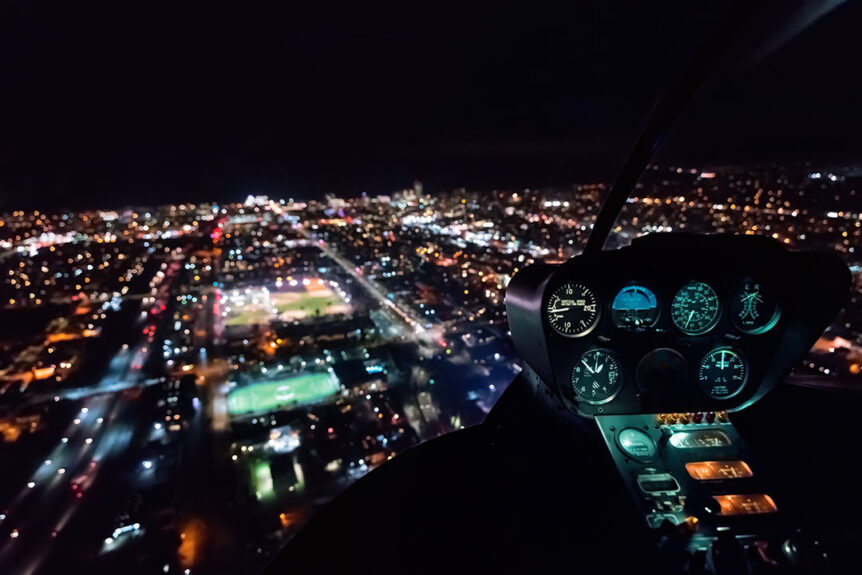
Flying by helicopter at night has a certain mystique and often prompts practical considerations. How are obstacles identified after dark? What happens when weather conditions shift? And how common are nighttime helicopter operations in professional aviation?
Contents
- Night Flight Risk Factors
- Systems and Equipment
- Route and Landing Zone Planning
- Operational Suitability of Night Helicopter Flight
- What Makes Night Helicopter Flights Safe and Reliable
In professional helicopter operations, night flying is a planned and highly structured activity. It is supported by regulations, training standards, and aircraft equipment designed to manage the unique risks that come with reduced visibility.
Night Flight Risk Factors

A helicopter departing a helipad overlooking Rio de Janeiro, illustrating terrain, obstacles, and visual complexity relevant to night flight operations.
Night operations fundamentally change the visual environment. Even in clear weather, the human eye can misjudge height, distance, and terrain features. Aviation authorities account for these factors by requiring pilots and operators to meet additional standards when flying after dark.
The FAA defines “night” for logging purposes and establishes currency requirements for certain night operations. Pilots must complete recent night takeoffs and landings to remain current, ensuring their skills stay sharp in low-light conditions. These requirements are outlined across FAA regulations and training publications such as the FAA Pilot’s Handbook of Aeronautical Knowledge and related guidance materials.
The key risk categories in helicopter night operations typically include:
- Visual illusions and reduced cues: fewer references can increase the risk of spatial disorientation.
- Obstacle and wire awareness: wires are difficult to see in daylight and even more challenging at night.
- Weather changes: haze, fog, low cloud, and reduced visibility are harder to detect early.
- Landing zone complexity: unlit or unfamiliar landing zones require careful assessment.
Professionally managed operations reduce these risks through conservative routing, clearly defined weather minimums, detailed terrain and obstacle planning, disciplined cockpit procedures, and technology that improves situational awareness.
Systems and Equipment
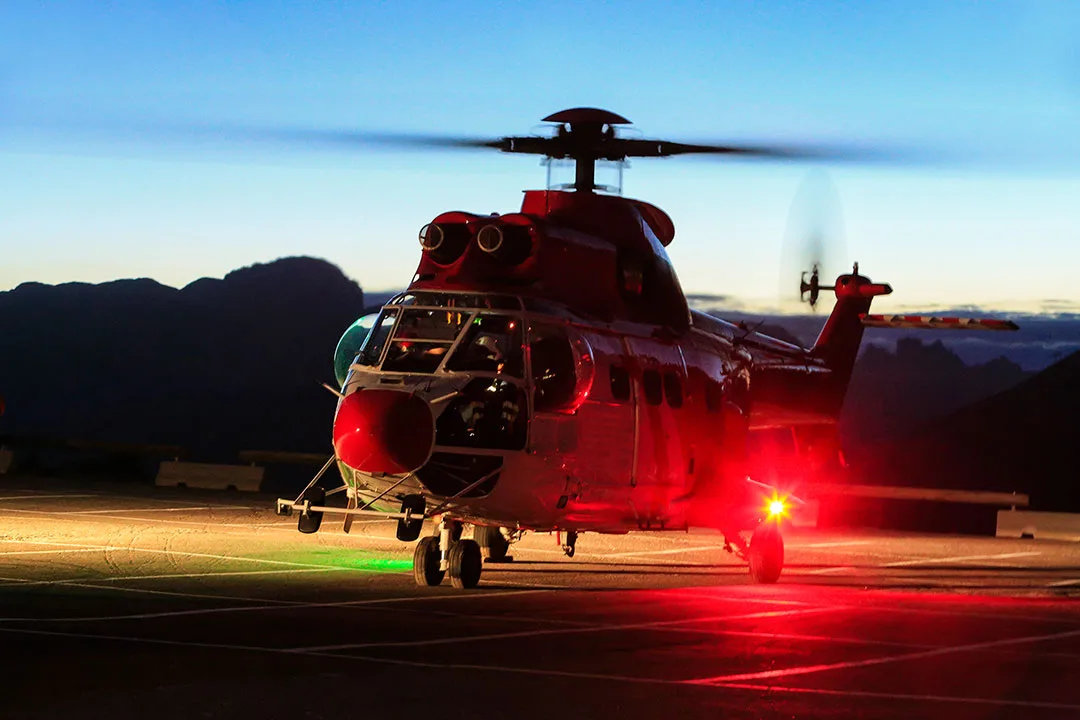
A helicopter staged on a tarmac prior to night operations.
Modern helicopter missions benefit from an ecosystem of tools that help pilots maintain awareness and make informed decisions. Not every aircraft carries every system, and equipment varies based on mission profile, regulatory category, and operator standards, but these technologies are commonly associated with professional night operations.
Night vision goggles (NVGs)
Night vision goggles amplify available light and can significantly enhance a pilot’s ability to see terrain features and certain obstacles in low-light environments. NVG operations require specialized training, dedicated procedures, and cockpit lighting designed for compatibility. When NVGs are used, operational procedures account for differences in visual perception and how it influences approach and landing techniques. FAA human factors research and operational guidance on NVG use is available across its handbooks and safety resources.
IFR capability and instrument procedures
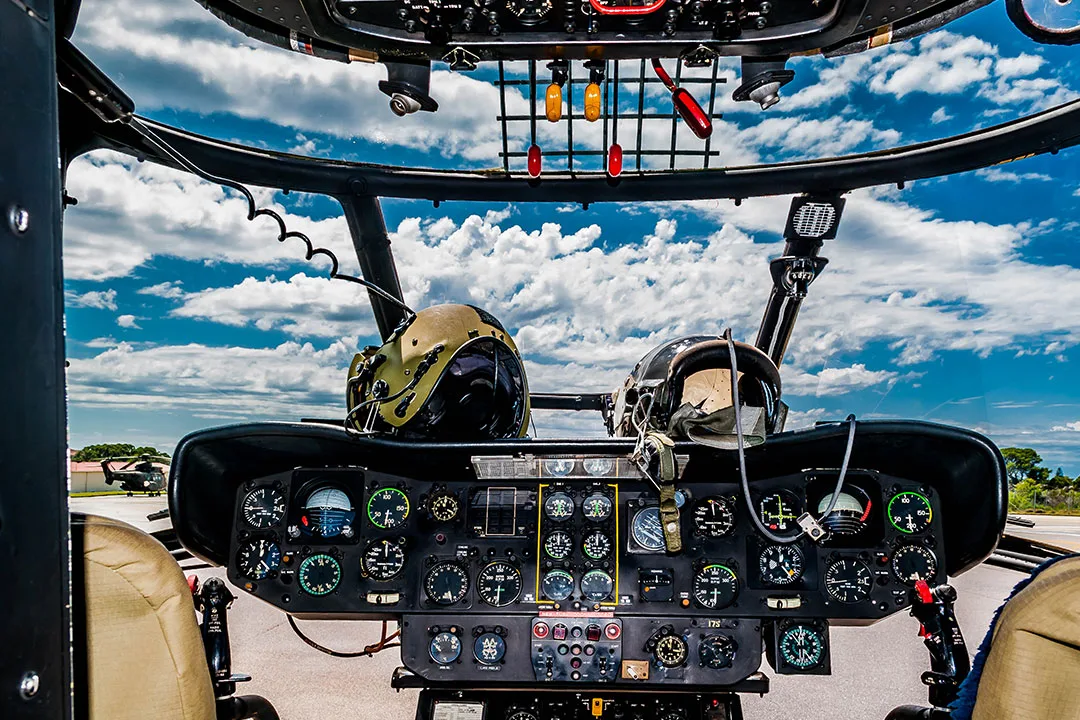
A helicopter instrument panel displaying flight and navigation instruments used during IFR operations.
IFR, or Instrument Flight Rules, allows properly equipped helicopters and qualified pilots to operate using instruments and published procedures when visibility is limited. IFR does not eliminate weather risk, but it provides structured navigation and stabilized approaches when conditions allow. In the US, instrument procedures, charts, and navigation standards are published through the FAA’s Aeronautical Information Services.
Weather intelligence and briefings
Night flights demand disciplined weather planning. Operators rely on official forecasts, observations, and route-specific tools to track ceilings, visibility, winds, and convective activity. Aviation weather products and explanations of key forecast data are provided by the National Weather Service, which supports both pilots and dispatchers in flight planning and monitoring.
Terrain awareness and navigation tools
Modern avionics, moving maps, and terrain databases support situational awareness when visual cues are limited. These systems help crews plan routes and maintain safe clearance from terrain and obstacles. While they never replace training or judgment, they meaningfully reduce workload and enhance awareness when used correctly.
Route and Landing Zone Planning
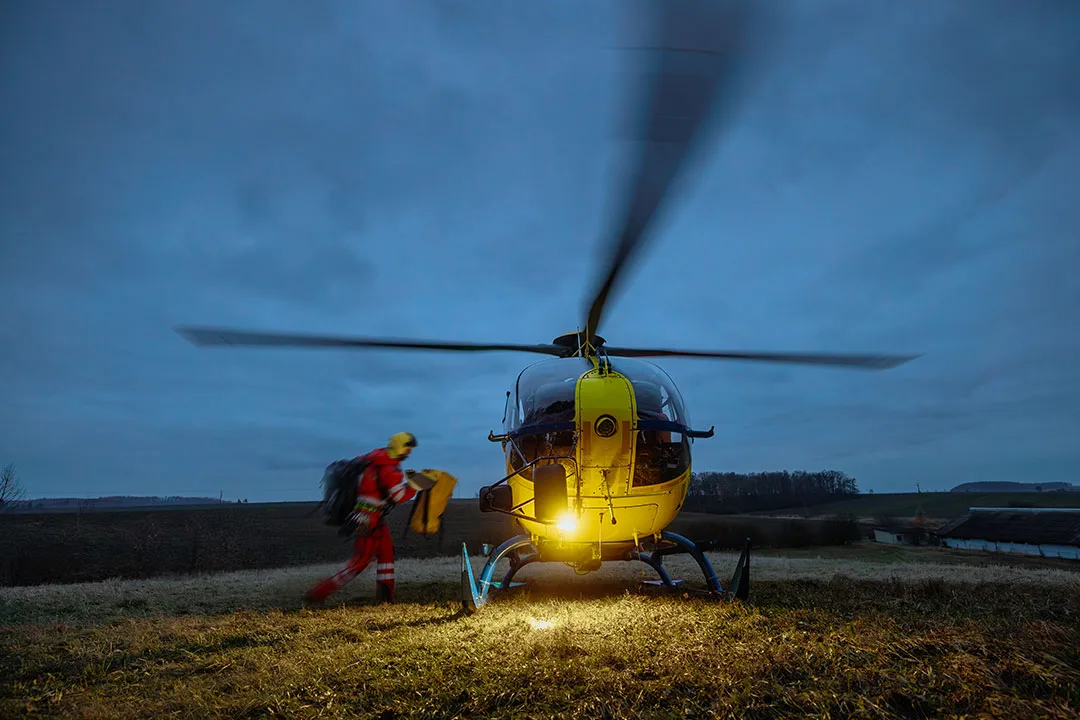
An EMT approaches a helicopter at a prepared landing area at dusk, illustrating controlled access and landing zone readiness.
Night helicopter operations are largely decided before the rotors ever turn. Safe outcomes are the result of conservative planning and clear decision-making well in advance of departure.
At a high level, planning typically includes:
- Route selection with margins: favoring paths with recognizable landmarks, ambient lighting, and lower obstacle density when practical.
- Obstacle and wire risk management: avoiding low-level flight unless required by the mission and appropriately mitigated.
- Weather gates: setting go and no-go criteria based on ceilings, visibility, wind, and trends, not just current conditions.
- Alternate plans: identifying suitable divert locations early.
- Landing zone evaluation: confirming surface conditions, slope, obstacles, lighting, and approach paths.
Among these factors, landing zone evaluation plays a particularly critical role in night flight planning. Key considerations include lighting, access, nearby obstructions, and how the area will be controlled during arrival and departure, all of which take on added importance after dark.
If a site cannot be made suitable, using an established helipad or airport is often the safest option.
Operational Suitability of Night Helicopter Flight
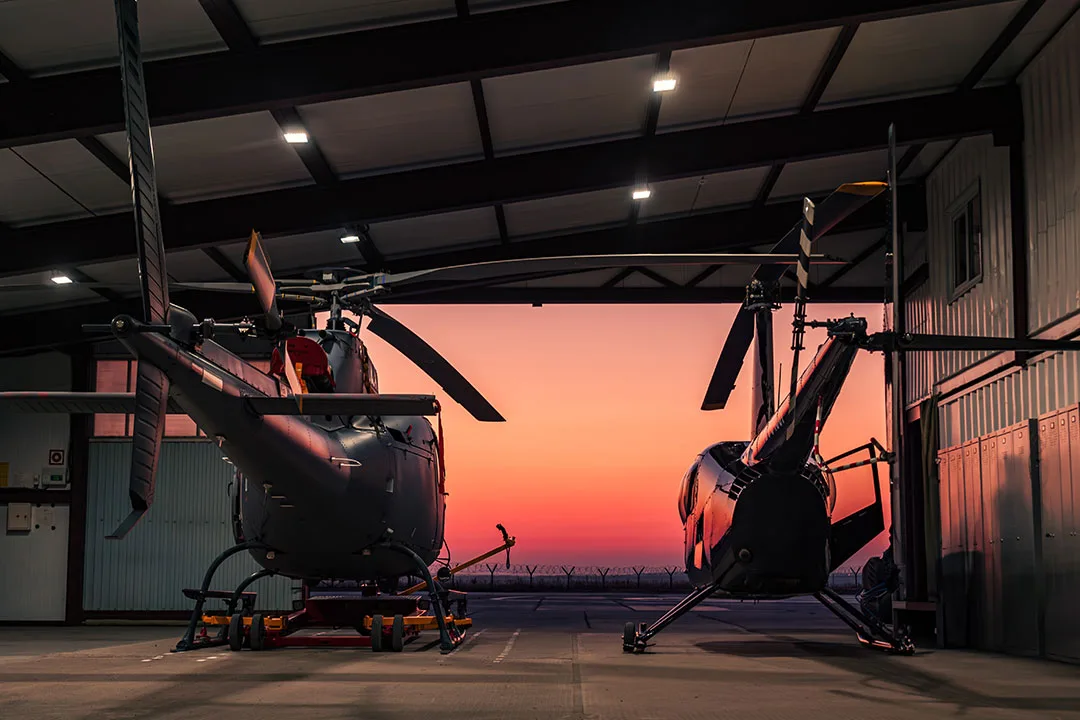
Two helicopters staged inside a hangar at sunset, ready for time-sensitive missions when conditions support safe night flight.
Night helicopter services can be an effective solution for time-sensitive travel, late event departures, positioning flights, remote site logistics, and specialized missions. They are also common in emergency services, offshore operations, and utility work where operational value is high.
At the same time, responsible operations treat night flight as a capability, not a requirement. Sound go and no-go decisions consider the full operational picture:
- Weather trends: expected conditions throughout the mission, not just at departure.
- Route and terrain: obstacle density and availability of alternates.
- Aircraft equipment: what systems are installed and serviceable for that specific flight.
- Pilot qualifications and currency: including recent night experience and any required authorizations.
If any element is not aligned, adjusting timing, changing landing sites, or moving the flight to daylight is often the most professional choice.
What Makes Night Helicopter Flights Safe and Reliable
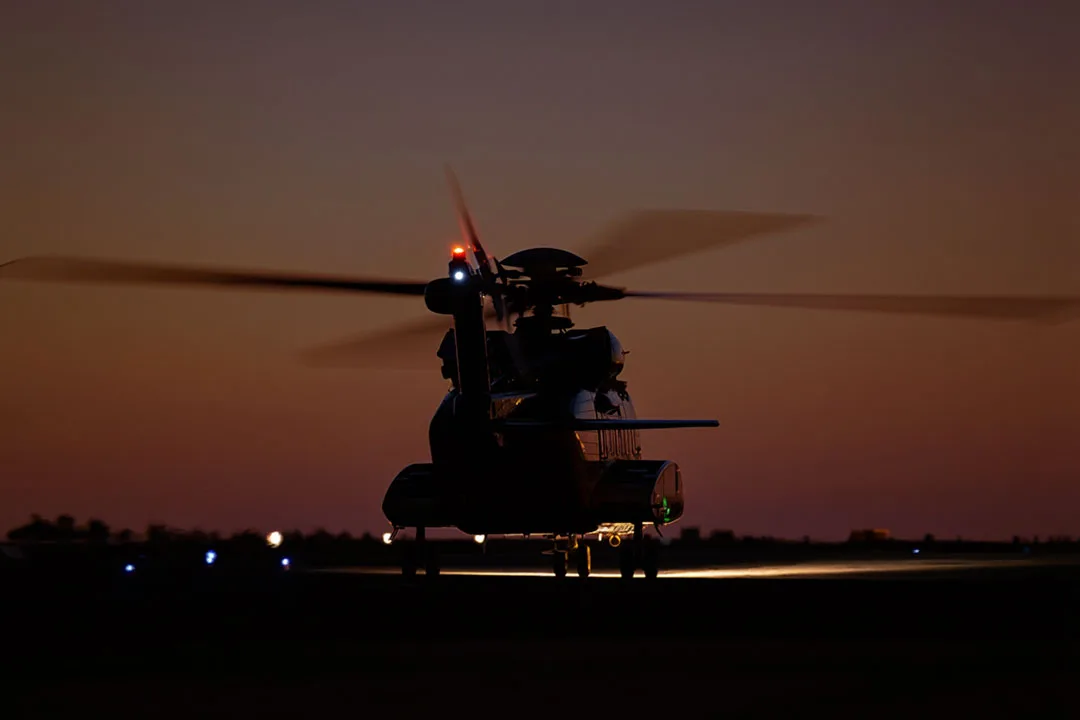
helicopter taxis out at sunset for a night flight
Night helicopter operations are the result of deliberate planning and structured decision-making, not on-the-fly judgment. Every after-dark flight is shaped by standardized procedures, qualified crews, and equipment selected to support situational awareness when visual cues are limited.
Risk is managed through preparation, conservative margins, and a clear understanding of when conditions support safe flight and when they do not.