
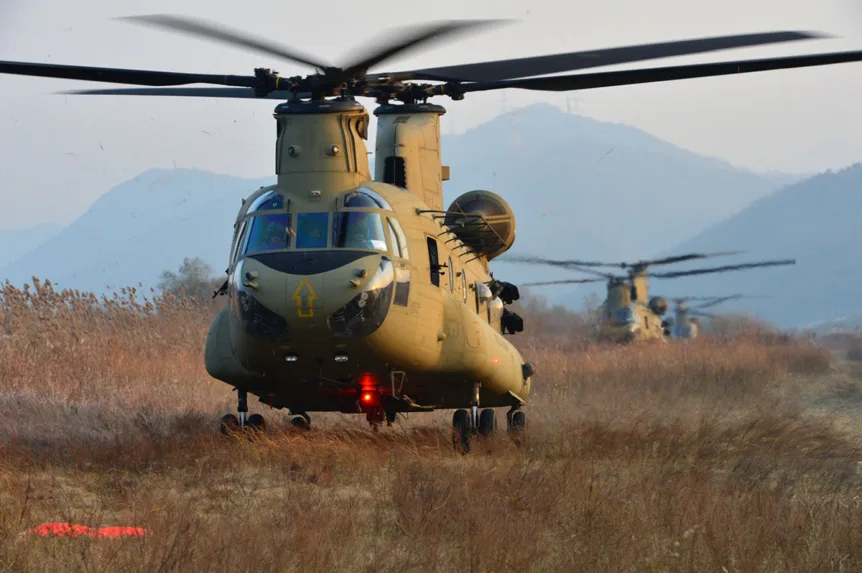
The Chinook helicopter, an engineering marvel and symbol of strength, has been a pivotal player in the world of aviation for over six decades. This versatile, heavy-lift helicopter has shaped the course of military and civilian operations across the globe. Join us as we embark on an exciting journey to explore the origins, capabilities, and the riveting stories of this extraordinary flying machine.
In the late 1950s, the United States Army sought a new heavy-lift helicopter capable of transporting troops, equipment, and supplies with ease. They needed a machine that could effortlessly navigate the treacherous terrain of the battlefield and perform seemingly impossible tasks. The result was the birth of the Chinook helicopter, which first took to the skies in 1961 and has since become an invaluable asset for military and civilian missions alike.
The company responsible for developing and building the Chinook helicopter is none other than Boeing Vertol, a subsidiary of the renowned American aerospace giant, Boeing. Founded in 1940 as Piasecki Helicopter Corporation, the company was later renamed Vertol Aircraft Corporation after being acquired by Boeing in 1960. Boeing Vertol’s vision and engineering prowess led to the creation of the Chinook, which has since become one of the most recognizable and respected helicopters in the world. Over the years, Boeing has continued to refine and enhance the Chinook’s design, ensuring its enduring relevance and effectiveness in an ever-changing world.
The Chinook’s innovative tandem rotor design sets it apart from other helicopters. This powerful configuration allows it to lift and transport heavy payloads, making it the ideal choice for a variety of tasks. From delivering essential supplies to remote areas to carrying out daring rescue missions, the Chinook helicopter has proven time and time again that it’s up to the challenge.

Boeing CH-47 Chinook Helicopters
One of the most famous examples of the Chinook’s versatility is its role in the 1980 Iranian hostage rescue mission, known as Operation Eagle Claw. The US military relied on the helicopter’s exceptional abilities to navigate through harsh desert conditions, attempting to rescue 52 American hostages. Although the mission was ultimately unsuccessful due to unforeseen complications, the Chinook’s performance left a lasting impression.
Fast forward to 1991, and the Chinook helicopter found itself in the limelight once again during Operation Desert Storm. As part of the coalition forces fighting against Iraq, these helicopters played a critical role in moving troops, equipment, and other cargo across the unforgiving desert landscape. The Chinook’s agility and resilience in this harsh environment cemented its reputation as a true workhorse of the skies.
The Chinook helicopter has also played a crucial role in numerous disaster relief efforts, showcasing its humanitarian capabilities. For instance, following the devastating 2005 earthquake in Pakistan, Chinooks were deployed to provide aid and transport supplies to the hardest-hit areas. Similarly, in the aftermath of the 2010 earthquake in Haiti, these helicopters were instrumental in delivering essential resources and evacuating the injured to safety.
But the Chinook’s story doesn’t end there. This incredible machine continues to serve in various conflicts, such as the ongoing war in Afghanistan. In 2011, during Operation Neptune Spear, the world watched in awe as a modified Chinook helicopter, known as the MH-47, played a critical role in the mission to capture and kill Osama bin Laden. The helicopter’s stealth capabilities, combined with its ability to navigate through mountainous terrain, made it the ideal choice for this high-stakes operation.
Today, over 20 countries, including the United States, the United Kingdom, Canada, and Australia, have Chinook helicopters in their arsenal. As technology continues to advance, so too does this iconic aircraft. The latest models, like the CH-47F and the MH-47G, boast significant upgrades in avionics, digital flight control systems, and overall performance.
As we look to the future, we can expect to see the Chinook helicopter continue to evolve, pushing the boundaries of what’s possible in aviation. For example, the development of the CH-47F Block II will provide increased lift capacity, allowing the helicopter to carry even heavier payloads. This new model will also feature an upgraded rotor system and advanced avionics, further enhancing the Chinook’s capabilities and performance in both military and civilian operations.
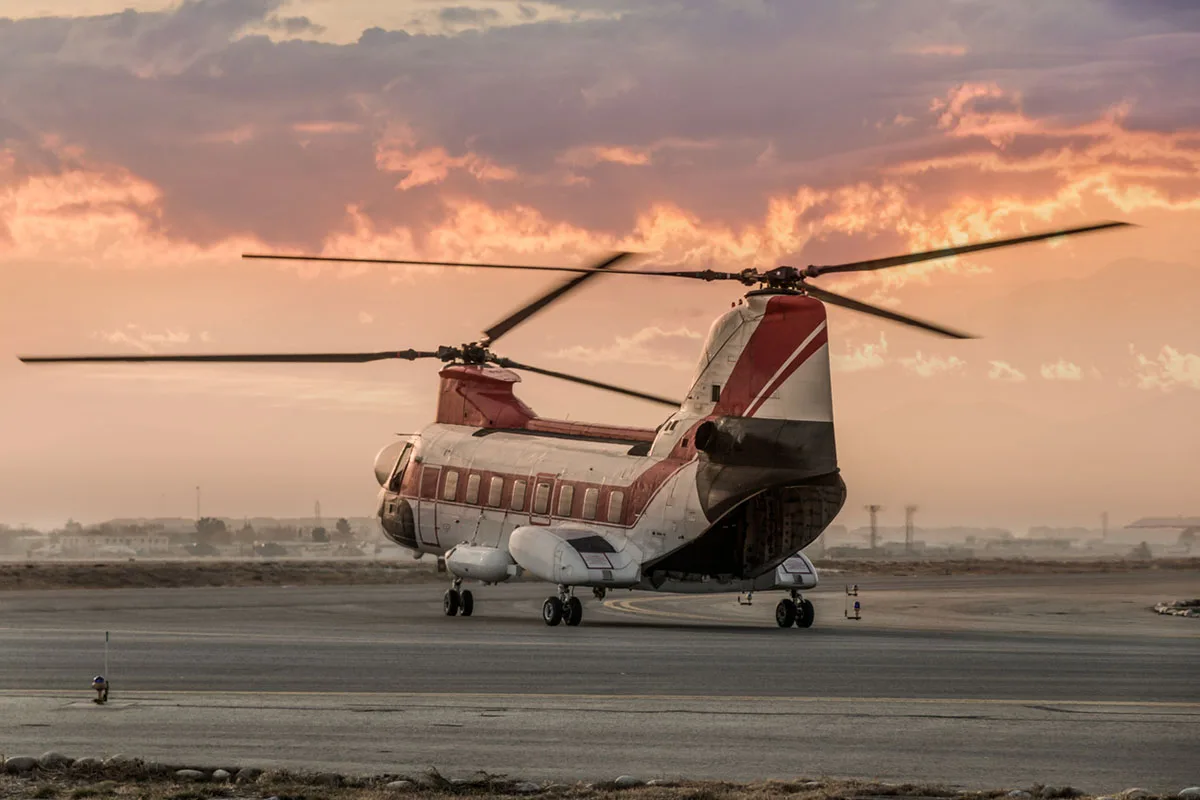
Boeing CH-47 Chinook Helicopter
The Chinook helicopter has also captured the imagination of the private sector, with companies exploring its potential in various industries. From construction and logging to firefighting and oil exploration, the Chinook’s unrivaled lifting capacity and adaptability make it an attractive option for businesses seeking efficient and cost-effective solutions.
In the realm of firefighting, the Chinook has proven to be a game-changer. Its ability to transport massive amounts of water or fire retardant makes it an invaluable tool in combating wildfires. In 2018, during the devastating California wildfires, Chinook helicopters played a significant role in suppressing the flames and saving countless homes and lives.
The Chinook’s legacy also extends to the world of space exploration. In 2012, a modified Chinook was used to transport the retired space shuttle Endeavour through the streets of Los Angeles to its final resting place at the California Science Center. The precision and power of the Chinook helicopter made this seemingly impossible task a reality, showcasing its unparalleled capabilities to the world.
Despite its storied past, the Chinook helicopter’s journey is far from over. As the global landscape continues to change and new challenges arise, this incredible machine will undoubtedly remain at the forefront of aviation technology. From its early days as a military workhorse to its current role as an indispensable tool in various industries, the Chinook helicopter’s story serves as a testament to human ingenuity, determination, and the relentless pursuit of progress.
As we continue to push the boundaries of what’s possible, the Chinook helicopter will undoubtedly be there to carry us forward, soaring through history and innovation. And while we may not know what the future holds, one thing is certain: the Chinook helicopter’s legacy will continue to inspire and captivate generations to come.