
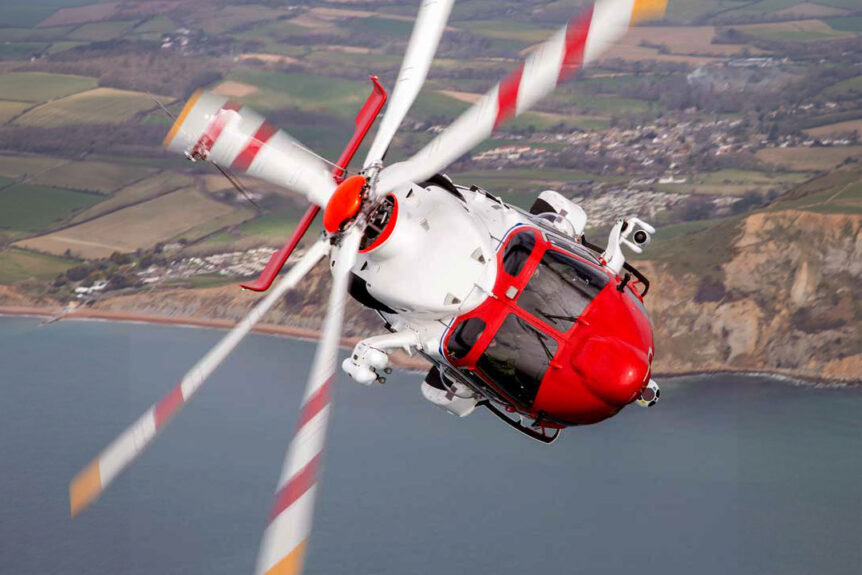
The Leonardo AW189 is a super-medium, twin-engine helicopter purpose-built for demanding offshore, search and rescue (SAR), and VIP/corporate transport missions. Designed to bridge the gap between medium and heavy types, it delivers long range, high payload, and advanced safety systems in a modern airframe.
This detailed profile walks through the AW189’s key technical specifications, performance figures, and cabin features using manufacturer and authority-published data to give operators, aviation professionals, and informed passengers a clear understanding of what the aircraft can do.
Structural Design & Operational Efficiency
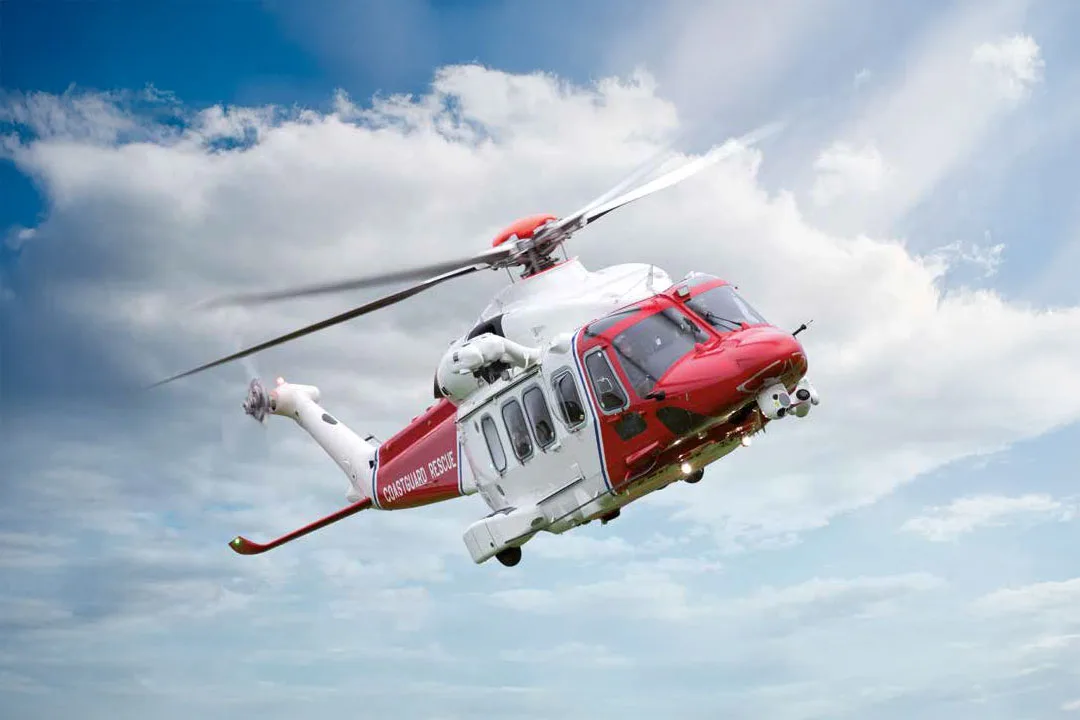
Leonardo AW189 Helicopter | Photo: leonardo.com
The AW189 is part of Leonardo’s AW family and shares commonality with the AW139 and AW169, but it is optimized from the outset for the super-medium category. According to Leonardo’s official product data, the AW189 is certified for a maximum takeoff weight (MTOW) of 8,600 kg (18,960 lb) in its baseline configuration and up to 8,900 kg (19,621 lb) with the increased MTOW option.
- Role: Super-medium twin-engine multi-role helicopter (offshore, SAR, VIP, utility)
- Manufacturer: Leonardo Helicopters (formerly AgustaWestland)
- Configuration: Single main rotor, tail rotor, retractable tricycle landing gear
- Rotor system: Fully articulated 5-blade main rotor; 4-blade tail rotor
- Maximum takeoff weight (standard): 8,600 kg (18,960 lb)
- Maximum takeoff weight (increased option): 8,900 kg (19,621 lb)
The airframe makes extensive use of composites for strength and corrosion resistance, a critical factor for offshore operations over salt water. The wide main cabin and large sliding doors on both sides are designed to streamline passenger embarkation, stretcher loading, and hoist operations in SAR roles.
Engines, Powerplant, and Fuel System
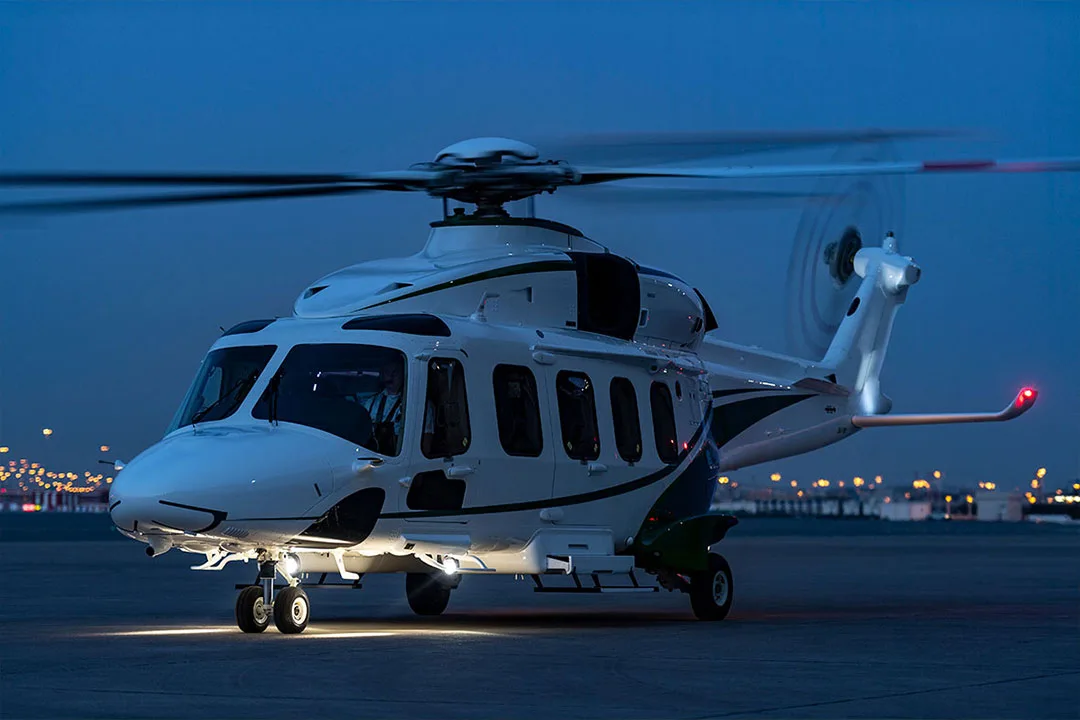
Photo: leonardo.com
The AW189 can be delivered with either GE CT7-2E1 or Safran Aneto-1K engines, depending on mission requirements and customer preference. The engine options are specifically matched to the helicopter’s long-range, high-payload profile.
- Engine type (baseline configuration): 2 × General Electric CT7-2E1 turboshafts
- Takeoff power (each CT7-2E1): 1,978 shp (1,476 kW)
- Alternative engine option: 2 × Safran Aneto-1K turboshafts (for AW189K variant)
Leonardo’s data indicates a standard fuel capacity of approximately 4,200 liters (1,109 US gal), enabling long-duration missions without auxiliary tanks. The fuel system is crashworthy and includes multiple tanks with cross-feed capability to enhance safety and center-of-gravity control.
The Aneto-powered AW189K variant offers increased power for hot-and-high and offshore operations in particularly demanding environments, while maintaining the same airframe and mission systems architecture.
Performance Built for Demanding Environments
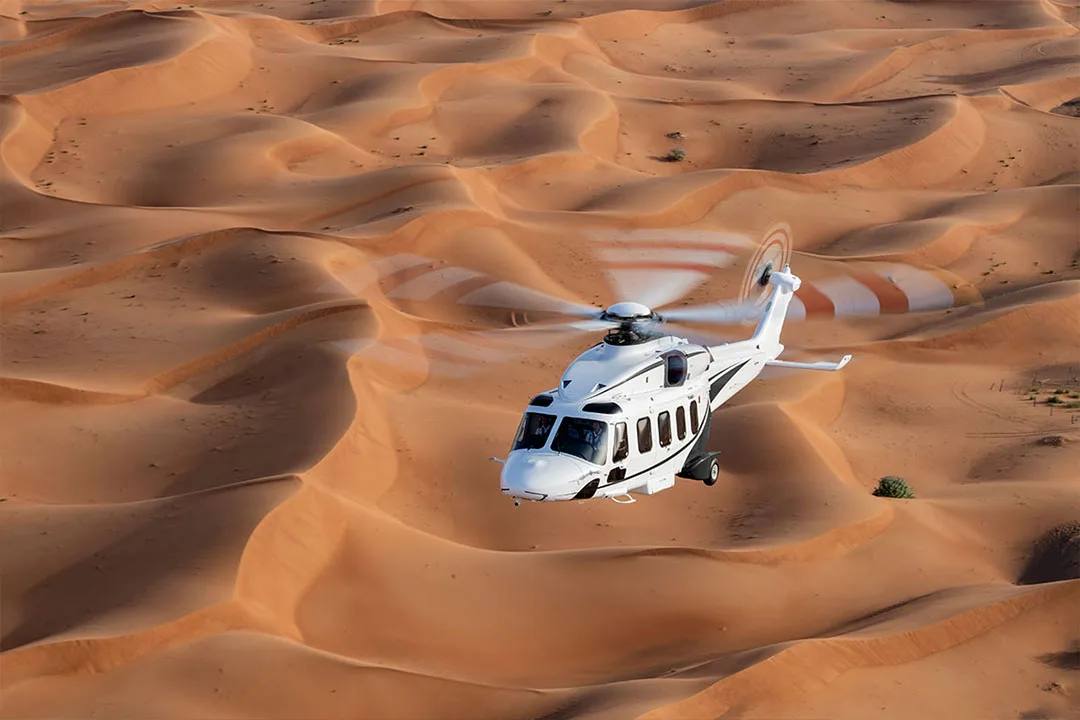
Photo: leonardo.com
The AW189’s performance envelope is tailored to offshore oil and gas transport, long-range SAR, and executive shuttle requirements, combining cruise efficiency with strong one-engine-inoperative margins.
- Maximum cruise speed: 155 knots (287 km/h, 178 mph)
- Never-exceed speed (VNE): 167 knots (309 km/h, 192 mph)
- Maximum range (no reserves, standard tanks): up to 540 nm (1,000 km, 621 mi) at long-range cruise
- Endurance: approximately 5 hours 30 minutes, depending on configuration and reserves
- Service ceiling: 15,000 ft (4,572 m)
- Hover ceiling OGE (ISA, MTOW, sea level): 6,000 ft
The combination of high cruise speed and long range allows the AW189 to serve platforms and windfarms well offshore without staging, reducing transit times and supporting tight crew-change schedules. For SAR and HEMS roles, the aircraft can remain on station for extended search patterns, particularly when equipped with auxiliary fuel in mission-specific configurations.
Cabin, Capacity, and Mission Flexibility
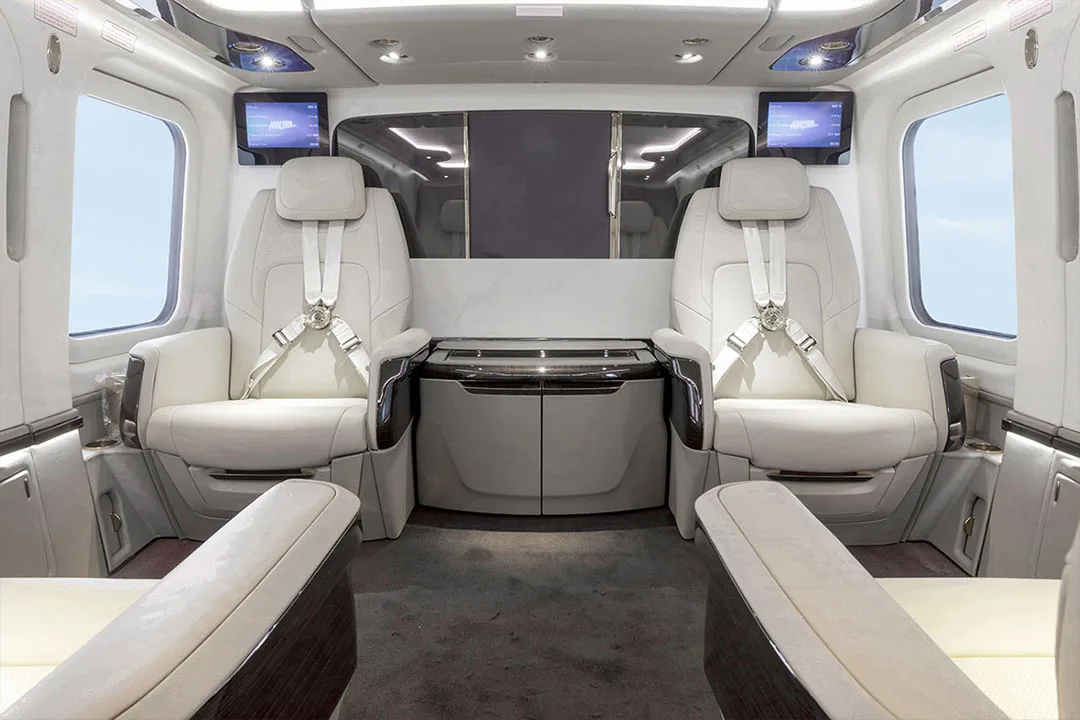
A look inside the AW189’s cabin interior. | Photo: leonardo.com
One of the AW189’s defining characteristics is its large, unobstructed cabin. Leonardo highlights that the AW189 offers the largest cabin in its class, with a flat floor and stand-up headroom for most occupants.
- Cabin length (excluding cockpit): approximately 3.86 m (12.7 ft)
- Cabin width: 2.40 m (7.9 ft)
- Cabin height: 1.45 m (4.8 ft)
- Cabin volume: about 11.2 m³ (395 ft³)
- Typical offshore seating: up to 16–19 passengers plus 2 pilots, depending on layout
For offshore energy support, the cabin is usually configured with high-density, energy-absorbing seats and dedicated storage for lifejackets and survival gear. Large sliding doors on both sides permit rapid loading and unloading while the helicopter remains on the helideck.
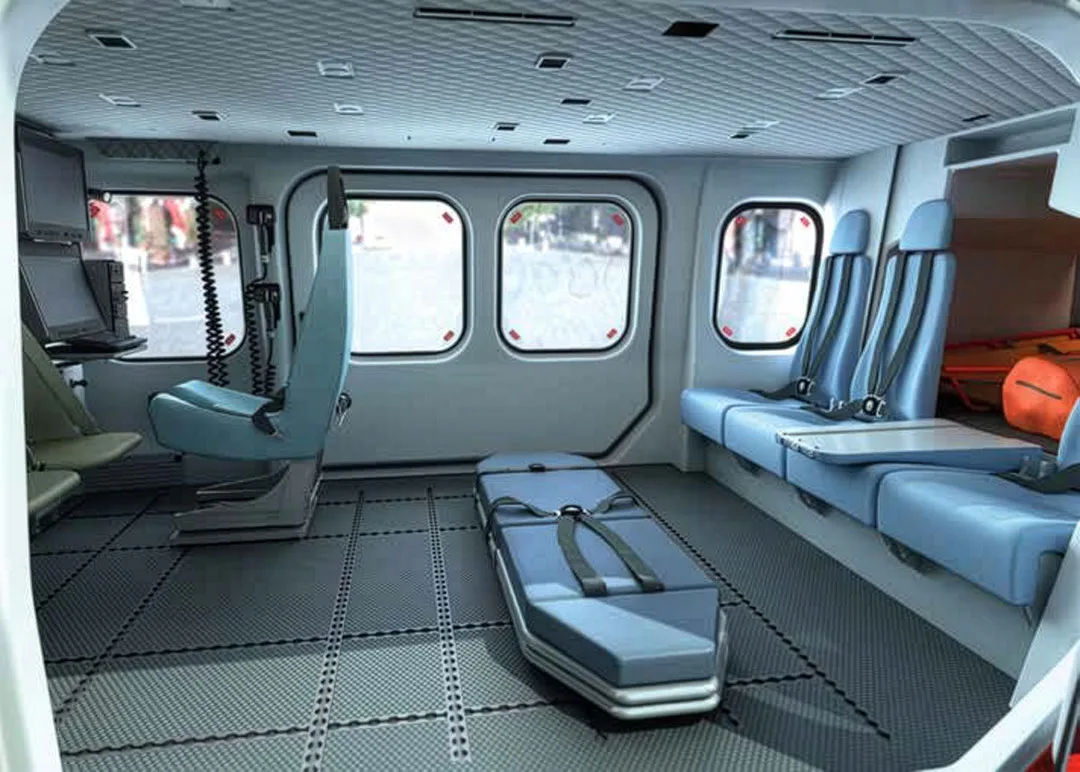
The AW189 includes fixtures and provisions for a number of self-contained systems including a three-stretcher MEDEVAC solution. | Photo: leonardo.com
In SAR or HEMS roles, interiors can accommodate multiple stretchers, medical equipment racks, and a rescue hoist. Leonardo documentation notes that the AW189 can carry up to 6 stretchers plus medical attendants in certain dedicated layouts, supported by a high-visibility cabin and integrated hoist control interfaces.
VIP and corporate transport versions replace high-density seating with fewer, wider seats, club arrangements, and optional soundproofing enhancements. The flat floor and large volume make it straightforward to tailor the cabin for corporate shuttles, head-of-state missions, or private operations.
AW189 Technical Specifications
| Specification | Details |
|---|---|
| Max Gross Weight | 8,300 kg (18,298 lb)* *8,600 kg (18,960 lb) for AW189K version |
| Optional Increased Gross Weight | 8,600 kg (18,960 lb) |
| Powerplant | 2 × General Electric CT7-2E1 and 1 × Safran e-APU (60 kW) or 2 × Safran Aneto-1K and 1 × Safran e-APU (60 kW) |
| Overall Length | 17.57 m (57 ft 08 in)* *Rotors turning |
| Overall Height | 5.07 m (16 ft 07 in)* *Rotors turning |
| Rotor Diameter | 14.60 m (47 ft 11 in) |
| Capacity | Crew: 1–2 Passengers: up to 19 (16 for IOGP standard) |
| Max Cruise Speed (@ 5,000 ft, ISA, MGW, MCP) |
294 km/h (159 kt)* ** *General Electric CT7-2E1 **Safran Aneto-1K |
Avionics, Safety Features, and Certification
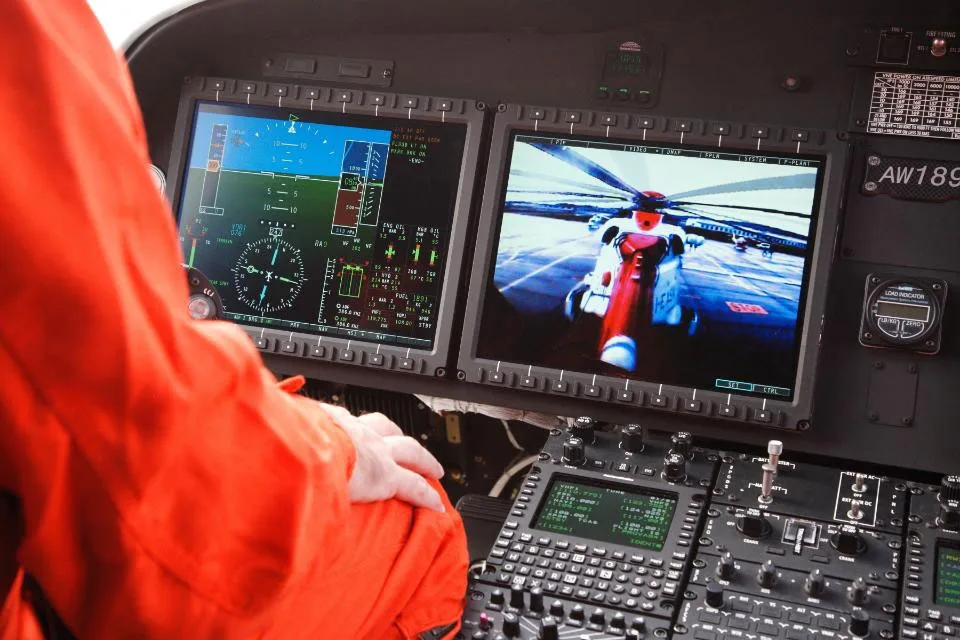
A Look Inside the Cockpit of the AW189 | Photo: leonardo.com
The AW189 is equipped with a full glass cockpit and advanced avionics suite tailored for long-range IFR operations in harsh weather. Its cockpit layout is designed for two-pilot operation and to reduce pilot workload through automation and situational awareness tools.
- Avionics suite: Fully integrated 4-axis digital Automatic Flight Control System (AFCS) with dual Flight Management Systems (FMS)
- Displays: Large-area multifunction displays providing flight, navigation, engine, and system data
- Navigation and safety options: Synthetic vision system, HTAWS (Helicopter Terrain Awareness and Warning System), weather radar, digital map, and Automatic Dependent Surveillance–Broadcast (ADS-B) capability
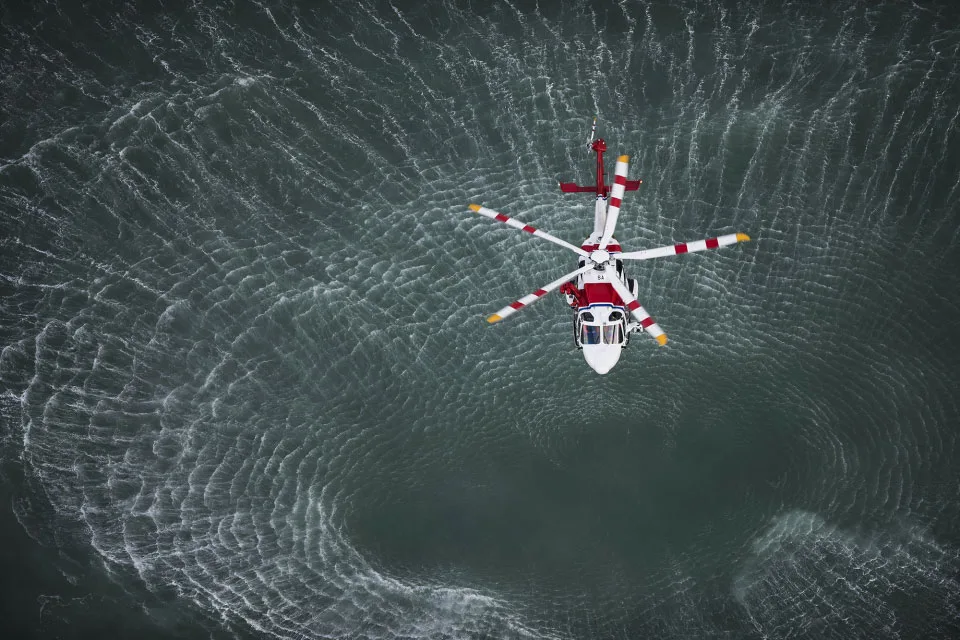
Photo: leonardo.com
Leonardo emphasizes that the AW189 meets or exceeds the latest offshore safety and redundancy standards. Key features include:
- Full ice protection system (FIPS) option for operations in known icing conditions
- Crashworthy fuel system and energy-absorbing landing gear and seats
- Redundant hydraulic, electrical, and flight control systems for fail-operational capability
- Certified for all-weather operations and night vision goggle (NVG) compatibility in SAR roles
The AW189 has been certified by the European Union Aviation Safety Agency (EASA), with type certificate data sheets confirming compliance with CS-29 large rotorcraft standards. Additional validations have been issued by other authorities, enabling worldwide operation for offshore and government customers.
Operational Roles and Typical Use Cases
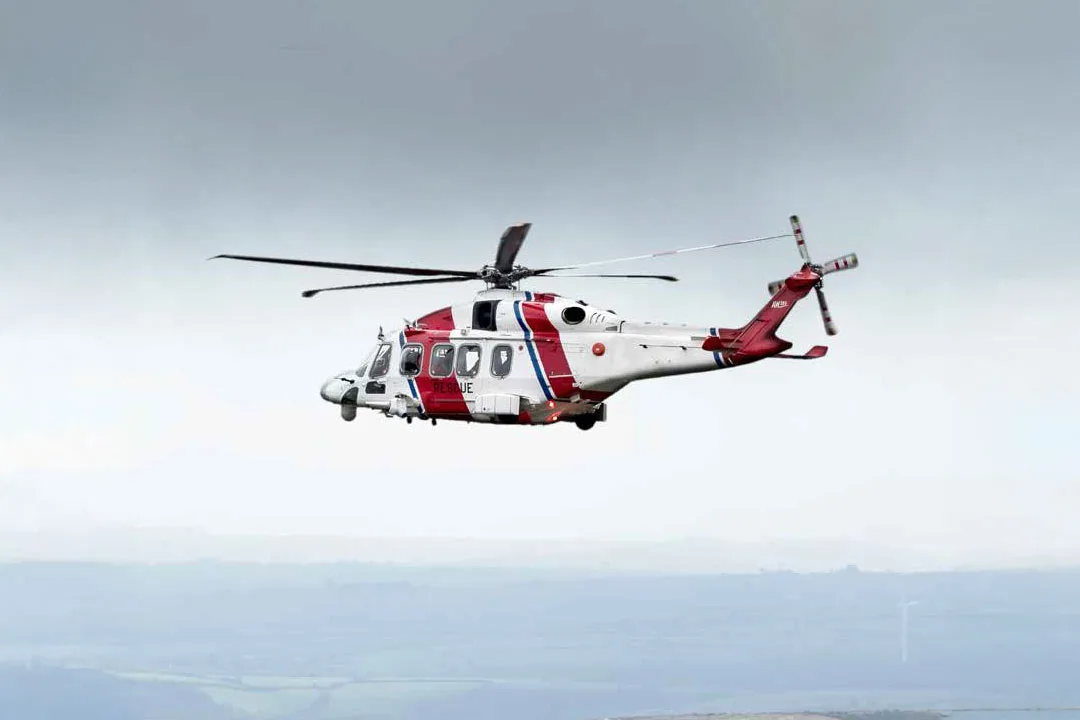
Photo: leonardo.com
While the AW189 can be customized for many missions, several core applications dominate its worldwide fleet usage:
- Offshore Oil & Gas Transport: High-seat-count configurations, long range, and the FIPS option make the AW189 a strong choice for extended overwater sectors to deep-water platforms and windfarms.
- Search and Rescue (SAR): Large cabin, powerful hoist options, long endurance, and advanced avionics support demanding SAR profiles in poor weather and at long distances from shore.
- Emergency Medical Services (HEMS): Configurable interiors allow multiple stretchers, intensive-care equipment, and crew workspaces while maintaining range to serve remote regions.
- VIP and Corporate Transport: Custom interiors leverage the spacious cabin to provide comfort comparable to small business jets, especially on short and medium routes.
- Parapublic and Government Missions: Border surveillance, maritime patrol, and disaster response roles benefit from the AW189’s endurance and sensor integration capacity.
Designed to move larger groups of passengers or equipment farther offshore than traditional medium twins allow, without the cost and scale associated with heavy helicopters, the AW189’s specification set delivers a well-balanced solution.
Its combination of high MTOW, long range, modern safety systems, and a versatile cabin design has established it as a reference platform in the super-medium segment.