

Helicopter lifting capacity has been a pivotal factor in the development of rotorcraft, enabling tasks ranging from military logistics to disaster relief. Take a closer look at the most powerful helicopters ever built, their unmatched lifting capabilities, and the dependable aircraft leading in heavy-lift operations.
The Pinnacle of Lifting Power: Mil V-12 and Mi-26
Mil V-12: The Giant That Set Records
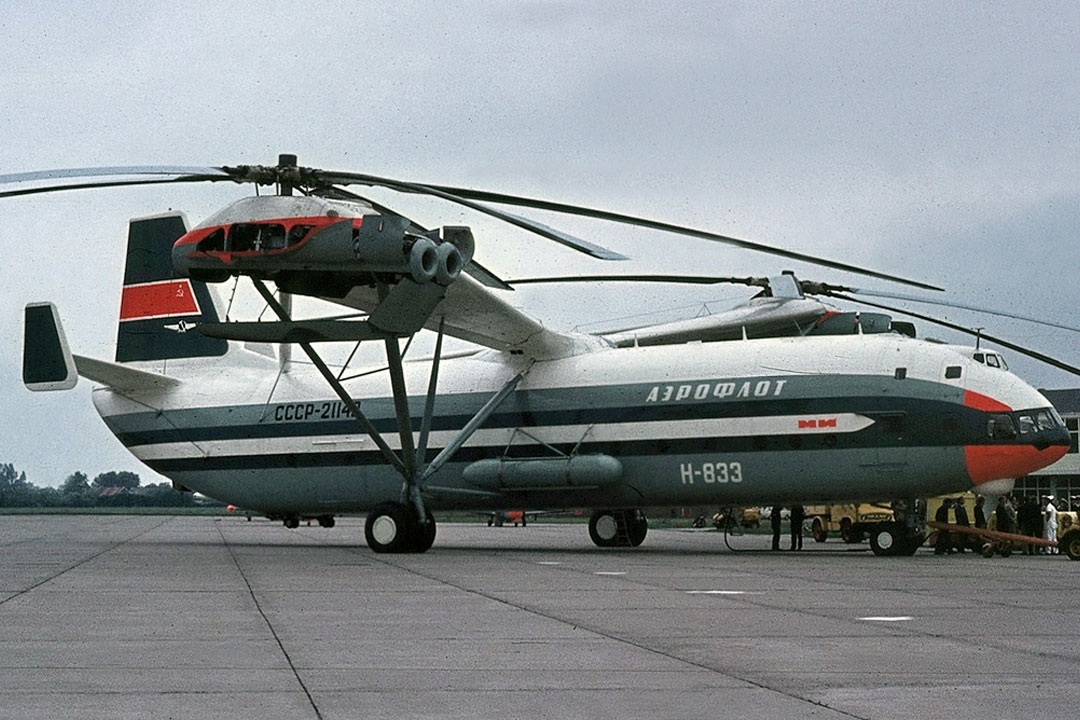
Mil V-12 | Photo: Groningen Airport-Eelde
The Mil V-12, a product of the Soviet Union’s intense Cold War-era engineering efforts, was first flown in 1968. This behemoth was intended to transport massive missile components across Siberia without relying on rail or road. It employed two Mil Mi-6 rotors mounted side-by-side on fixed wings and was powered by four Soloviev D-25VF engines.
Although it achieved phenomenal test results—including world records for payload lifted—it never entered production. The strategic need for such a helicopter diminished with advancements in missile technology, and the sheer cost and complexity of the V-12 sealed its fate.
Mil Mi-26: The Heavy-Lift Champion
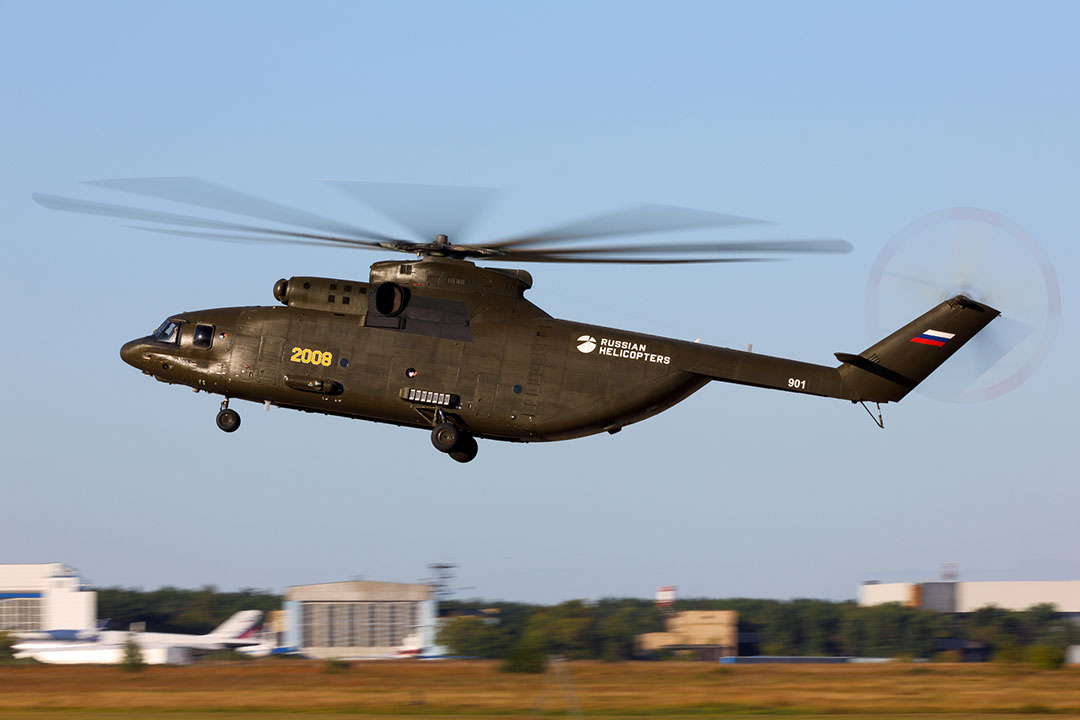
Mil Mi-26 | Photo: Artyom_Anikeev
After the V-12, the Mil Mi-26 emerged as a more practical but still enormously powerful heavy-lift helicopter. First flown in 1977 and entering service in 1983, the Mi-26 was designed to fulfill both military and civilian roles. It could transport up to 90 troops or two armored vehicles and has been used in operations ranging from Chernobyl cleanup to delivering humanitarian aid in disaster zones like the 2005 Kashmir earthquake.
Its immense capacity has made it indispensable for oversized and remote-location transport missions around the world.
Modern Marvel: Sikorsky CH-53K King Stallion
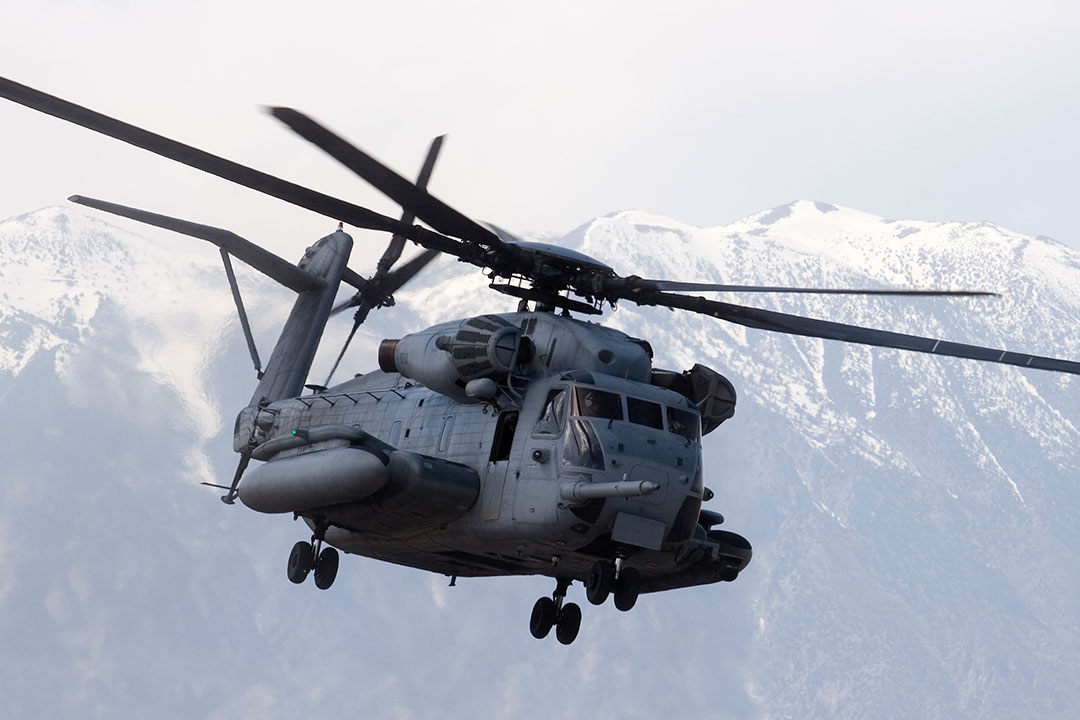
CH-53 King Stallion
The CH-53K King Stallion continues Sikorsky’s legacy of designing robust, mission-ready helicopters. Developed in the 2010s and entering service in the early 2020s, it features modern digital fly-by-wire systems that reduce pilot workload and improve safety. One of its most impressive attributes is its ability to lift a 12,000-pound external load over a radius of more than 110 nautical miles under high/hot conditions—something legacy helicopters struggle to achieve.
It’s intended to serve the U.S. Marine Corps well into the 2040s and beyond, replacing aging CH-53E Super Stallions with improved performance, maintainability, and survivability in contested environments.
Reliable Workhorses Across Classes
Boeing CH-47 Chinook

Boeing CH-47 Chinook | Photo: K G Yon
First introduced in 1962, the CH-47 Chinook has evolved through numerous upgrades. From Vietnam to Afghanistan, the Chinook has proven its reliability in both combat and humanitarian missions. Its tandem rotor configuration not only improves lift but also simplifies loading and unloading.
The current CH-47F variant features composite rotor blades, advanced digital avionics, and increased lift capacity. This helicopter continues to be produced and upgraded due to strong global demand and remains one of the most iconic heavy-lift helicopters in the world.
Sikorsky S-64 Skycrane
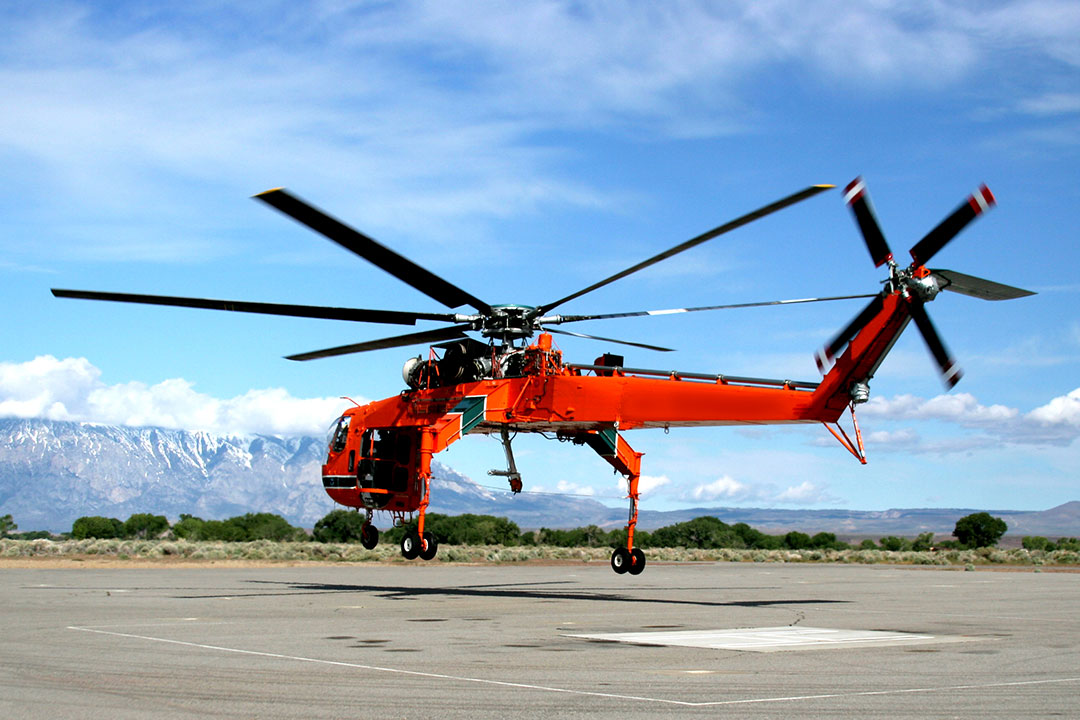
Sikorsky S-64 Skycrane
Originally developed for the military, the CH-54 Tarhe transitioned into the commercial S-64 Skycrane after its retirement from Army service. Its modular design allows operators to customize the payload pod for different missions—whether it’s transporting water tanks for firefighting, installing heavy HVAC units, or even placing ski lifts.
Kamov Ka-32

Kamov Ka-32 | Photo: Dragunov1981
The Kamov Ka-32, derived from the Ka-27 military helicopter, is well-known for its coaxial rotor design, which removes the need for a tail rotor and allows for better stability and maneuverability in tight spaces. It’s particularly favored in mountainous regions and urban environments, including in South Korea, Switzerland, and Canada. Its rugged construction and reliability have made it ideal for logging, precision construction, and fire suppression—especially from helibuckets suspended underneath the fuselage.
Other Noteworthy Heavy Lifters
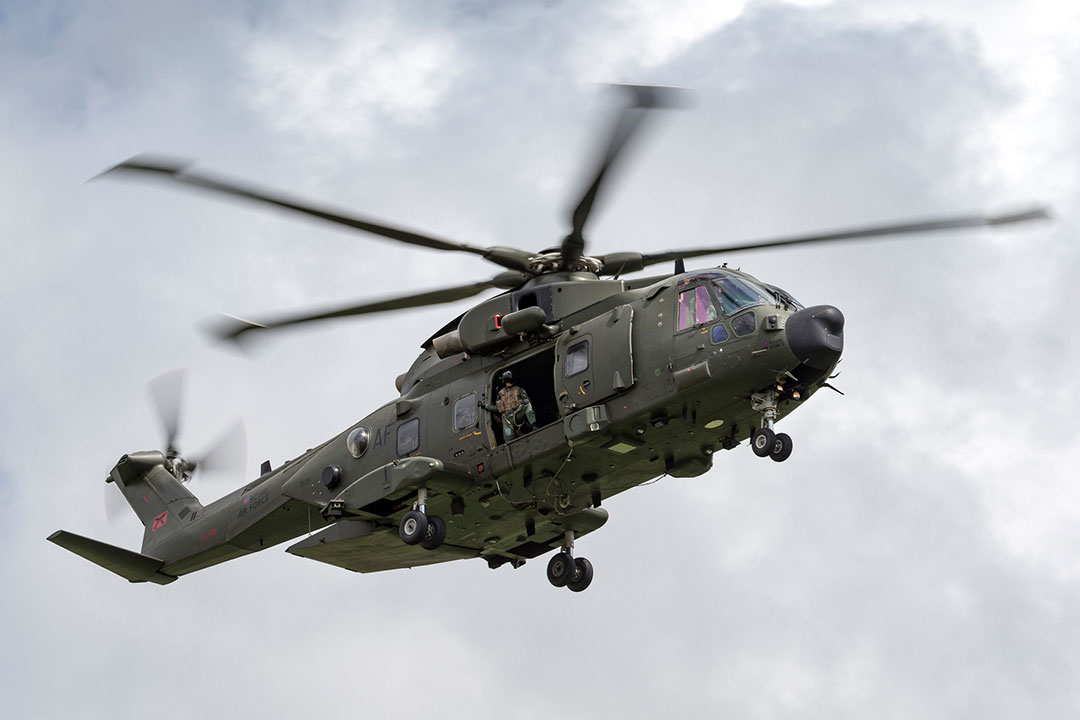
AgustaWestland AW101 | Photo: Ryan Fletcher
- AgustaWestland AW101: While primarily a multi-role naval platform, the AW101 can lift over 5,000 kg and has been used for SAR, VIP transport, and utility missions by countries like the UK, Italy, and Canada.
- Bell 214ST: This stretched twin version of the Bell 214 family was designed for use in hot and high conditions, particularly for offshore oil and gas transport with significant lift capability.
- Eurocopter AS332 Super Puma: Highly respected in offshore, SAR, and military applications, the Super Puma continues to serve globally in demanding environments, including UN peacekeeping missions.
Heavy-Lift Helicopter Showdown: Capacity, Engines & More
| Helicopter | Max Payload | 1st Flight | Engine Type | Primary Use |
|---|---|---|---|---|
| Mil V-12 | 97,455 lbs (44,205 kg) | 1968 | 4 × Soloviev D-25VF turboshaft | Prototype – Missile transport |
| Mil Mi-26 | 44,000 lbs (20,000 kg) | 1977 | 2 × D-136 turboshaft | Military logistics, disaster relief |
| CH-53K King Stallion | 36,000 lbs (16,329 kg) | 2015 | 3 × GE38-1B turboshaft | U.S. Marine Corps heavy lift |
| CH-47 Chinook | 24,000 lbs (10,886 kg) | 1961 | 2 × Honeywell T55-GA-714A | Troop/cargo transport |
| Sikorsky S-64 Skycrane | 20,000 lbs (9,072 kg) | 1962 | 2 × Pratt & Whitney JFTD12A | Firefighting, utility, construction |
| Kamov Ka-32 | 11,023 lbs (5,000 kg) | 1980 | 2 × Klimov TV3-117 | Firefighting, logging, urban lift |
| AW101 | 11,905 lbs (5,400 kg) | 1987 | 3 × Rolls-Royce Turbomeca RTM322 | SAR, transport, naval ops |
| Bell 214ST | 13,200 lbs (6,000 kg) | 1977 | 2 × General Electric CT7 | Oil & gas, utility transport |
| Eurocopter AS332 Super Puma | 9,920 lbs (4,500 kg) | 1978 | 2 × Turbomeca Makila 1A1 | Offshore, SAR, military ops |
The Future of Heavy-Lift Helicopters
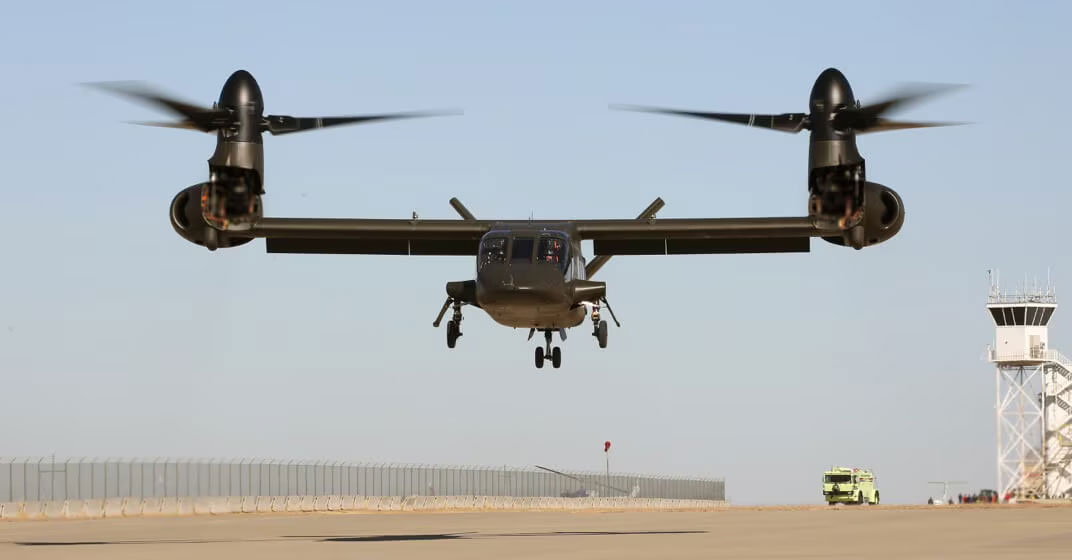
Bell V-280 Valor | Photo: bellflight.com
The future of helicopter lifting capacity lies in smarter, lighter, and more autonomous platforms. Advances in composite materials reduce weight while maintaining strength. Hybrid propulsion and electric VTOL technologies promise cleaner, quieter flight.
Projects like the Bell V-280 Valor and Airbus’ Racer aim to combine speed, range, and lifting power in one package. Additionally, drone-based lift systems are growing in popularity for tasks under 200 kg, especially in logistics and construction.
Evolution Through Innovation
The development of helicopter lifting capacity mirrors the expanding needs of global industries—from military deployments and firefighting to energy infrastructure and humanitarian logistics. Whether it’s the historic strength of the Mil V-12, the enduring service of the Chinook, or the modern innovation of the CH-53K, rotorcraft continue to set new standards in vertical lift performance.
As aerospace technology evolves, so too will the reach and versatility of heavy-lift helicopters, making them more vital than ever in the decades ahead.
Partner with Fair Lifts for Your Next Heavy-Lift Challenge
From remote infrastructure placement to heavy equipment delivery, Fair Lifts specializes in matching the right aircraft to the demands of your project.
When helicopter lifting capacity is critical, trust us to handle the planning, execution, and elevation of your mission with expertise and care.
For expert heavy-lift helicopter solutions, call us at 1-800-318-8940 or contact us today.