
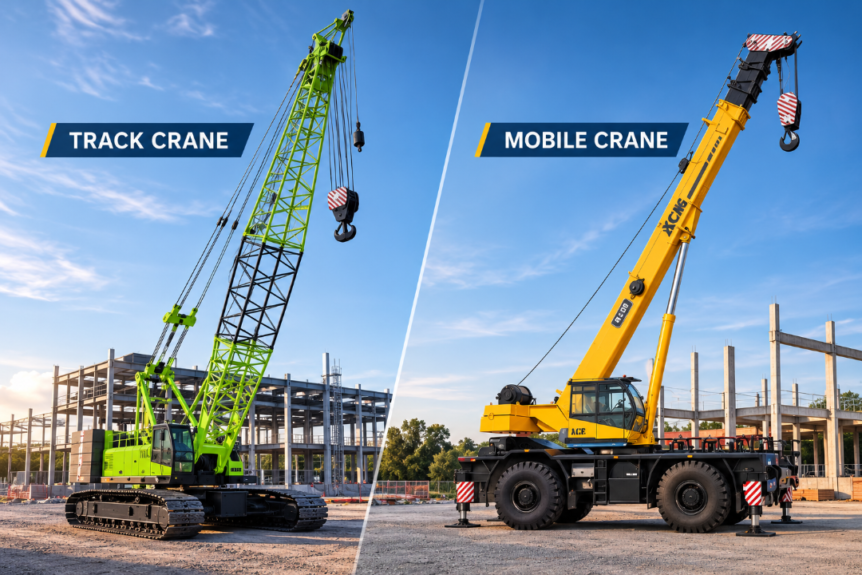
Choosing between a crawler crane and a mobile crane comes down to more than lifting capacity. Ground conditions, travel distance, setup requirements, working radius and project duration all influence which machine makes sense. Comprehensive ground crane services, like those at Fair Lifts, help contractors evaluate lifting options based on the demands of the project and the constraints of the site.
A crawler crane can be well suited to heavy lifts and projects that require the crane to work in one area for an extended period. A wheeled mobile crane can be a better fit when rapid mobilization, road travel and flexible positioning are priorities.
The best choice is the machine that can complete the required lifts safely and efficiently within the site’s constraints.
Crawler Crane vs. Mobile Crane: The Main Differences
A crawler crane travels on tracks rather than conventional wheels. Its tracked undercarriage distributes the machine’s weight over a larger contact area than many wheeled configurations. This can be advantageous on suitable prepared surfaces and certain construction sites, although actual ground pressures and allowable conditions depend on the crane and its configuration.
Many crawler cranes can travel short distances on site with the boom and load configurations permitted by the manufacturer. Others require specific restrictions or preparation before moving. Do not assume a crawler crane can travel with a suspended load simply because it runs on tracks.
A wheeled mobile crane is designed for road or site mobility, subject to the machine’s transport requirements. Depending on the model, it may arrive ready for a relatively quick setup, using outriggers and other support systems as specified by the manufacturer.
Neither type is automatically better. The project determines which advantages matter.
Capacity and Working Radius
Both crawler and mobile cranes come in a range of capacities. The required capacity depends on the load, the boom configuration, the lifting radius and the working conditions.
A crawler crane may be appropriate for heavy components, large structural assemblies or repeated lifts where its capacity and configuration suit the work. A mobile crane may handle the same type of task when the load, radius and site conditions fall within its rated capacity.
For either machine, evaluate the load chart for the exact configuration. Include the weight of rigging and lifting accessories where required by the crane’s capacity calculations. Confirm the required height, radius and pick-and-carry restrictions, if applicable.
A crane’s maximum rated capacity does not tell you what it can lift at the farthest reach or greatest height. That distinction should be established before equipment is selected.
For more detail on mobile-crane selection, read How to Choose the Right Mobile Crane for a Construction Project.
Ground Conditions and Site Preparation
Ground conditions can make or break a crane plan.
Crawler tracks distribute the crane’s weight over a contact area, but they do not eliminate the need for a suitable working surface. Soil strength, slope, drainage, underground utilities, voids and recent excavation can all affect whether a location is suitable.
Mobile cranes also require adequate support. Outrigger loads can be concentrated, and the supporting surface must meet the requirements of the specific crane and lift plan.
Before choosing equipment, determine whether the site needs engineered mats, ground improvement, access-road upgrades or other preparation. Include the cost and time of that work in the comparison.
A crane that is less expensive to mobilize may create higher overall costs if its setup requires extensive site modifications.
Setup, Mobility and Project Duration
Mobile cranes often have an advantage when a project needs equipment to arrive, set up, complete a lift and move on. The actual time depends on crane size, transport arrangements, counterweight requirements, access and site conditions.
Crawler cranes can be advantageous when a project involves substantial lifting over an extended period or requires repeated lifts within a defined work area. However, delivery, assembly, disassembly and transport can add significant time and cost. Large crawler cranes may require specialized transport and dedicated assembly space.
Consider the full schedule:
- How many lifts are required?
- Will the crane work in one area or move between multiple locations?
- How much space is available for assembly and staging?
- What delivery and transport restrictions apply?
- How long will the crane remain on site?
- What happens if the work sequence changes?
The lowest equipment rate may not produce the lowest project cost. Mobilization, setup, standby time and schedule impact matter just as much.
Which Crane Fits Different Project Scenarios?
A crawler crane may be worth evaluating for long-duration construction projects, substantial structural lifts or repeated operations where its capacity and site mobility suit the plan.
A mobile crane may be the better option for shorter-duration lifts, projects with suitable road and site access, or work that requires the crane to relocate between lifting positions.
These are starting points, not fixed rules. Some crawler cranes require extensive site preparation, and some mobile cranes can handle demanding heavy lifts. Compare the actual machines and their rated configurations against the project requirements.
When Should You Consider a Helicopter Lift?
Sometimes the main constraint is not crane capacity. It is access.
If a ground crane cannot reach the pick or set-down point without extensive preparation, a helicopter lift may provide another option. This can be relevant for rooftop HVAC installations, remote infrastructure, restricted industrial sites and locations where conventional crane access would disrupt surrounding operations.
The comparison should include the number of lifts, payloads, site access, mobilization, preparation and schedule. Helicopter lifting has its own requirements, including suitable flight paths, weather limitations, payload restrictions and ground support.
Fair Lifts provides heavy lift helicopter services for projects where aerial lifting merits consideration.
Additional Reading:
- Considering a Heavy Lift? The Undeniable Benefits of Aerial Crane Helicopters
- Helicopter Crane Operations in Modern Construction.
Compare the Complete Lift Plan
The right equipment decision accounts for capacity, ground support, access, setup, duration and the number of lifts required. Fair Lifts provides ground crane services with these practical constraints in view, helping project teams assess their options before equipment is committed.
Discuss your project: Contact Fair Lifts to review the lift requirements, site conditions and potential equipment options.
Crawler Crane vs. Mobile Crane FAQs
Is a crawler crane better than a mobile crane for heavy lifting?
Not in every situation. Both types are available in different capacities. The correct choice depends on the load chart, working radius, ground conditions, setup requirements and duration of the work.
Can a crawler crane work on soft ground?
Potentially, but tracks do not guarantee that the ground can support the machine. The site must be assessed for bearing capacity, slope and other conditions, with mats or ground improvements provided where required.
Are mobile cranes faster to set up than crawler cranes?
Many mobile cranes can be set up more quickly because large crawler cranes may require separate transport and assembly. Actual setup times depend on the equipment, counterweights, access and job requirements.
When might a helicopter be a better option than either crane?
A helicopter may be worth evaluating when ground access or crane setup creates substantial constraints. Payload, flight access, weather, lift count and overall project cost must be assessed before deciding.