

In a bold step to combat the growing threat of wildfires, the Greek government has expanded its aerial surveillance network by significantly increasing its fleet of Greece wildfire drones. The country now operates approximately 82 advanced surveillance drones, up from around 45, to assist in early fire detection and enhance real-time decision-making across high risk regions during the 2025 wildfire season.
Climate Pressures Fuel Urgent Action
Recent summers in Greece have been marked by devastating fires, fueled by extreme heat, drought conditions, and shifting weather patterns. In 2023 alone, over 1,700 square kilometers of land were scorched by wildfires, an area nearly three times larger than the annual average over the past decade. These alarming trends have prompted officials to act swiftly, not only by investing in advanced drone technology but also by refining protocols for quicker deployment of firefighting resources.
Drone Fleet Upgrades and Capabilities

During the “Through Fire 2025” drill in Lavrio, approximately 37 miles southeast of Athens, Greece, firefighters operate a drone on Thursday, May 22, 2025. Photo: Associated Press / Thanassis Stavrakis
- Fleet expansion: Greece increased its drone count to approximately 82, equipped with thermal imaging, long-range optics, and autonomous navigation.
- Operational roles:
- Detecting hot spots before they spread
- Providing aerial mapping of fire perimeters
- Relaying live data to emergency management centers
- Key technologies:
- Thermal cameras to see through smoke and darkness
- Real-time data uplinks to mobile command posts
- Capability to fly in poor visibility, including ash-laden skies
Boosting Firefighting Personnel and Partnerships
- Record staffing: Over 18,000 firefighters are active across the nation; an all-time high that includes full-time, seasonal, and trained volunteers.
- EU Civil Protection aid: International assistance includes around 300 firefighters from Bulgaria, Czechia, France, Romania, and Moldova.
- Unified response systems: Greece is integrating fire services, police, coast guard, and military in joint response drills for seamless coordination.
Strategic Investment in Prevention
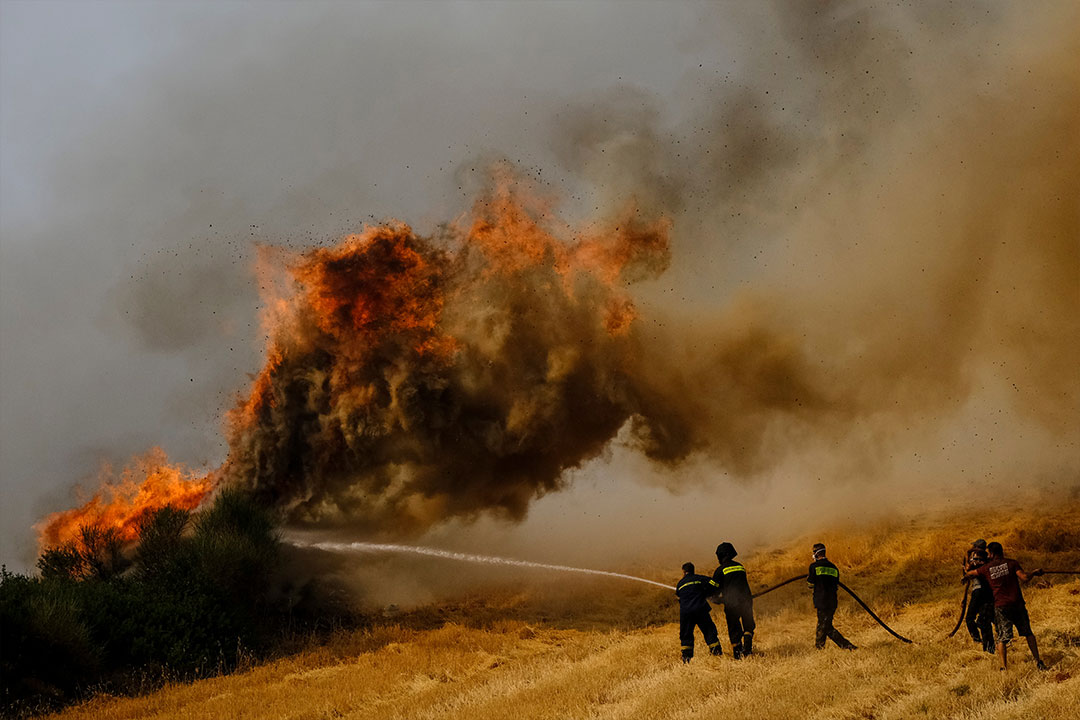
Firemen battle to extinguish a wildfire in the area of Afidnes, northeastern suburb of Athens, Greece | Photo: Alexandros Michailidis / Shutterstock.com
Backed by nearly €2 billion in new funding, Greece’s wildfire defense modernization effort includes procurement of additional firefighting aircraft, upgrades to meteorological forecasting stations, and expanded drone operations. The country is also increasing its investments in research and development, focusing on the long-term role of unmanned systems in natural disaster response and land management.
Benefits and Global Significance
The benefits of this drone-centered approach to wildfire management are already evident. Drones dramatically reduce the time required to detect and assess fires, allowing for faster containment and more targeted water or retardant drops. They also reduce risk to human spotters, who no longer need to enter hazardous zones to gather visual intelligence.
Setting the Standard in Climate Adaptation
The expansion of Greece wildfire drones is more than a technological upgrade, it’s a national strategy to adapt to an evolving climate crisis. With robust investments, international cooperation, and a record number of firefighters, Greece is setting a new standard in rapid response wildfire management. As global wildfire seasons lengthen and intensify, this integrated approach may serve as a model for others on the frontline of climate-driven disaster prevention.